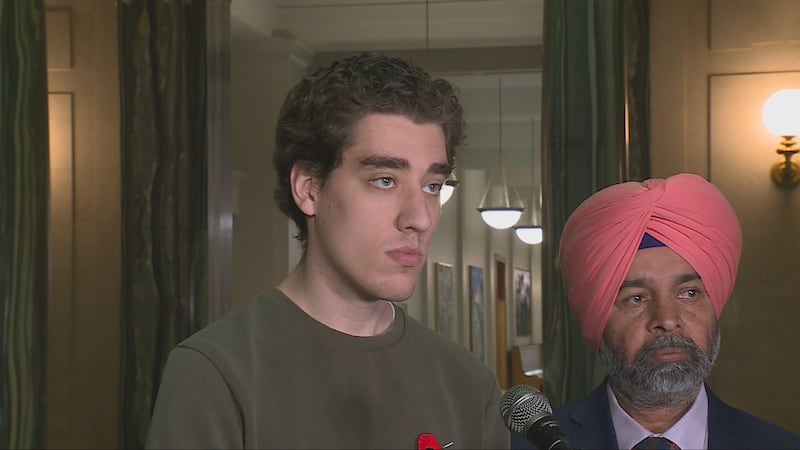
A Saskatchewan university student says mounting costs of housing are affecting students’ academic performance and quality of life. Logan Weatherald is a third-year history student at the University of Saskatchewan. He says since 2024 there’s been a more than $800 increase to on-campus housing. Between that and increased tuition costs, Weatherald says it negatively impacts the ability for students to perform at their best. “This is money that can be going toward gas or groceries or a variety of other expenses, and I think students are seeing these costs rising alongside their tuition costs, and it’s really affecting their ability to just be students,” Weatherald told reporters at the Legislature. “So they’re having to make the choice to either not go to these great institutions that we have in Saskatchewan here, or take up jobs while they’re doing full-time school or making a variety of other difficult decisions.” The third-year student was invited to the Legislature by the NDP. Weatherald said he paid $8,767 for a shared four-bedroom rental unit in 2024, increasing to $9,110 in 2025 and $9,570 in 2026. He added these changes are usually made with little direct communication to students, and are instead revealed in housing application process. Since Weatherald lives on campus during the year he does a lot of walking, but many of his peers who drive also have to contend with higher gas prices as an added pressure. “I’m very grateful to have my parents’ support in getting a post-secondary education. But I know for many students, it’s a case of, if they don’t have that support, they’re taking on these jobs, alongside five classes and extracurriculars and that sort of stuff,” he said. “And frankly, with all of that, it’s difficult to maintain academic excellence or just be a very good student. “If something starts to slip, whether it’s grades that are suffering or anything else — it’s just very difficult.” NDP says underfunding to blame Sask. NDP MLA Tajinder Grewal said the issue stems from consistent underfunding in post-secondary education by Saskatchewan’s government. Grewal cited the University of Saskatchewan’s 2025-26 financial report, which states “overall, base operating grant increases have not kept pace with domestic enrolment growth and inflation resulting in the grant per domestic student decreasing overtime.” “In 2016-2017, that grant was more than $21,000 per student, and now that grant is less than $11,000 per student today,” Grewal added. “So it’s 50 per cent less than 10 years ago. Our institutions are struggling to fill the gaps because there is not enough funding from this government.” Grewal said the provincial government used to fund almost 60 per cent of the operating budget of post-secondary institutions, but with a lessened amount now, institutions are filling the gap by raising tuition, fundraising or relying on international students and raising housing costs. Government touts aggressive spending Advanced Education Minister Ken Cheveldayoff defended the province’s track record in funding post-secondary education, saying Saskatchewan has had the “largest increase for post-secondary in the country.” “We’ve had a multi-year program that we announced last year that sees a three per cent increase each year for four years, and it limits tuition from zero to three per cent,” he told media Tuesday. “Affordability is a concern for all of us, but rent in Saskatchewan is amongst the lowest in the country. Saskatoon is amongst the lowest, Regina is the lowest in the country when it comes to rent.” He added that the province also has the second-lowest utility bundle. “We understand that there are concerns and it’s difficult for students to juggle. And some do have to take jobs and we understand that, but we also have the most aggressive student loan program in the country as well. $119 million dollars I believe, last year, to ensure students are able to get the loans we need,” Cheveldayoff said. The minister also agreed to meet with Weatherald to hear his concerns.