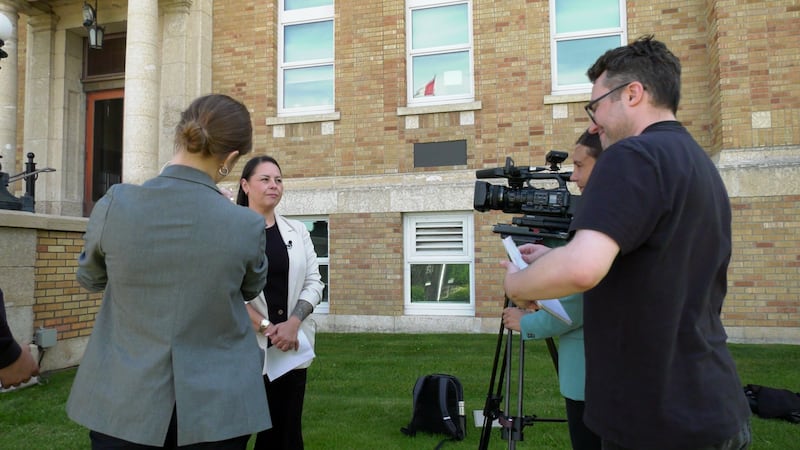
The Federation of Sovereign Indigenous Nations (FSIN) is running short on time to respond to the federal government and explain years of spending. In an interview with CTV News, Indigenous Services Canada (ISC) Minister Mandy Gull-Masty said she will soon move forward with action if the FSIN doesn’t work with Ottawa and answer to a forensic audit which identified $28.7 million in ineligible and unsupported spending. “I’m observing what kind of feedback I’m getting. I’m observing what kinds of decisions are being taken,” she said. “I’m trying to hold that space, but this is not a space with unlimited time.” Gull-Masty wouldn’t give a deadline for when FSIN will have to repay or prove its spending, but her patience is wearing thin. “I have an expectation for information being provided to me; information being appropriately disclosed to membership. And I hope that at FSIN they will see that there’s an opportunity to work together,” Gull-Masty said. “But the decision will ultimately lay with them and what their next step is.” Gull-Masty said her office has found it “challenging” to work with FSIN and get some answers. The FSIN did not respond to a request from CTV News, but previous news releases have denied the findings of the audit and claim it comes down to an interpretation of how fees are administered. The largest expense in the audit report is more than $23 million ineligible COVID-19 spending. Gull-Masty understands during the five-year audit period from April 1, 2019, to March 31, 2024, there were no guidelines in place for how to deal with a pandemic. As she weighs the challenging circumstances with the questionable or unsupported spending, she also says the expenses point to habits within the FSIN. “I can emphasize that you still have the responsibility to be accountable during that time. I’m trying to create flexibility and understand that. But like I said, there are many transactions in this audit that also reflect to decisions that are taken as part of standard operating practices. You do have to be accountable to that, too,” Gull-Masty said. In a letter from ISC to FSIN Chief Bobby Cameron and the organization’s CEO in March, Ottawa established April 2 as a deadline to provide adequate proof of spending to lower the $28.7 million repayment. At its annual spring assembly in North Battleford on April 15, the FSIN passed a resolution formally rejecting forensic audit findings from ISC, and the federal department’s plans to implement stricter financial oversight. A copy of the resolution obtained by CTV News said federal funding will move to set agreements “due to a high amount of outstanding reports at one time and due to the findings of the forensic audit.” According to ISC’s website, set funding agreements come with more rigid requirements. Set funding must be spent or returned by the end of the fiscal year and cannot be shifted to other categories like flexible agreements — which FSIN has been under for multiple years. As calls from some chiefs for more transparency and accountability grew louder, some wondered about the FSIN’s finances moving forward and the health of the organization overall. Gull-Masty wouldn’t say if more information was provided by April 2, but she says the FSIN will need to answer to its people as well. “It is their work to decide, you know, how they feel about what has been undertaken. But we are here to provide as much information and opportunity for local leadership to ask questions, if need be, because communication is a huge part of this undertaking,” she said. As part of the resolution that passed at its spring assembly, any chief looking to serve on the treasury board will have to sign a non-disclosure agreement. The zero-tolerance approach to disclosure of information to the media, partner organizations or anyone not authorized will result in a treasury board member vacating their position and potential further action. “I hope that membership is really going to have the reflection of what it is they’re trying to understand from their leaders,” Gull-Masty said.