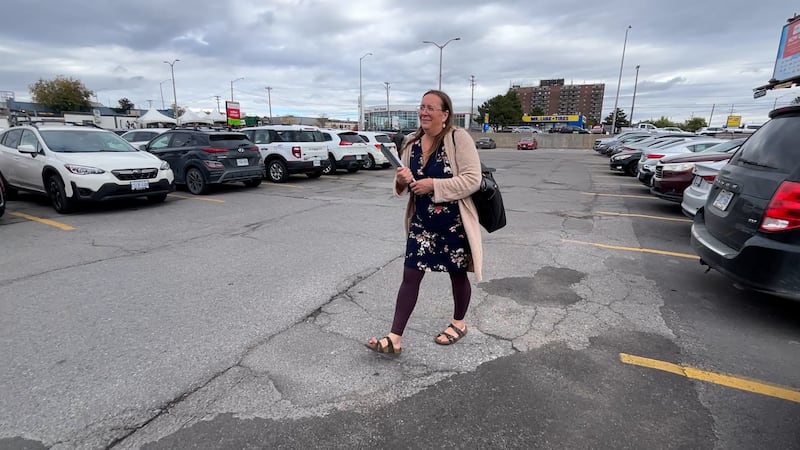
Local daycares are raising concerns about a policy change set to come into effect at the beginning of next month regarding Saskatchewan’s $10 per day daycare agreement with the federal government. “One of the most significant changes is to the parent fee reduction grant,” said Cara Warner, director of Dream Big Childcare Centre. “Providers will no longer receive grant funding for casual children over their licensed spaces; even though we provide care for children over our licensed spaces by stacking.” The Government of Saskatchewan and Ottawa came to a new five-year agreement to keep childcare at $10 a day earlier this year. Coming into effect April 1, it also expanded age eligibility to children you are turning six years old. However, providers like Warner say they are experiencing cuts due to policy changes and funding models related to part-time and casual spaces. “To me, that goes against the heart of the $10 a day childcare,” Warner added. “It’s no longer $10 a day if parents are now paying hundreds of dollars more for administration fees, extended hours fees, fundraising fees and all these other fees we need to put on them just to try to make ends meet so we don’t have to close our doors.” The changes are impacting parents like Kaitlin Gibson. She and her husband recently moved to Saskatchewan from Ontario. They have a son who is 16 months old. Gibson wanted to return to work following her maternity leave, but she says she faced significant childcare challenges. “I ultimately had to quit because we could not access reliable full time childcare,” she said during a news conference Wednesday. “Parents need predictability. Families are expected to somehow build careers, support local economies and survive financially while piecing together childcare week by week.” The NDP opposition Wednesday called for the province to reverse its course regarding the policy changes. “This isn’t the change that families and childcare providers were looking,” childcare and early learning critic Joan Pratchler said. “[The deal] might be the best deal [the minister] could come up with, but it certainly isn’t the best deal for the parents or the providers for the economies in small towns.” However, the province says the opposite is occurring. Sameema Haque, assistant deputy minister of education, says the change caps funding to a centre’s licensed spaces, instead of the total number of children enrolled. “We are not discontinuing [funding for] part-time spaces,” she told CTV News. “Part-time and casual spaces are still options that are available. What we are changing is we are no longer going to provide duplicate funding for that space.” The ministry says many centres were taking advantage of the program, receiving a larger grant than the number of spaces available. Haque called the shift an ‘efficiency measure’ in the name of ‘fiscal responsibility.’ “A 70-space centre can have 70 children every day,” she explained. “They don’t need to be the same 70 children if they’re having part-time kids come in. But we will fully fund them for 70 children.” “[Daycares] are not hiring additional staff, they are not feeding two children and they don’t have any additional occupancy costs. We are fully funding that space,” Haque added. The agreement will provide more than $1.6 billion to Saskatchewan daycares over five years to support access to high-quality, affordable, flexible and inclusive early learning and childcare programs and services across the province. This includes an annual three per cent funding increase starting in 2027-28. According to the Ministry of Education, childcare facilities have seen an increase of more than 11 per cent to their fee schedules since 2021 and an extra $2.8 million has been directed to facilities with the lowest fees to ensure greater equity across the system. It added Saskatchewan received about $27 million less than anticipated as a result of the population-based adjustment. The new policy regarding part-time spaces is set to come into effect July 1, 2026.