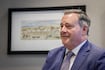
Saskatchewan Finance Minister Jim Reiter is challenging the notion the provincial government has downloaded its responsibility onto municipalities. “Nothing is further from the truth,” the minster said. “People throw that around once in a while and I just find it so incredibly wrong.” Reiter made the comments while speaking to Regina Chamber of Commerce members Thursday, pointing to continued increases in municipal revenue sharing as the cover for the extra strain cities face. “You can see why I take exception to this downloading nonsense,” he added. “Anybody that’s been doing this for a while and has experienced council knows that’s not the case, once in a while this misinformation gets thrown out and needs to be corrected.” However, municipal leaders from across the province feel different. “In our city, maybe more than some of the smaller cities in Saskatchewan, is an urgent matter on homelessness and housing,” Saskatoon Mayor Cynthia Block told CTV News Wednesday. “We need to do more and we’re going to change what we are seeing in our city.” “There’s still areas we need to have conversations on,” Regina Mayor Chad Bachynski added. “There’s still work to do. I recognize we went through a tough budget ourselves. There are global economic challenges we all face.” Property tax strain Under provincial law, the primary source of municipal revenue is property taxes. Cities may also charge service fees and access grants from other levels of government. Municipal revenue sharing is also a useful tool Saskatchewan municipal administrations access. In Wednesday’s budget, the province announced it was increasing funding for the program. The government will distribute more than $392 million to municipalities in Municipal Revenue Sharing. This is the equivalent of 0.75 of one full point of Provincial Sales Tax. That is an increase of $31 million from 2025-26, when it distributed more than $361 million across the province. “The province has more than stepped up on the municipal revenue side, the facts show it,” Reiter reiterated to reporters following his speech Wednesday. The facts also show Saskatchewan’s four largest centres have all increased tax rates well above the rate of inflation in the past year. Saskatoon city council approved a tax hike of 6.7 per cent in its recent budget. Regina approved its highest single-year tax increase ever at 10.9 per cent in 2026. Prince Albert is yet to finalize its tax increase for this year, but in 2025 a 5.43 per cent rise to the mill rate was approved. Moose Jaw’s council recently passed a 6.95 per cent property tax increase. “We’re all looking for a new deal,” said Mayor Block “At a time when cities are really being looked upon to provide more and more, the only tool we have is property taxes.” “Increased cost of construction is universal across Canada,” added Bachynksi. “And it’s something we’re all facing and we have to navigate that.” SUMA continues advocacy efforts The Saskatchewan Urban Municipalities Association (SUMA) is exploring alternative revenue tools for municipalities, including new or improved taxation options. SUMA is looking to advocate for amendments to municipal revenue options, allowing cities province-wide to reduce their reliance on property taxes and boost funding for local services. SUMA President Randy Goulden welcomes the increases to revenue sharing but says the program continues to not keep up with cities’ needs across the province. “Some of the concerns, pressures and stresses our urban municipalities have in our infrastructure and in providing services to our residents, not just in our communities, but outside of our communities,” she said. “The increase in the municipal revenue sharing has not kept up with the costs of allowing us to have those services and to build and maintain infrastructure.” Saskatchewan’s urban centres now make up the majority of the province’s population. Despite 53 per cent of residents living in cities, just 47.9 per cent of municipal revenue sharing dollars are allocated to them Sixteen per cent goes to towns, villages and resort villages, 28.5 per cent to rural municipalities and 7.4 per cent to northern communities. “Lots of times the revenues from the province flow from outside [urban centres],” explained Reiter. “They flow from oil, potash, the rural areas. Services have to be provided in those areas because that’s where the money comes from. So it’s a balance.” Municipal revenue sharing expects to be a topic of discussion at SUMA’s annual convention in April.