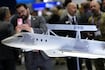
The Royal Canadian Air Force (RCAF) has marked the first operational flight of its future training aircraft at 15 Wing Moose Jaw. The CT-102B Astra II completed its inaugural flight on Monday at the military base south of Moose Jaw. According to the RCAF, the Astra II is significantly enhanced compared to its predecessor, capable of greater speeds, altitude and performance. “There is more [g-force], more systems. It also makes sure that people start to learn how to operate more automation, digitization,” RCAF Maj.-Gen. Denis O’Reilly told reporters. Designed and developed in Germany, a fleet of 23 Astra IIs will be based out of 15 Wing as part of the RCAF’s Future Aircrew Training (FAcT) program. The Astra II is the result of an arduous selection process, as the plane had to fulfill over 100 requirements from the RCAF. Kevin Lemke is the general manager of SkyAlyne. He said the decision was made not only for today but for future training years from now. “It’s way more powerful. It’s got a full glass cockpit like in a fighter aircraft,” he explained. “Its own touch screens. It is very modern.” Once fully operational, every RCAF pilot who earns their wings for the next 25 years will begin training on the Astra II. Pete Saunders, who serves as the Director General Integrated and Air Missile Defence with the RCAF, reiterated the importance of the training upgrade. “We need to bring together, in a coherent manner, in order to ensure that we put young aviators on board that the systems in place support them,” Saunders explained. With greater speed and altitude performance, the Astra II will help trainees learn the basics faster so they can move on to the more complicated aircraft the RCAF has to offer. The RCAF expects the fleet to be fully operational by the end of the year.