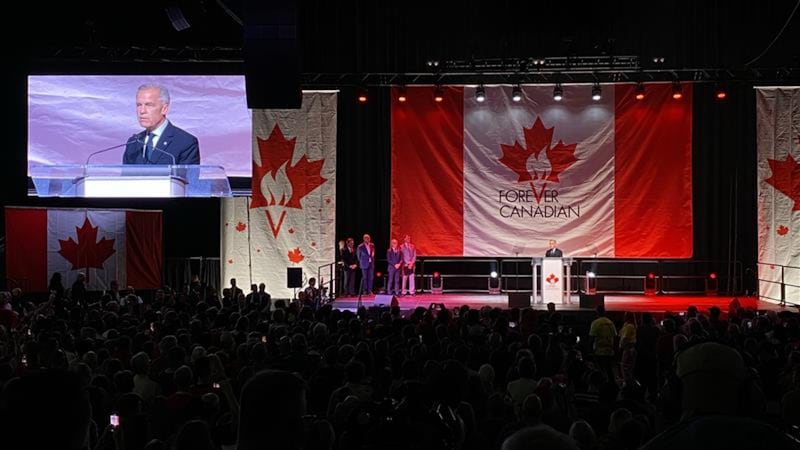
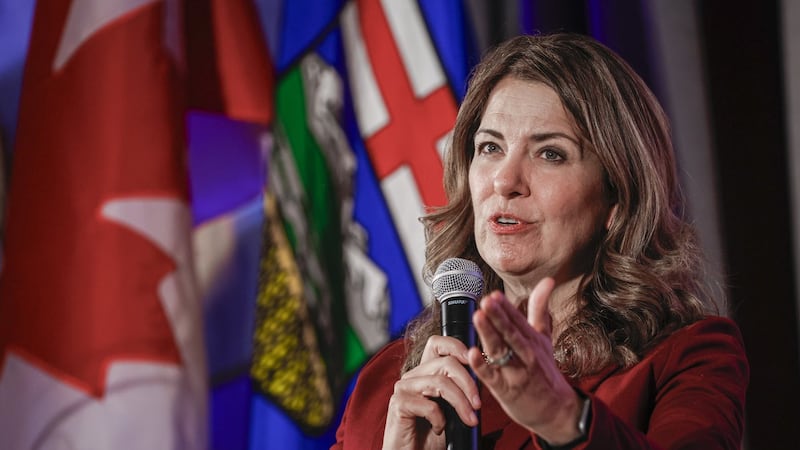
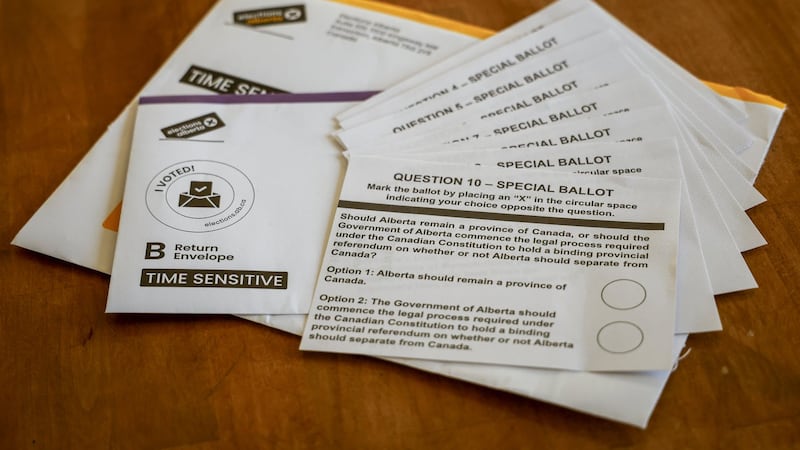
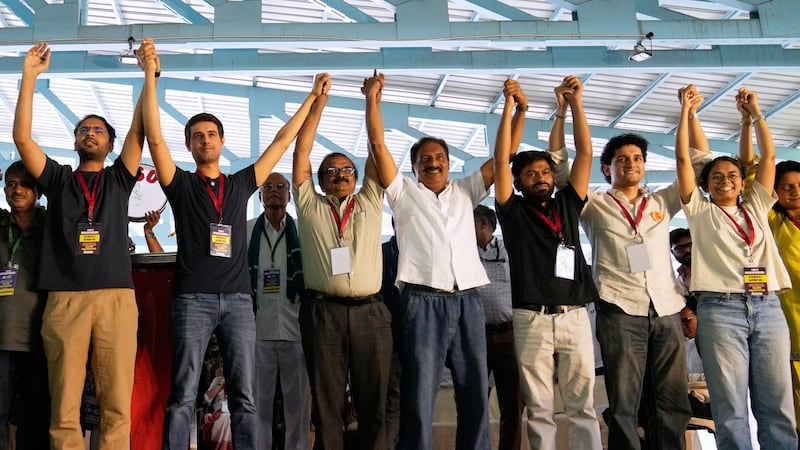
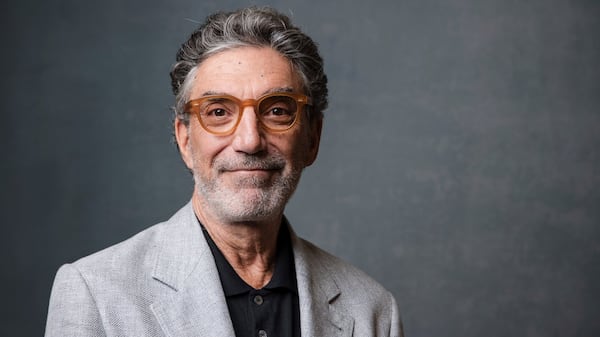
James Moore is a former federal cabinet minister under prime minister Stephen Harper, and is a contributing columnist for CTVNews.ca. Now that the federal New Democrats have selected Avi Lewis as their leader, Canadians know the leadership offering that they will be presented by the major parties in the next campaign. Now the race is on between the parties to try to frame the ‘ballot question’ of the next campaign – whenever that may be. But at this moment, given the climate and context in which we live, the ballot question for the next campaign seems quite cemented. Many politicians tend to think that election campaigns are about their leadership, their ideas, their problem-solving, their résumé and capacities. But voters tend to think that elections are about them, about their concerns, their anxieties, their aspirations and their needs. And the voters are right. Elections are about them. So, the challenge for political leadership is to have absolute clarity about the priorities of voters and to align your political product offering and leadership approach to needs of voters and the proposition that you and your team are the best solution on offer. It seems to me to be clear that the vast majority of Canadian voters will not elect anyone in the current environment to lead a government who does not demonstrate a fixation and governing ethos around two words: Canadian solidarity. And so the ballot question for the next election seems to me to be clear: ‘Who is best to build Canadian solidarity?’ One could use the words ‘Canadian unity,’ but I think that is an insufficient summary for the moment. For one, to many Canadians, ‘unity’ is a brand that is isolated within the context of the national unity question of the Quebec–Canada tensions of contemporary history. What I’m referring to now is something even deeper. ‘Solidarity’ is a fundamental alignment of interests and a commitment to one another that is unbreakable. It is an aspiration for cohesion and empathy in response to the challenges of forces that threaten the Canadian family. It is a fortification against those forces that would divide Canada, weaken our country and wedge Canadians against each other. And I think it’s understandable why there is a thirst for a sense of Canadian solidarity. Half of those who will be eligible to vote in the next election campaign have lived through three major traumas that destabilized their lives and our country in ways that were beyond our control. And it is both the destabilization and the loss of control that are coequal traumas to all three events. Three traumas, one unifying need It is one thing to have a crisis, that is bad enough. But when trying to endure through a crisis that is beyond your control, that feeling of loss of control begs for a sense of strength through solidarity that demands political alignment. The first of those three recent traumas was the 2008-2009 global financial crisis. Forces beyond Canada’s control resulted in the deepest global recession since the Second World War. Canadians sought political leadership that had clarity on the mission of their anxiety about protecting Canada’s interests in the global economic crisis and they found that comfort in economist Stephen Harper and rewarded him with a majority government in 2011. The second trauma was the COVID-19 crisis where Canadians were profoundly unnerved and destabilized in a way that had not been experienced in a century. The pandemic caused generational economic disruptions and social change that we are still triaging to this day. Whether it was vaccine policies, government spending skews that torqued us to deficit levels we’re still trying to reconcile, work from home policies, the economic shifts, the de-urbanization of workspaces and more. Politically, Canadians sought solidarity and comfort in one another in ways that shattered through normal political considerations and alignments. In the middle of the crisis, provincial and federal elections took place, and governments that were seen by the voters to be putting the public interests first in response to the crisis were politically rewarded across the country. Over time, as the crisis faded, scrutiny of those governments emerged and habitual political divides re-emerged, but in the moment of anxiety and crisis and division, people sought leaders who were seen to be unifiers against traumas beyond our control. It is clear to me that we are in a third trauma that has a similar DNA to the first two. Donald Trump’s second presidency is not like any other that Canada has ever seen. The open threats to our economic sovereignty, the belligerence, the assault on the NATO security alliance, the daily incoherence on Iran, the impossibility of tracking any sense of ballast of reason in Mr. Trump’s administration of his duties as president, his apparent declining health and the triggering of economic, security and geopolitical unrest on a near constant basis is unnerving at the best of times. Given that there are still over 1,000 days left in his mandate as president is a reality we have to accept and manage. Canadians want problem solvers, not partisans In this trauma, Canadians increasingly want the security of solidarity. That’s why, when the conservative premier of Alberta and the Liberal prime minister of Canada work together to make progress on energy projects, Canadians are pleased. That’s why, when the social democrat mayor of Toronto, the Progressive Conservative premier of Ontario and the Liberal Prime Minister of Canada cooperate on a multilayered housing policy announcement that encompasses a suite of compromises from all levels of government on development fees, social housing, tax relief and government land use for housing needs expansion to (hopefully) spur demand and affordable prices, Canadians nod with their approval. That’s why when Pierre Poilievre goes on the Joe Rogan podcast and bats away an opportunity to criticize Prime Minister Carney on foreign soil and refuses to take a cheap poke at Justin Trudeau, consensus opinion is that the Conservative leader displayed the right judgment of character and statesmanship that could make him worthy of being prime minister one day. In all these examples – and there are plenty more – Canadians are consistently signalling that they want problem solvers in office and nation builders in power. The inverse of this principle holds true as well. Any political actor who does not recognize the moment that we are in, the trauma of this Trump presidency and its effects, and who acts as though the normal push and pull of usual politics is appropriate will be rejected by voters. This moment, this trauma that we are living through, is calling for leadership that aspires to draw the country and Canadians together. That’s why when an NDP leadership candidate screams in anger to “eat the rich” he is rejected and largely mocked by observers. Now is not the time for rote class warfare and fear mongering and pitting Canadians against each other. Read the room. There is not a large market for such small thinking. Further, that’s why efforts to advance a referendum on sovereignty are proving to be deeply unpopular in both Quebec and Alberta. Division, anger, exploitation of angst – that is a path to nowhere politically. Real concerns, properly understood and respectfully managed is the obligation of representatives elected to office. But the exploitation of division can be spotted a mile away by a finely tuned voter instinct and it is a dead end politically. The coming six months offer us a slew of known events that will expose the character and judgment of our leaders: the spring session of Parliament, the unfolding security crises in the Middle East and Europe, the Canada-U.S. -Mexico agreement on trade debates, the U.S. midterms and their fallout, the final two years of the Trump presidency post-midterms, the coming fall budget, the coming Quebec election, the coming Alberta referendum, and more. As events unfold, Canadians will be given a clear line of sight on who is real and who is synthetic in the great mission of our time: nation building through these times of crisis and keeping Canadians together on that journey. More from James Moore: