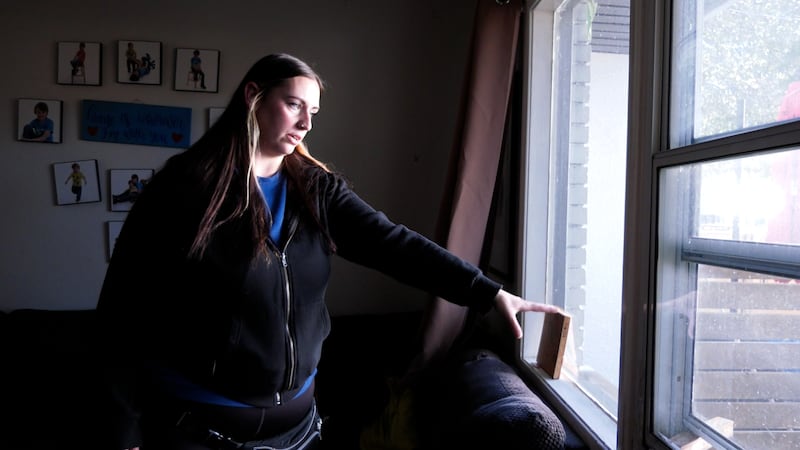
Some Ottawa residents are reporting flooding in their basements following another severe storm that soaked the capital. Environment Canada says 23.5 millimetres of rain was recorded at the Ottawa Airport on Monday after a series of storms moved through the national capital region. Sections of Highway 417 were submerged in water during the afternoon commute due to the storm, and some residents reported flooding on residential streets in the west end. In a statement to CTV News on Wednesday, a spokesperson for the City of Ottawa said the city received 111 service requests related to basement flooding and 93 requests related to flooded streets and catch basins between 3 p.m. on Aug. 10 and 3 p.m. and Aug. 11. “More than 87 per cent of the basement flooding reports received were concentrated in the city’s west and southwest, specifically in wards 7, 8, 9 and 16,” Carol Hall, manager of water linear systems said in a statement. Coun. Theresa Kavanagh told Newstalk 580 CFRA’s Ottawa at Work with Patricia Boal she received 10 reports from residents about flooding in the west end. “There have been some flooded basements. So lots and lots of concern; we’re all kind of PTSD right now,” Kavanagh said. Kavanagh said flooding on residential streets and on the Queensway is a “major concern.” “You talk about the one in 200-year rainfall, but if this keeps happening, we’re just going to have to do a bit more than what we were doing before,” Kavanagh said. Coun. Sean Devine also said he received reports of flooding in his Knoxdale-Merivale ward. “It’s hard to grasp just how frustrated, scared and angry some of these residents must be,” Devine said on Facebook. More than 6,000 residents reported flooded basements following heavy rain on Canada Day, with some areas in the west end receiving more than 140 millimetres of rain. The City of Ottawa described the flooding as a one in 200-year rainfall event. Hall says the amount of service requests received on Monday was “significantly lower” than during the Canada Day flooding. “During the same 24-hour timeframe on July 1, the City received 2,314 service requests related to flooded basements and 388 related to flooded streets and catch basins,” Hall said. “This represents approximately 95 per cent fewer basement flooding reports and 76 per cent fewer flooded street and catch basin reports during the August 10 rainfall event.” Infrastructure and Water Services general manager Tammy Rose told councillors in a memo on July 11 that staff were considering a “comprehensive review” to look at the performance of the sewer system and “identify opportunities for improvement.” The memo says staff will undertake the following activities and studies: Kavanagh says city staff have been checking places that were flooded to see how the infrastructure worked. “They’ve got people out there checking places that pooled up, and in some cases, it’s clogging. The catch basins are clogging, culverts are clogging. We can all do our bit and help with the catch basins, keep them clear in our neighbourhoods,” Kavanagh said. Calls to improve stormwater infrastructure Monday’s rainstorm sparked a concerning sense of déjà vu for many in the city who have recently, or are still, cleaning up from the Canada Day storm. Now there are growing calls for the city to take a closer look at Ottawa’s stormwater infrastructure. Ivan Potts lives in Ottawa’s Bayshore neighbourhood and says he’s taken matters into his own hands to prevent flooding. He says he’s cleared a nearby culvert off the Trans Canada Trail several times since the July 1 storm, after his home, along with many others in the neighbourhood, were flooded. “I had let the city know that we should probably get it cleaned out or dredged out, and that never happened,” he said of the culvert. “It really needs to be on a hinge system. Something that can open itself up when it blocks instead of going backwards and into homes.” He suggests a system that only opens when several hundreds of pounds of force from water pushes against the grate. Potts went back at the culvert during Monday’s storm to find more debris preventing the proper flow of stormwater. “It was flowing very heavily and there were about four or five of those boards jammed right up on the back of that grill blocking the water from coming out,” he said. “It was pretty hard because the water was rushing pretty fast and there was a lot of resistance, but I was able to get them all out and to let the water flow and then I monitored it until it went down to make sure it didn’t cause another backup into our home and everybody’s homes around here.” Some city councillors are also putting the city’s stormwater infrastructure in the spotlight. “Some people are just recovering and to have to experience this over again is difficult, so the city has to look at this with the idea that we have to improve,” said Kavanagh. “This isn’t going away. Climate change has made a difference and we’re going to see more water. We’re going to see more rainfall.” Hall, of the city’s water linear systems department, says City of Ottawa workers were monitoring drainage infrastructure and proactively inspecting catch basins and outlets. “Temporary water pooling on streets is expected during periods of heavy rainfall and is often a sign that the stormwater system is working as designed,” Hall said. “The City uses flow-control measures to limit the amount of water entering the storm sewer system at one time, helping to prevent sewer surcharging and reduce flood risks. As a result, water may temporarily accumulate on roadways and, in some cases, on private property, but it typically recedes within a few hours once rainfall subsides.” With files from CTV News Ottawa’s Austin Lee