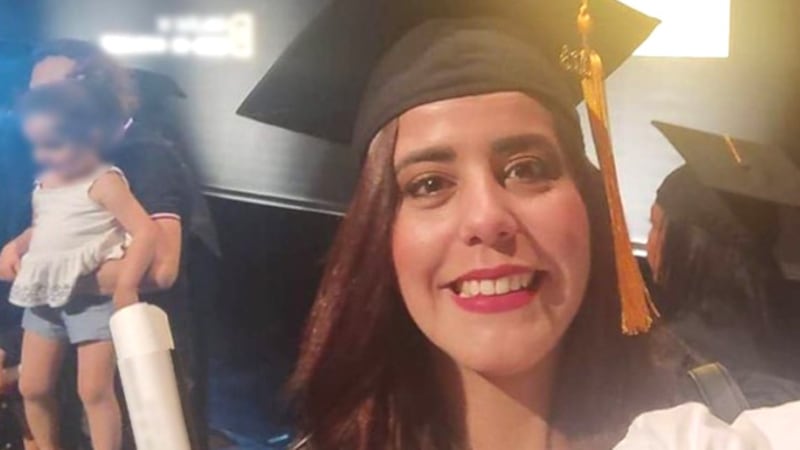
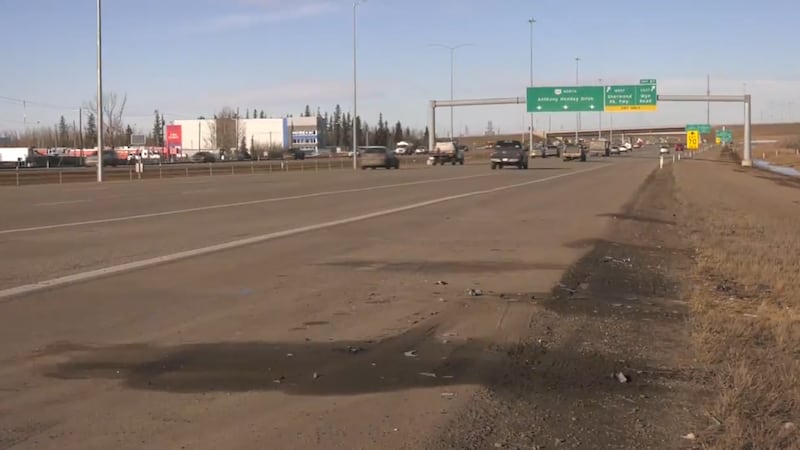
The final 911 call made by a 15-year-old autistic teenager who was fatally shot by police in Surrey, B.C., was played publicly Tuesday, as a coroner’s inquest examined what emergency responders knew about his mental health and the training available to communicate with him. Chase De Balinhard called police on Feb. 9, 2025, from a wooded area behind Clayton Heights Secondary School, telling the operator he intended to take his own life. “I’m gonna kill myself,” Chase told the call-taker. Over the next 19 minutes, the teenager described feeling depressed, struggling with friendships and receiving mental-health treatment, while also telling the operator he was carrying a gun taken from his father’s office. The recording was played during the second day of a coroner’s inquest into Chase’s death, with testimony from Michael Peters, the Surrey Police Service telecommunications operator who answered the call. Peters testified that he had received no autism-specific training and that his initial training included approximately one hour of instruction specifically on handling calls involving mental-health crises. The inquest is examining the circumstances of Chase’s death and considering whether recommendations could help prevent similar tragedies. A previous investigation by B.C.‘s Independent Investigations Office (IIO) concluded the officers’ use of lethal force was legally justified and found no reasonable grounds to believe an officer had committed a criminal offence. ‘I just can’t take it anymore’ Early in the call, there was some confusion over Chase’s first name, which he clarified by spelling it for the operator. He also disclosed that he was autistic after struggling to provide his home address. “I’m sorry. I’m autistic,” Chase told Peters. The teenager described difficulties with his mental health. “I’ve been depressed about now two years, and I’ve been hurting myself. And honestly, I just can’t take it anymore,” he said. Chase told the operator he had previously cut himself but said he had not harmed himself that day. His mother has maintained during interviews that Chase had never cut or harmed himself. The teen also described feeling increasingly isolated from his peers. “Honestly, I don’t have any friends anymore. They just ignore me now.” Chase said he had experienced suicidal thoughts before and had been receiving counselling and other mental-health treatment. “I don’t think they take it seriously,” he said when discussing his treatment. He acknowledged that counselling sometimes helped, although he expressed frustration with the support he was receiving. His treating psychiatrist testified Monday that Chase had a history of chronic suicidal thoughts, often expressed during periods of emotional distress. Dr. Patricia Frew said she had not identified an active suicidal plan requiring hospitalization at their final appointment on Jan. 8, 2025, approximately one month before his death. However, she emphasized that she could not determine Chase’s state of mind on the day of the shooting. Tuesday’s recording gave jurors an opportunity to hear Chase describe his thoughts and circumstances in his own words. Questions about the pellet pistol During the call, Chase told Peters he had a revolver taken from his father’s office. When asked whether he could put it down, Chase indicated he did not feel comfortable doing so. He later explained that the gun was beside him, within arm’s reach, rather than in his hand at that moment. Peters asked whether the weapon was loaded, a question he testified had been requested by responding officers. Chase said he did not know, although he said believed his father generally kept it loaded. He also described taking the gun from a drawer in his father’s office. “No, it was in his drawer, and he locks it all the time. But I already know which key it is,” Chase said when asked whether the weapon had been stored in a gun safe. That account adds to testimony Monday from Chase’s mother, Crystal De Balinhard, who described the air pistol as being secured in her husband’s office. She told jurors the weapon had been inherited by her husband, Rick, from his father, who served with the RCMP. Crystal testified that the family did not routinely leave the weapon accessible to Chase and said she did not know how he had obtained it. Chase’s statements during the call provided his account of how he accessed the weapon. The inquest has not independently established every detail of the storage arrangements. Peters testified that he checked police databases for information about Chase’s father and found he held a firearms licence, but that no registered firearms appeared in the search. That result did not establish whether the family possessed a firearm that was not required to be registered. The weapon was later identified by the IIO as a realistic-looking .22-calibre CO2 pellet pistol, with six pellets in its magazine and a full CO2 cartridge. What responding officers knew Peters explained that while speaking with Chase, he was simultaneously creating and updating a computer-assisted dispatch file. He said information entered into the system was available to dispatchers and responding officers, including Chase’s age, location, description, suicidal statements and disclosure that he was autistic. Peters testified that he attempted to build rapport while gathering information needed for the police response. He asked about the gun, whether Chase had injured himself, whether anyone else was nearby and how officers could locate him. He said some of his questions, including whether the firearm was loaded, were requested by responding officers. Peters also testified that he heard information being relayed from the Car 67 police mental-health team, whose nurse had access to medical records. According to the IIO, responding officers were informed that Chase was 15, autistic and had ADHD. Near the end of the call, Peters asked Chase about his feelings toward police. After Chase said he did not trust officers, Peters asked whether that distrust extended to wanting to harm them. “Both,” Chase replied. Peters testified that he took the statement seriously and entered the information into the dispatch file. Under questioning from counsel representing the RCMP, Peters agreed that someone reporting they were armed in a public place, and expressing a desire to harm police, presented information that had to be taken seriously. He also agreed that the ultimate assessment of risk belonged to responding officers, who could consider additional information and their own observations at the scene. Shortly afterward, Chase shouted an expletive and stopped responding to the operator. Peters testified that he later learned the outburst coincided with an officer’s first attempt to contact the teenager. He said he had the ability to call Chase back, but did not do so because he understood officers were already in the area and Chase had left his original location. Call-taker describes training gaps Much of Tuesday’s testimony focused on the training Peters had received before answering Chase’s call. Peters said he was hired in April 2023 and completed initial classroom and supervised practical training before taking calls independently, followed by a period of monitored work. He testified that his initial training included approximately one hour devoted to mental-health crisis calls. There was no specific autism or neurodivergence training, he said, nor a requirement for refresher training on handling calls involving suicide. Peters also testified that he had not received a dedicated crisis-intervention and de-escalation training program. He explained that call-takers follow standard operating procedures, but do not use a fixed script for each call. Their responsibilities include identifying callers, determining their location, gathering information about potential risks, maintaining communication and updating the dispatch system. Peters told jurors he tried to remain calm, use plain language and keep Chase engaged after learning he was autistic. However, under questioning from J.A. Pankiw-Petty, counsel for the De Balinhard family, Peters acknowledged that he had not received specific training about how certain communication approaches might affect an autistic caller. Pankiw-Petty questioned him about instances in which he asked Chase several questions in one sentence or used words the teenager appeared not to understand. The lawyer suggested that compound questions, ambiguous language and unfamiliar terminology could be confusing for some autistic people. Peters testified that he had not been trained on those specific concerns. He also acknowledged that behaviour can be difficult to interpret over the telephone, where call-takers cannot observe a person’s facial expressions or body language. Peters said he was required to take the information Chase provided at face value. Asked whether he would welcome practical autism-specific training for emergency call-takers, Peters said he would. He also testified that Surrey Police Service was introducing training of that kind and reviewing its operating procedures. Why weren’t parents contacted? The inquest also examined whether information from Chase’s parents could have assisted emergency responders. Peters testified that he had access to police databases and other systems that could provide contact information, although he did not recall every detail of the searches conducted during the call. He confirmed that neither Chase’s mother nor father was contacted by him. Peters said the decision to contact a parent would generally be left to responding officers, including consideration of confidentiality. Counsel for the family questioned whether a system flag identifying an autistic person’s communication needs, triggers, safety plan and emergency contacts would be helpful. Peters agreed that such information could assist call-takers and ideally would also be available directly to officers. He testified that existing police records might identify a person as autistic, but did not necessarily provide detailed instructions on how to communicate with them. Under questioning, Peters also acknowledged that Chase mentioned previous tailbone surgery and made expressions of pain during the call. He could not recall whether he relayed the surgery information to dispatch and said he had not pursued further questions about it. During Monday’s testimony, Chase’s mother described the teenager as still recovering from painful surgery for a pilonidal cyst, which required ongoing wound care. Jurors also heard that he had an existing mental-health safety plan identifying coping strategies and people to contact when distressed. The inquest has not established whether contacting Chase’s parents or having additional clinical information would have changed the outcome. Jurors question response Members of the five-person jury also questioned Peters about the information available during the call. One juror asked whether anything in the file prompted contact with Chase’s parents because he was a minor. Peters said he did not recall such an instruction and reiterated that contacting parents would generally be a decision for officers. Another question concerned why the incident remained classified as a suicide call after Peters learned Chase had a firearm. He explained that once officers were assigned, the original call classification was not normally changed, although additional information could still be entered into the file. A juror also asked why he had not further explored what type of firearm Chase possessed after a database search found no registered firearms associated with his father. Peters said he was conscious of Chase’s tone and did not want further questions about the gun to aggravate him. Asked why he had not provided an estimated time of arrival for officers, Peters said that information was sometimes provided to callers, but he could not recall why he had not done so in this instance. He also testified that the suicide-related training he received was developed internally, to the best of his knowledge. Peters told the presiding coroner that additional training specific to autism and mental health, along with access to relevant medical information, could have been helpful. Police shooting legally justified The inquest is taking place nearly a year after the IIO released its findings into Chase’s death. According to the police watchdog, officers from the RCMP and Surrey Police Service attempted to apprehend Chase for approximately 22 minutes as he moved through a school field, townhouse development and nearby residential streets. Witness officers told investigators Chase repeatedly pointed what appeared to be a handgun toward police and, at times, held it against his own head. The IIO reported that officers attempted to communicate with the teenager, repeatedly directed him to drop the weapon and considered less-lethal options. The senior officer on scene told investigators his initial plan was to establish dialogue and try to de-escalate the situation. However, he described difficulties maintaining contact and containing Chase as he moved through a populated residential neighbourhood. At approximately 3:17 p.m., according to the IIO, Chase turned and pointed the pistol toward nearby officers. Two officers fired almost simultaneously. Chase was struck by a single bullet to the chest and died at the scene. The IIO concluded the officers had objectively reasonable grounds to fear death or grievous bodily harm, and that their use of lethal force was legally justified. Chief civilian director Jessica Berglund found no reasonable grounds to believe an officer had committed a criminal offence, and the matter was not referred to Crown counsel. The officer who fired the fatal shot did not provide an account to IIO investigators. Subject officers are not required to do so during an IIO investigation. The watchdog also examined police training, finding that none of the officers interviewed had received autism-specific instruction, while there was no evidence that the officer who fired the fatal shot had received such training. Officers had received general crisis intervention and de-escalation training. The IIO acknowledged expert opinions that sensory overload may have affected Chase’s ability to communicate with police. However, it concluded that officers reasonably focused on the danger posed by what they believed was a real firearm, particularly as Chase moved through a residential neighbourhood and repeatedly pointed the weapon toward them. Family hopes for changes On Monday, Chase’s mother told jurors she hopes the inquest leads to better communication training for 911 operators, police and other emergency responders. She also raised the possibility of a voluntary registry that could provide first responders with information about autistic individuals, their communication needs and emergency contacts. Despite her concerns, Crystal acknowledged the danger officers faced during her son’s final moments. “We know they didn’t go up there to hurt our son. It’s never been us against them. It’s just about training,” she told the court. Speaking to reporters after Monday’s proceedings, the family’s lawyer emphasized that the family wants improvements in how first responders communicate with autistic people experiencing crises. Pankiw-Petty declined to interpret individual pieces of evidence, saying the family wanted to protect the integrity of the inquest and allow jurors to reach their own findings. Unlike the IIO investigation, the coroner’s inquest cannot determine criminal or civil liability. Presiding coroner John Knox and the jury will examine the circumstances of Chase’s death and may make recommendations intended to prevent similar deaths. Those recommendations are not legally binding. The inquest is expected to continue with testimony from responding police officers, civilian witnesses, medical personnel and experts in crisis intervention and autism. The broader circumstances surrounding Chase’s death and questions about autism-specific police training were previously examined in CTV News Vancouver’s five-part investigative series, Lost in Translation: The Death of Chase De Balinhard.