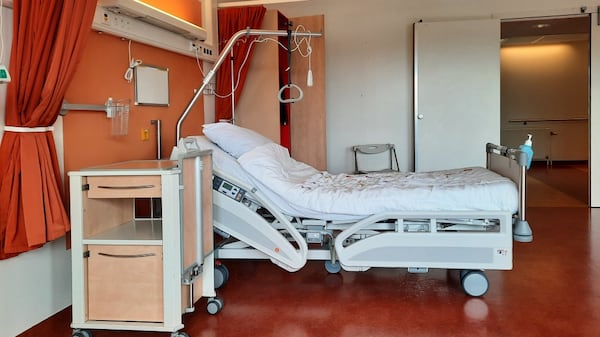
Hospital workers rallied at Ottawa City Hall to protest a proposed “bubble zone” bylaw that would restrict demonstrations outside hospitals. Some even travelled from out of town to show their support. Jamie-Lynne Hunt made the drive from Pembroke to stand alongside Ottawa hospital staff. “This is our one opportunity to really advocate on behalf of our patients safely,” said Hunt, a registered practical nurse and lead steward for CUPE 1502. Hunt said her rights and freedoms are on the line. “It’s always important to have the ability to speak up for what is right. And those rights and freedoms should not be, in any way, eroded,” she said. The group from Pembroke says what happens in Ottawa won’t just stay here. “They’re here to support the workers out of Ottawa that’ll be affected by this bylaw. Because it starts here, but it could eventually trickle down to other communities. And if we silence these workers, then in these communities, it’ll eventually impact the other smaller communities,” said Jodi Julius, a national staff representative with the Canadian Union of Public Employees. The City of Ottawa is seeking public input on a proposed “bubble zone” bylaw that would prohibit demonstrations around certain buildings like places of worship, schools and hospitals. Council directed staff to develop a bylaw with a protective distance of up to 80 metres around “vulnerable social infrastructure.” The union president says the city’s plan doesn’t go far enough to protect freedom of speech. The city has said that they’re prepared to amend the bylaw to allow us to have protests around our contracts. But we want to have the right, and we believe everyone else should have the right, to have protests around matters of public policy,” said Michael Hurley, president of the Ontario Council of Hospital Unions (OCHU) of CUPE. City councillor Sean Devine said the bylaw would restrict the only option hospital workers have to protest. “Such a bylaw would prevent hospital workers, from having the only legitimate access they have to protest. And that had been one of my concerns. Some of my other concerns would be whether we already have laws on the books to restrict the kind of activity that the bubble bylaw would be seeking to perform. So let’s use those laws,” Devine said. Suzanne Pinel-Asselin, francophone vice-president of OCHU, said hospital workers already face limits. “Hospital workers were deemed essential, so we can’t strike. So protests are really one of the only tools that we have, to be able to bring attention to underfunding and hallway healthcare,” she said. Legal experts warn that banning protests could take away a basic tool that unions use to push for change. “The right to strike is fundamental in a unionized environment. It’s the ability to reach an impasse. You’ve seen it in the current political environment. said Karin Galldin, an OCHU lawyer with Goldblatt Partners LPP. “You see it at the federal labor relations environment as well. It’s the final tool for unions, to be able to sort of effect meaningful change on behalf of their members.”