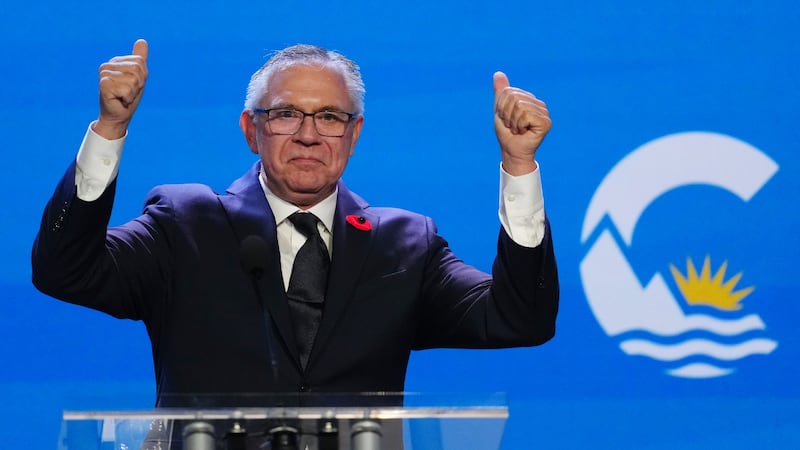
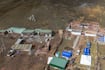
The City of Ottawa wants to acquire a $2-million farmland property located near Fitzroy Harbour to be used as a valuable piece of the environment, according to a report going to city council. The proposal sparked debate among councillors Thursday. Councillor David Brown told 580 CFRA’s the Morning Rush with Bill Carroll Friday it’s a bad investment. “It’s a lemon. We should pass this up,” Brown said. Acquiring the 223-acre waterfront property, which is located in West Carleton, right at the end of the province and at the end of Ottawa, might sound like a “rare opportunity,” but it comes with unforeseen extra costs, Brown said. “This property, there’s some buildings on it. Now, we don’t know what condition these buildings are in, and we’re going to have to spend a little bit of money inspecting them. And if they’re not good and they need to be demolished, not to worry. For a cool estimated $300,000 more of your tax dollars, we demolish the buildings on this property. “Now, there’s also a few wells that will likely have to cap and decommission.” Brown notes that there could be a burial ground on the property, which is an added cost. “We don’t know where, so we’re going to have to spend some more money, but there will be restrictions that come along with having a burial ground on this parcel,” he added. Brown says the farmland was listed for sale for 14 months. The listing price has dropped twice, starting at $3.5 million to $2.6 million, Brown says. He adds that the price is expected to drop to $1.95 million. Brown says no farmer has offered to buy this land yet because the city “gave it the lowest soil quality score that there is.” The buildings on the property, such as old barns or manufacturing buildings, are not occupied, says Brown. He adds that the property has not been changed in about 70 years. “There is no productivity to be had here,” he said. Brown says rural councillors are not against buying farmlands to preserve the environment and conserve the lands that have special features on them, noting that there have been multiple lands that have been purchased across rural Ottawa. “This this property isn’t at risk. It’s 31 kilometers from the urban boundary. There is zero connection to any municipal services, which is why it can’t be developed. Farmers don’t want it because you can’t grow anything on it,’ Brown added. “We might buy it and do nothing with it.” Wouldn’t just doing nothing be good enough? The purchase of the land will not protect it from anything, answers Brown. He notes that “there are conservation authorities whose sole job is to conserve and enhance land with natural features and wetlands.” “I’m not discounting the possibility of enhancing some of those natural features, but I don’t think the city of Ottawa needs to be in that business,” he said. Brown says since no one wants to buy the land, it’s not at risk, which means it can be left to preserve itself. “But we even asked for a list to come to council before the next council meeting to highlight other properties in Ottawa that are at risk that we could purchase to conserve,” he said. “There are opportunities for landowners who want to donate lands to governments or government agencies. There is a tax compliment that they would receive for that.” What are the possibilities and the challenges? Though the land could be used as a park, all possibilities come with a high price tag, Brown says. Buying the land and then coming up with a plan is not a good idea, according to rural councillors. Brown notes another challenge, which is city staff’s recommendations of paying all the unknown costs up front, which could impact the “ability to purchase lands that need to be conserved in the future in the rural areas.” “So, not only are you asking for my money today, but you’re also asking for the taxpayers' money tomorrow,” he said. The idea to purchase the land was discussed Thursday at the agricultural and rural affairs committee. Rural land meets acquisition criteria: Report According to the report, the acquisition of the farm at 5689 Ferry Rd. meets the requirements for conservation over the long-term. “Staff in the Natural Systems Branch of the Strategic Initiatives Department became aware of this rural property, with frontage along the Ottawa River, in early 2024. A review of this parcel revealed that these lands occupy a significant section of the Natural Heritage System Core Areas and Linkage Areas, as per the official plan, that has been identified as being highly important to conserve over the long-term,” reads the report. The report notes that the land offers a conservation opportunity for many reasons: 1. It lies within a linkage area of the city’s natural heritage system. 2. It includes Ottawa River shoreline, which is estimated at 807 metres. 3. It contains wetland and mature, significant woodlands. 4. It provides opportunities for reforestation and wetland restoration in support of the city’s no net loss policies and tree planting goals The report says the price of acquisition, which is $1.95 million plus applicable taxes, is within the budget. The budget for conservation and stewardship of rural environmental lands has a current balance of approximately $5 million. The yearly allowance to acquire lands is $2 million per year. This means the city has the money in its purchasing account. Allocations in 2023 and 2024 have been $500,000 and $250,000, consecutively.