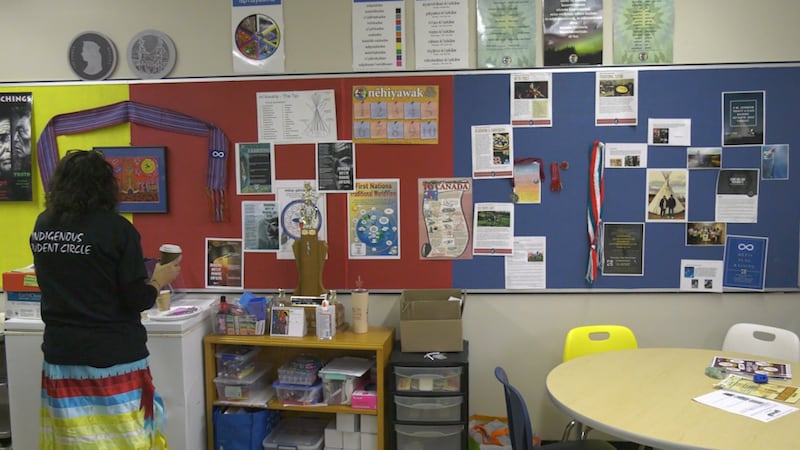
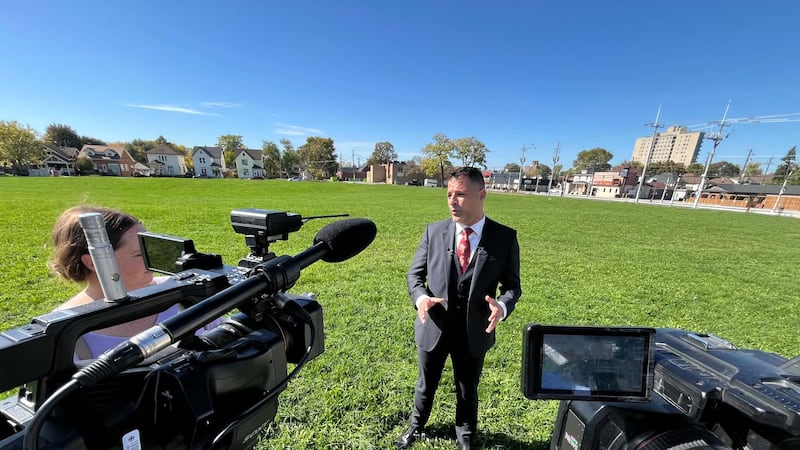
During a visit to North Bay, the chief commissioner of the Ontario Human Rights Commission spoke about discrimination within the retail sector, health care and in the education systems. Patricia DeGuire was in town on Wednesday to give a 40-minute presentation at the North Bay Indigenous Friendship Centre. DeGuire said it’s everyone’s duty to push for an end to discrimination in society. “Human rights can be sustained and advanced if every individual takes responsibility,” she said. In her speech to about 25 representatives from health and wellness organizations, municipal leaders and education advocates, DeGuire said she wanted to strengthen relationships and push for equity. DeGuire was invited to North Bay to speak by Maurice Switzer, a member of the Indigenous Reconciliation advisory group, a committee within the commission. Switzer was also a former Ontario Human Rights Commission appointee and currently serves as president of the friendship centre’s board of directors. “Do unto others as you would have them do unto you,” he said. “We’re all part of the human circle.” “It was a great day of sharing and knowing about our human rights,” said Kathy Fortin, executive director of the friendship centre. Many years after the 2012 Supreme Court of Canada ruling that learning to read was a human right, the commission ruled the Province of Ontario was not fulfilling its obligation to teach Black and Indigenous children or children with disabilities -- like dyslexia -- to read. Leaving an important legacy “The Ontario Human Rights Commission is very committed that we will use our mandate to ensure that we leave a legacy for all our children, not that they learn to read, but to enhance their education,” DeGuire told CTV News. When it comes to health care for Indigenous patients, DeGuire told the crowd the commission met with friendship centres and other organizations in northern Ontario to get more feedback on its current state. A report on the issue, titled ‘What We Heard,’ is slated for a 2026 release. “It has become a crisis state,” DeGuire said. “The Ontario Human Rights Commission believes that before we address needs in the communities, we must consult and we must collaborate.” Switzer is aware of changes happening in local health care. ‘Drastic cases’ “Our local public health unit, they have taken active steps to create more learning about Indigenous peoples and issues with their staff,” he said. “They’ve had training and (are) learning. They’re hiring Indigenous managers. He added that there have been “drastic cases” where First Nations people have visited doctors in hospitals and have experienced racism. “Part of that is probably because they are unable to communicate the way that clients in the system are expected to,” Switzer said. DeGuire told the crowd that “discrimination is always prevalent” and that regrettably, it’s increasing due to increased global conflicts. She said part of the commission’s plan to foster a human rights culture in Ontario is driven by individual community action, which will lead to a healthier society. “Once we are motivated and empowered, everything else follows,” DeGuire said.