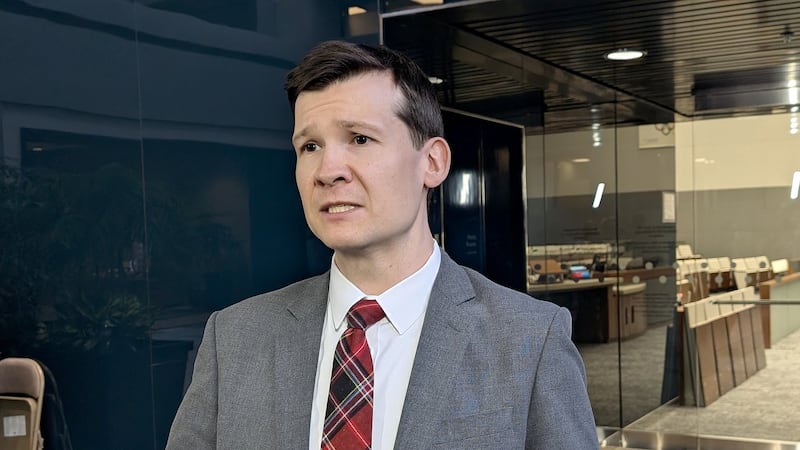
The brain is well known for being in charge of everything we do - from social connections to emotions, memory, speech, sleep, movement, and more - but the question remains...how? Dr. Stuart Trenholm, leader of the Neural Circuits Research Group at the Montreal Neurological Institute, says there is still so much that remains unknown. “I think the public has this general misconception that we know more than we do, and I would argue that we know very, very little,” he tells CTV News. Trenholm says he considers the brain to be one of the universe’s three fundamental mysteries, along with the ocean and theoretical physics. One of the biggest challenges to cracking the code? Oftentimes, a brain - and its owner - must be alive in order to be studied. “The majority of what we know about the brain does not come from us scientists, it comes from terrible accidents that somebody has, and then they show up to the hospital or somewhere and they say, ‘This is the crazy thing that happened to me,’” Trenholm admits. Brains Need Hearts Brain Canada, an organization at the heart of all things brain, says it’s working hard to push research forward - because it affects all of us. “It’s really something that we take for granted,” explains Dr. Viviane Poupon, president and CEO of Brain Canada. “We forget that we have a brain and we forget everything it does for us.” READ MORE: The organization recently launched a new campaign, Brains Need Hearts, inviting Canadians to recognize the value of brain research. “The brain remains our most important organ, and the least understood,” said France Chrétien Desmarais, chair of Brain Canada. “The science is there. The researchers are there. What’s missing is heart: the engagement of as many people as possible to accelerate discoveries.” Brain Canada points out that brain disorders, as well as diseases and mental health conditions, touch families across the country - and that’s why more needs to be done to spark open and inclusive conversations. “Brain research is transforming lives every day, but continued progress depends on people who believe in its potential,” said Poupon. “Brains Need Hearts is a call to Canadians to recognize the importance of brain research and to understand that every breakthrough begins with the support of a community that cares.” As part of the campaign, Brain Canada is inviting people to Buy a Neuron - one of the 86 billion that make up our thoughts, emotions, memories and life experiences. “It’s this gigantic, when you look into it, this gigantic universe between our ears,” Poupon tells CTV News. “It’s as vast as the universe. Eighty-six billion. That means as many stars as there is in the universe.” READ MORE: As for Trenholm, who is currently working with Brain Canada to develop a 2D open science textbook about the brain, he says he believes we’re in a “new golden age” of neuroscience - one that could lead to extraordinary discoveries and the unlocking of one of life’s greatest mysteries. “Finally, a bunch of tools are around that will allow us to get past our current state of knowledge,” Trenholm muses. “I think we’re finally at a stage where you can go from a genetic understanding of a cell, to a functional understanding, to a connection understanding, to a full brain understanding, to an outcome behavioural understanding and put that in a full package.”