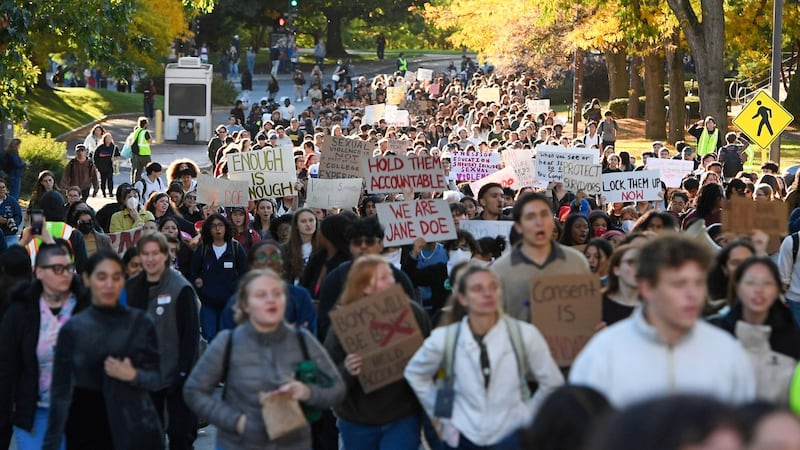
There has been significant backlash from opposition parties, business groups and pro-immigration advocates after the Quebec government abolished the Quebec Experience Program (PEQ) last November. Recent protests and a reversal by CAQ leadership hopeful Christine Fréchette, who is promising to revive the fast-track immigration program, have resulted in the government backtracking on its refusal to grandfather the program. On Wednesday, Immigration Minister Jean-François Roberge said his department would evaluate different scenarios to allow a transition period between the PEQ and the new point-based Skilled Worker Selection Program (PSTQ). But what exactly is the PEQ, and who are the people now living with uncertainty and the possibility they will have to leave Quebec? Overview of the PEQ The program, launched in 2010 and terminated in November 2025, provided international students and temporary foreign workers with a fast-track pathway to permanent residency. In order to qualify and apply for a certificate of selection in Quebec, certain criteria needed to be met. Temporary foreign workers — including those in highly skilled, specialized and intermediate manual occupations — needed to have worked full-time in an eligible job in Quebec for two years to qualify. They also had to meet the program’s language requirements. Foreign students who completed their studies in high-demand programs from recognized Quebec institutions and satisfied the language requirements were also eligible under the PEQ. The spouses and common-law partners of eligible applicants also needed to demonstrate a minimum level of spoken French. Over its 15 years, the PEQ underwent several restructurings and reforms. Why the government ended the program In a recent interview, economic immigration lawyer Jorge Alejandro Torres explained that the government ended the PEQ to control the number of applicants it accepted. “Their argument was, ‘We’re going to get way more than 45,000 applications per year if we don’t put a handbrake.’ They wanted to have control over who was being selected as a permanent resident in Quebec,” Torres noted. “That was compounded with, at the time, with housing, cost of living, they thought this kind of big influx of people was going to put a higher strain on those issues, especially in the Island of Montreal.” Businesses caught in the crossfire Torres said the end of the PEQ has had major adverse effects on companies across Quebec that have and continue to experience labour shortages. He added that many employers heavily rely on temporary foreign workers who are not easily replaced. “Employers came forward after the announcement, saying, ‘Look, we’re essentially going to go out of business, or our business is going to become unworkable.’ We’re talking about nurses. We’re talking about teachers, auto mechanics,” he said. The human impact of PEQ cancellation Then, of course, there is the massive human impact. Torres said that many people came to Quebec with the intention of applying to the PEQ to obtain permanent residency, and noted that recruitment agencies, including the province, even promoted it to attract foreign workers. But for those who had not yet applied for a certificate of selection in Quebec when the program was abolished, they remain in limbo and are at risk of having to leave the province they call home. “These are people who came with their families, their spouses, their children, some of their children were born here while they were temporary foreign workers. So, by you closing the door, you’re essentially creating this human tragedy,” he said. According to the attorney, some people are also contemplating moving to other provinces, accelerating what he called a potential ‘brain drain’ from Quebec. Selection criteria for PSTQ Under the PSTQ, the government will prioritize people who have obtained a degree in Quebec, those who work in a strategic sector such as health, education, construction, and engineering, as well as people who have a “diverse profile.” Roberge previously said that applications from people living outside of the Montreal metropolitan area will be given priority. The government has confirmed that 2,549 invitations were sent out at the end of January. The Quebec government plans to admit nearly 29,000 economic immigrants this year. “It’s no longer an objective program. It’s a subjective program, which means now your name will be on a pool, and then there will be drops, and then you cross your fingers and you hope you’ll be selected, essentially, so that’s, that’s the key difference,” Torres said. “Really, you’re going to get what they also call a lottery system. Now it’s not purely chance. But it’s the minister that will decide each time what the criteria will be for each draw.” With files from the Canadian Press.