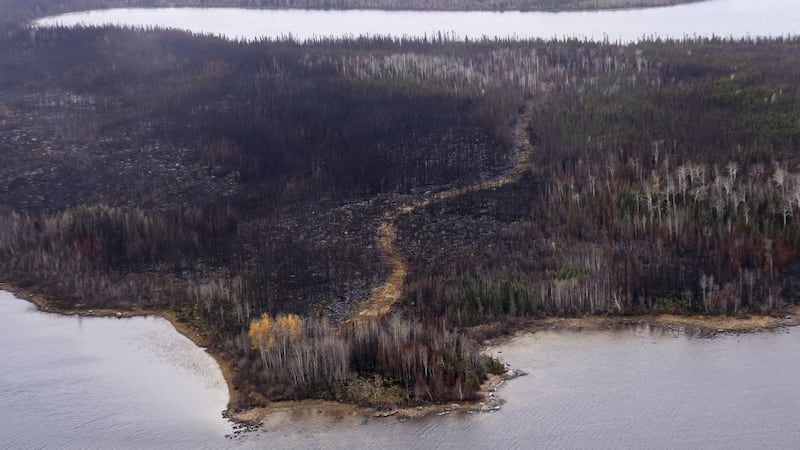
Quebec’s 2023 wildfires burned 4.3 million hectares and forced 27,000 people to evacuate from 26 municipalities and Indigenous communities. Considered the most destructive fire season in a century, the economic cost was more than $8 billion, according to a new report from Ouranos, Natural Resources Canada, and the Quebec government. The study, prepared by consulting group Nada Conseils, determined that a total of 713 fires raged across the province, more than in the past two decades combined. “The 2023 fires cost everyone,” the authors wrote. “Beyond the billions of dollars, they left behind fractures and scars that have not yet healed.” The impacts affected many sectors of Quebec society. Human cost Residents faced about $935 million in losses, primarily in “increased deaths, hospitalizations, and emergency room visits due to degraded air quality.” The report showed the smoke from forest fires caused approximately 90 additional deaths, mainly related to respiratory and cardiovascular diseases. There were also approximately 974 emergency room visits and 110 hospitalizations attributed to days of intense pollution caused by smoke, mainly for respiratory problems such as asthma, bronchitis, or other lung conditions. The costs of these deaths and illnesses to the Quebec economy are estimated at $585.4 million. Stress and post-traumatic impacts, particularly among children, have not yet been fully measured, the report noted. There were additional human costs, including $12 million in lost wages, $10 million in evacuation expenses, and at least $32 million in destroyed hunting camps, cabins and other structures. Government spending Governments at all levels spent a total of $1.1 billion, largely on firefighting ($211 million) and reforestation efforts ($773 million). Municipal officials, often forced to improvize during evacuations, shouldered additional emergency costs to provide relief for their residents. “Elected officials and firefighters were stretched to their limits,” the report determined, adding that exhaustion among local responders was an often invisible cost. Business losses Businesses, particularly in forestry, mining, and tourism, lost an estimated $3.7 billion. Some forest-dependent businesses were forced to shut down entirely, while the long-term decline in timber supply could push losses into the billions more over the coming decades. “The consequences observed on key industries are diverse and disrupt their entire economic ecosystem,” the authors said. Environmental losses Ecosystems absorbed some of the heaviest blows, with fires releasing massive amounts of carbon into the atmosphere. The long-term cost of those emissions is pegged at $3.1 billion. Habitats were disrupted, bodies of water contaminated, and caribou populations pushed closer to collapse. The report warns that climate change is making extreme fire seasons more likely. “The 2023 wildfire season will certainly have generated significant costs for Quebec society,” it stated, “but it will also have generated a collective awareness of the importance of the boreal forest in our identity and our economy.” Researchers say the findings should guide future adaptation measures, from land management to emergency response, to reduce the mounting costs of wildfires in Quebec. “The exceptional nature of these events is matched only by the opportunity they provide to reflect together on how to preserve the precious link we have with the forest,” the report concluded. “The question is not only how we can bounce back after 2023, but also how we can adapt thanks to 2023.”