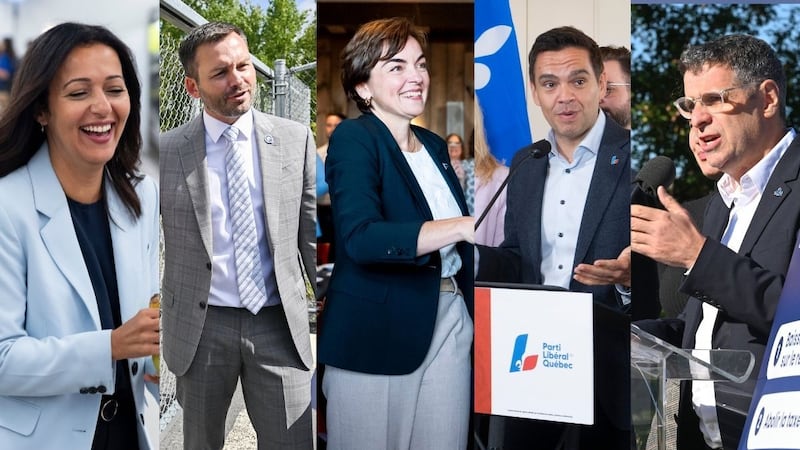
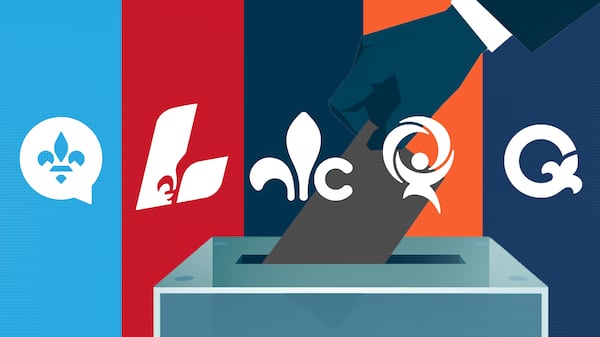
Parti Québécois Leader Paul St-Pierre Plamondon was the primary target on Friday as his political rivals urged Quebec voters not to elect a sovereigntist government with less than three days to go in the provincial election campaign. Leaders of the Coalition Avenir Québec and the Conservative Party both started their days by delivering warnings about a referendum that the PQ has promised to hold after U.S. President Donald Trump leaves the White House in 2029. For his part, Charles Milliard pitched his Quebec Liberals as the only federalist option, suggesting Conservative Leader Éric Duhaime and Coalition Avenir Québec Leader Christine Fréchette were closet separatists. “We don’t want Quebec to leave Canada,” said Milliard during a news conference on Montreal’s South Shore. “Fréchette is unable to take a stance on the national question. As for Mr. Duhaime, he voted yes in 1995.” The Liberal leader visited five ridings, all outside of Montreal. Duhaime used some buses in a garage as props to make his point at a news conference in Quebec City. One bus had a sign featuring the logo and slogan of the “Yes” side from the 1995 Quebec referendum, while the other had a sign with the logo of the “No” side’s campaign. He and candidate Maïté Blanchette-Vézina closed the garage door, promising that the buses for a potential referendum campaign would never leave if the Conservatives win enough seats to hold the balance of power at the legislature. “We’re going to make sure that the ‘Yes’ bus and the ‘No’ bus remain nothing more than a fantasy of Charles Millard and Paul St-Pierre Plamondon, and that they certainly don’t become a nightmare for Quebecers over the next four years,” he said, attacking both the PQ and Liberal leaders. Vézina previously crossed the floor in the provincial legislature, leaving the governing Coalition Avenir Québec to join the Conservatives, which have yet to have an elected official at the national assembly. Fréchette campaigned in Salaberry-de-Valleyfield, west of Montreal, with her finance minister, Eric Girard. She warned that a PQ government would cause “colossal damage” to Quebec’s economy and trigger instability that would be felt “the very day after the election.” She said companies that have been considering investing in Quebec “will think twice.” “They’re asking themselves, ‘Well, in two and a half years, where will we be?’ … There are decisions that will outright exclude Quebec,” she said. She urged Quebecers to remember the effects of the 1995 referendum on the financial sector, when banks implemented risk premiums, “which can have a domino effect on corporate financing, mortgages, the government’s borrowing costs, and infrastructure costs.” “We’ll pay the price,” Fréchette warned. Fréchette also told journalists that she would remain the head of the party regardless of election results. Polls show the Coalition Avenir Québec could be wiped off the political map, and Fréchette may lose her seat. First Nations leaders have also come out against the PQ’s sovereignty plan, saying it would need their approval. “We are not asking you to make room for us in your political agenda. We are asking you to recognize our status as a government and our right to self-determination,” wrote Lucien Wabanonik, Chief of the Anishnabe Nation of Lac Simon, in an open letter to St-Pierre Plamondon published Friday. “Once that relationship is established, we can lay the foundation for a shared future.” St-Pierre Plamondon has promised to consult Indigenous communities in Quebec before holding a referendum, but specified they would not get a veto. Campaigning in Quebec City, the PQ leader accused his opponents of intensifying their “fearmongering campaigns” because they have “lost credibility.” “It becomes a caricature,” he said. “I think this actually helps the Parti Québécois a little, because it’s reached such a level that it’s obvious … that it’s a bit of a last-ditch effort. So, I’ll let my opponents say whatever they want.” However, he walked back his comments on the role of First Nations in achieving sovereignty, saying he wants consensus. He also promised to be the premier “of absolutely everyone” in Quebec if elected. Leftist party Québec solidaire is also sovereigntist and expecting to win seats on Monday. Co-spokesperson Ruba Ghazal was in Trois-Rivières and focused her campaign on unionized workers and families. She promised to ban lockouts during strikes, saying it’s an “outdated practice” that goes against workers’ rights. She also promised to increase family allowances and to create more spots in subsidized daycares. The five party leaders are expected to make their final pitches to the public over the weekend before the election day on Oct. 5. This report by The Canadian Press was first published Oct. 2, 2026. Erika Morris, The Canadian Press