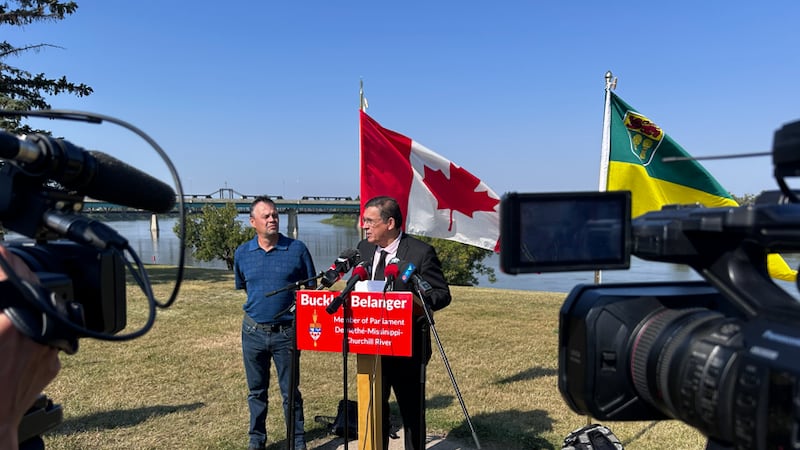
Quebec Solidaire (QS) unveiled a manifesto on Quebec independence on Friday, proposing “a new vision for the Quebec sovereignty movement.” Titled “Nouveau Québec libre,” the 14-page document aims to mobilize new support for the province’s independence. It will also serve as an additional tool to promote the party’s vision during the election campaign, said party spokesperson Sol Zanetti, who oversaw the manifesto’s development. “We believe it is important, in order to increase support for independence, to propose an updated vision—a new vision for the Quebec sovereignty movement—that stands out in two ways. “First, because it is inclusive—inclusive of people who are newcomers to Quebec, those who arrived long ago, or those who, in one way or another, have an immigrant background. It is also a vision that fully respects and recognizes the sovereignty of First Nations and Inuit peoples,” Zanetti summarized in an interview. In the manifesto, the left-wing party details, in particular, the reasons for making Quebec a country. According to QS, there is an “urgent need for Quebec to defend its own interests on the international stage” in the context of the ecological crisis and trade negotiations with the United States. The document is not merely a response to the Parti Québécois’ (PQ) “Blue Book”—which was fully unveiled over a week ago and addresses various issues surrounding a sovereign Quebec. The QS manifesto has been in the works for several months and does not share the same objective as the PQ’s 500-page document, Zanetti noted. He acknowledged that the manifesto is aimed at both skeptics and “longtime sovereigntists who want independence but no longer identify with the Parti Québécois’ vision—people who are very uncomfortable with the positions the Parti Québécois is taking under Paul Saint-Pierre Plamondon.” “It’s aimed at all those people to show that there is another path to Quebec sovereignty—a path that is new, progressive, and inclusive, and one that also creates the conditions necessary for a victory for the “Yes” camp,’ says Zanetti. A constituent assembly QS advocates a path to independence in collaboration with First Nations and the Inuit. “We must answer questions about what tomorrow’s Quebec will look like by developing those answers together with First Nations and the Inuit,” says Zanetti. QS proposes holding a “co-constructed” constituent assembly with the First Peoples. Its mandate would be to consult the public and draft a constitution that would define, among other things, the political system of the new country as well as “the structure of the relationship between First Nations and Inuit and the plurinational state that Quebec will become following negotiations.” This constitution would then be put to a referendum, which would allow Quebec to declare independence if it receives popular support. This entire process would be initiated and completed during the first term of a QS government. Should a PQ government be elected, the PQ would establish, during its first term, an itinerant consultation commission with a view to adopting a provisional constitution for the country of Quebec, prior to holding a referendum. Two to four years “after independence takes effect” following a victory for the “Yes” camp, the PQ would establish “a constituent assembly tasked with drafting the permanent constitution of the country of Quebec.” Zanetti is critical of the PQ’s approach. He considers holding a referendum on a provisional constitution to be “very risky,” particularly with regard to Indigenous support for the project. He also laments the length of the process, which could stretch out over nearly eight years. “The government that will achieve independence—that will launch the process—must commit to completing it within a single term. It doesn’t know if it will have two,” he argued. Zanetti also lamented that the PQ’s “Blue Book” initiative is “essentially about answering all the questions without having consulted First Nations and the Inuit.” The PQ has stated that “in a spirit of collaboration and with a view to jointly building our collective future,” it “chose to initiate a dialogue with First Nations and Inuit before publishing the chapter concerning them.” That chapter was scheduled to be released this summer. The preface to the QS manifesto is signed by the party’s National Indigenous Commission. Zanetti notes that the document is “the result of a long process of reflection,” informed in particular by the 98 lectures he has given on independence. This report by The Canadian Press was first published in French on July 3, 2026.