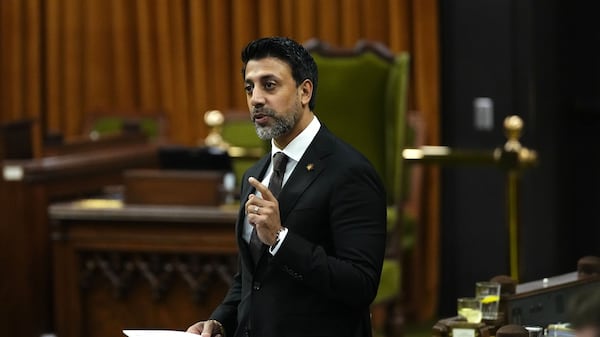
The Manitoba government is offering up $100 million to help Manitobans that will be impacted by tariffs from the United States. Jamie Moses, the Minister of Business, Mining, Trade and Job Creation, made the announcement Friday, saying the province is working to face these challenges head-on. “We know that the unprovoked attacks from Donald Trump’s administration will only embolden us to take more action to support our growing economy,” said Moses. A large portion of that cash will go toward a $50 million Manitoba Trade Resilience Loan Program, allowing businesses to access capital to cover operational expenses, with low interest rates on the loans. Another $1 million is going into the Export Support Program, which helps Manitoba businesses reach different markets and helps them set up deals around the world. “We’ve already shown success in this program by having over 156 deals and 90 per cent of the participants saying they’ve got new leads because of this program.” The Made in Manitoba initiative will expand with a $500,000 increase in funding. Another $500,000 will also be used to help alcohol producers achieve interprovincial trade. The government is also earmarking $250,000 for export advisory services. There is also a longer-term approach happening with some of the money, as $13.7 million is being used over two years to create a Tariff Workforce Stabilization and Youth Employment Program. Moses said the goal is to get younger Manitobans into the workforce and ensure there are more opportunities once this tariff situation has been resolved. Also announced, from Sept. 1 to Dec. 31 of this year, businesses can defer their provincial taxes. “These initiatives altogether are a comprehensive suite of programs to ensure that our economy in Manitoba will weather the storm of Donald Trump’s tariffs and become stronger throughout it,” said Moses. When the Trump administration announced the tariffs on Canadian goods, the agriculture industry was heavily targeted—from dairy producers to honey farms being slapped with 50 per cent tariffs. The province is working to help agriculture producers by increasing the Operating Credit Guarantee Program to $3 million, providing more support through multiple loan programs, and working with honey producers to develop “sector-specific supports.” Manitoba PC Leader Obby Khan said the supports don’t go far enough. He wants to see tax breaks, as the deferred taxes and loans will have to be paid back, creating a hardship later on. “Direct aid to support businesses is what’s needed right now, businesses are on the verge of closing,” said Khan.