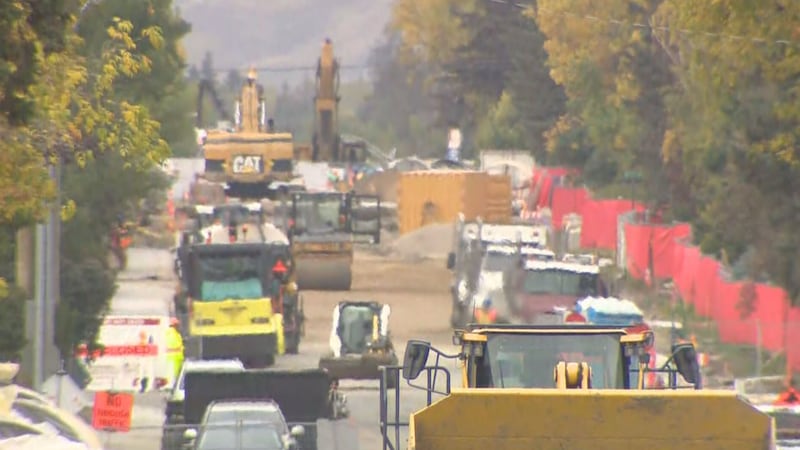
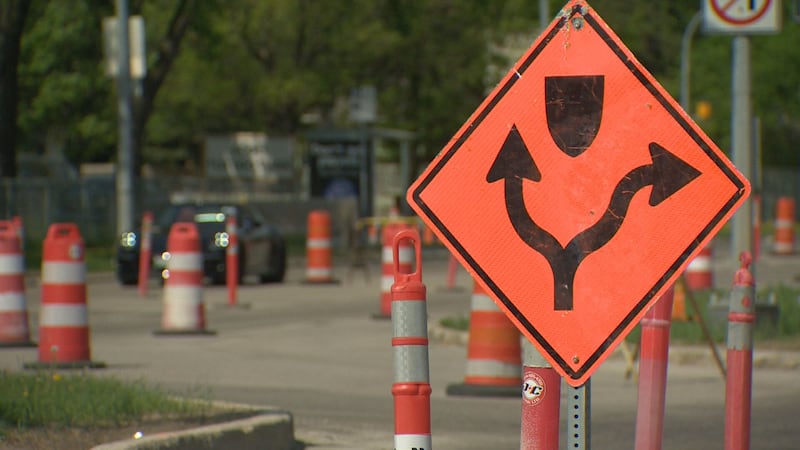
The traffic blockage in Montreal has gone from “minimum” to “maximum,” according to a study on roads on the island. The Montreal Metropolitan Chamber of Commerce (CCMM) and Tourism Montreal published a “Minimum Blockage” report three years ago, and this year’s version has a dramatic slash through the word ‘minimum,’ instead titled: “Maximum Blockage: Taking concrete action to have a visible impact on site management and traffic flow.” The two organizations say that the study “paints a disturbing picture of traffic flow and the management of public and private construction sites in the city.” “Getting around Montreal should not be an obstacle course, yet it has become a daily reality for everyone,” said CCMM CEO and president Isabelle Dessureault. “Between protracted construction sites, unexpected detours and constantly congested roads, traffic flow is now a problem for citizens, workers and visitors alike. What is needed is integrated planning, close coordination and exemplary operational discipline.” Dessureault said “immediate action” is needed to coordinate construction sites and “restore order to a system that is currently too often out of control.” Even though 2025 saw a decline in obstructed arteries, the organizations say Montreal remains affected by “insufficient and uncoordinated coordination, intrusive signage and uneven quality of execution.” “Intrusive signage and poorly coordinated construction sites directly undermine our attractiveness,” said Tourism Montreal CEO Yves Lalumière. “Solutions exist, and it is time to implement them. Aesthetics are not a luxury: they are a factor in international competitiveness. This update to the study is an olive branch to the new administration, to which we offer our full cooperation. Let’s give Montréal back the quality of experience it deserves.” The study found that congestion and chaos remain due to poor construction productivity and planning, subpar public works quality and lack of coordination. The report criticizes the city for “a culture of laxity,” and, of course, the overabundance of orange cones. The study found that from 2024 to 2025, obstructed road numbers fell by 40 per cent, but that number “masks persistent structural challenges.” READ MORE: Montreal drivers lost 63 hours this year to traffic — highest in Canada, among global top 30 The report’s authors say that determining how many roads are blocked in the city centre has become impossible due to data being in a format that is difficult to analyze. “The overabundance of signage and the lack of modulation during construction work amplify the perception of a city paralyzed by roadworks,” the organizations say in a news release. The study proposes the following solutions for Montreal Mayor Soraya Martinez Ferrada’s new administration: The study found that 31 per cent of the city’s roads are in “poor” or “very poor” condition, and 41 per cent of those in the Ville-Marie borough are in the same state. In total, 1,260 km of road requires maintenance or complete repair in the borough. The city has allocated $600 million for road repair between 2025 and 2029, as compared to $321 million from 2020 to 2024. The two groups are bemoaning the reality that “orange cones have become the unintended symbol of Montreal.” “Not of progress, but of a city where it is difficult to get around and where, too often, we go round in circles,” the two presidents said. “It is urgent that we regain control of our construction projects to give Montreal back the mobility it deserves. We will continue to propose concrete solutions, rigorous analyses and practices inspired by the world’s leading cities.”