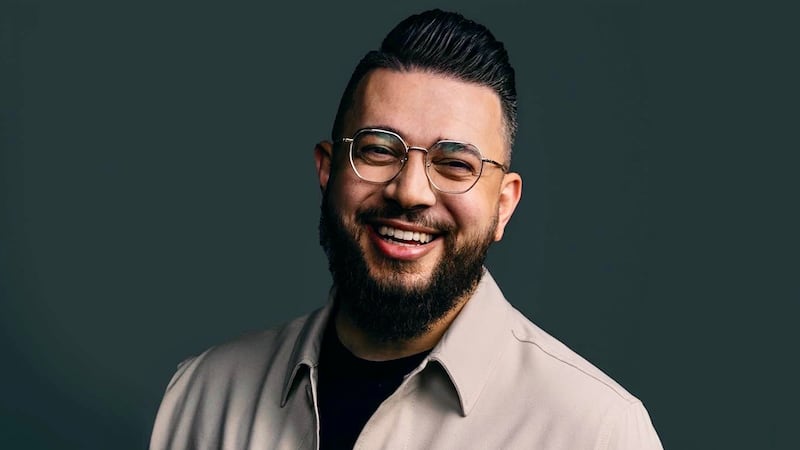
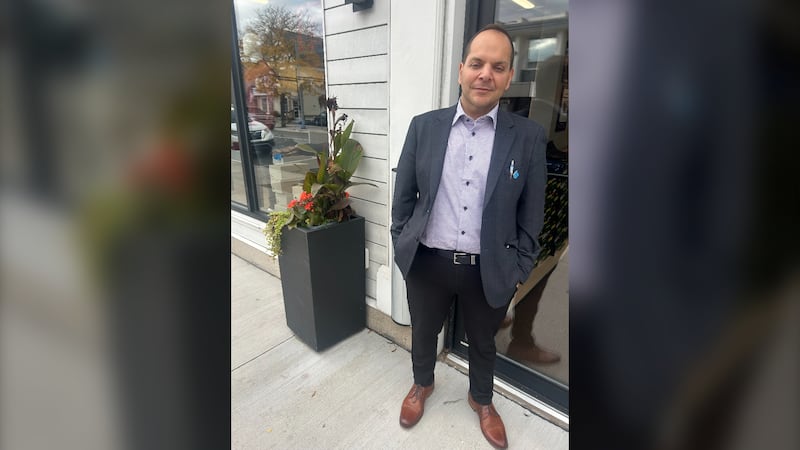
Mahmoud El-Kahlout, who told CTV News his disabled daughter died in Gaza after months of malnutrition and lack of medical care, says he still has at least 14 family members in the enclave, devastated by bombings and famine. They have been living in a refugee camp since May 2024, after their homes were destroyed by Israeli bombs. “My family is starving. They have no safety,” said El-Kahlout, adding he is in constant contact with them via texts. “They ask me every day to get them out of Gaza … I cannot live my life because they don’t have a life in Gaza.” El-Kahlout says his brothers spend their days searching for food, though there is very little left, and the few items for sale are too expensive. A can of milk can cost $80 USD, he says. In a text message shown to CTV News, El-Kahlout’s sister-in-law, Lamis, tells him she can barely get formula for her baby, who is suffering from a severe intestinal infection as the family huddles in a tent in the southern Gaza Strip. “I broke down in the street … because I couldn’t find milk for my baby,” the message from Lamis reads. “Yesterday, I gave her milk meant for adults—aid milk. It’s not even safe for babies. Our neighbour gave us three spoonfuls of her own baby’s formula.” Lamis shares that living in the refugee camp has been incredibly hard, especially as her family members no longer have jobs or income. She says it gets very cold in the winter and too hot in the summer, and there are bugs, rats, and mosquitoes everywhere. Hygiene is also lacking, with Lamis pointing out that the water is dirty and there are long lines to use the few bathrooms, which don’t get cleaned. People bathe once a week and wash their clothes by hand until their hand are sore and the skin cracks, she recounts. Lamis says she is trying desperately to keep her two young children alive, including a seven-month-old. “Life in Gaza is impossible,” she tells CTV News via WhatsApp. “My daughter is sick, [my husband] Mohamed is sick, and my father-in-law and his mother suffer from chronic illnesses. With the lack of food, there is no treatment or immunity.” She says that without income, the family has gone into debt to get food and can barely manage to eat one meal per day. Meanwhile, getting medicine, including insulin to treat her father’s diabetes, is “mission impossible.” “Every moment we stay in the tents makes us more tired, scared and stressed because of the Israeli weapons. We really need help to get out of this hard situation,” Lamis tells CTV News. The Israel Defence Forces (IDF) claim that Hamas is diverting aid resources, to justify cutting off all food assistance in the enclave for the last three months. Those claims have been disputed by USAID. Israeli and American contractors, like the Gaza Humanitarian Fund (GHF), have set up aid distribution sites in Gaza, where Israeli troops have reportedly killed and injured hundreds of people seeking food. According to the United Nations, “between July 30 and July 31 alone, 105 Palestinians were killed and at least 680 more injured along the convoy routes in the Zikim area in North Gaza, southern Khan Younis, and in the vicinity of the GHF sites in Middle Gaza and Rafah.” El-Kahlout says he feared the worst when his sister-in-law sent him a text to tell him that his brother, Ahmed, was shot in the back at a distribution centre on July 28. Lamis confirms he was the first member of the family to venture to the GHF aid distribution centres, which she calls “death traps.” Ahmed received limited care for his wounds, as Gaza’s hospitals have largely been destroyed. El-Kahlout stresses that he still does not have access to the necessary medication due to Israel’s ongoing siege and blockade. He is demanding that Canada come up with a strong humanitarian solution for Gazans. He wants the government to create a Canada–Gaza authorization for emergency travel (CGAET), similar to the Canada–Ukraine authorization for emergency travel (CUAET). “If Canada can fly over Gaza to drop food packages, then it can also use those same planes to rescue the starving and those trapped under rubble and fire,” he said. On Aug. 20, El-Kahlout received news that his cousins and their children had been bombed in their tents. One of his cousins, Hassan Jamal Adwan, and his two children, seven-year-old Sarah and five-year-old Ali, were killed. Many others were critically injured, including Adwan’s wife, Wafaa, and their infant, Siwar, along with three other family members. ‘I don’t know how it will end’ Thousands of kilometres away from the devastation, Claudia Bérubé wakes up in her Verdun home every morning and opens Facebook Messenger to make sure the green dot next to her friend’s name is there, confirming he is still alive. Nedal Toman, a professor at the University of Palestine, is working as a logistics supervisor with Doctors Without Borders in a hospital in Deir al-Balah. His family lives in Gaza City. Bérubé first met Toman virtually through friends in Montreal who had immigrated from Gaza. She says that “despite our country’s rather low-key position [on Gaza], many people are in solidarity with them. They are not abandoned to their fate.” Bérubé had set up a GoFundMe to support Toman and his family after their home was destroyed in June 2024 and regularly sends them money to buy food and clothes. Though the family had money saved, Toman tells CTV News that food prices have gone up exponentially. Bérubé says she is in constant contact with Toman and his wife, Sherin, who send her photos and videos of their four children, 12-year-old Eleen, 10-year-old Majd, six-year-old Mahmoud and two-year-old Ahmed. The videos show the children barely flinching as the sound of bombs goes off in the background. Toman tells CTV News by Messenger that what should be a 25-minute commute to work now takes him two hours “due to the lack of transportation, the lack of roads and the great destruction.” As a result, Toman says he spends every other night sleeping in a tent near the hospital, and the rest at home with his family. The family, having lost their own home, has been staying at Shiren’s brother’s apartment. That living arrangement may be short-lived as the family could be forced to move south again, where they would have to live in tents. “If they asked us to leave, I would wish for death. The idea of leaving itself is very painful and harsh… leaving to the unknown, covered by tattered tapes in the street,” Toman said via Messenger. Every day, Toman says he spends his time helping treat injured people only to watch them die or be forced to undergo amputation, “as a result of the continuous bombing and targeting of citizens seeking humanitarian aid at the random, inhumane distribution points,” he said. He says his children, who were diligent students in school, have been deprived of their education for nearly two years, “in addition to the horrors of bombing, war, and displacement.” Recent news of Israel planning to take control of Gaza City has Toman on high alert and desperate for an exit. “I do my professional duty at the hospital with all sincerity, but I remain preoccupied with fear for my family in Gaza because they are in an area that has been heavily bombed in the last week,” he told CTV News. “All I wish is that I don’t lose any of my children or my wife.” Toman tells CTV News he wants to get his family out of Gaza but can’t as its borders are tightly controlled – two of them by Israel and a third by Egypt. The Rafah crossing into Egypt has been closed for over a year. “It’s genocide in every sense of the word,” he tells CTV News. “We are a cultured family with advanced degrees, and we will not be a burden on anyone if you can get us out of Gaza.” From her home in Montreal, Bérubé laments that there is no possible way for her to help Toman and his family come to Canada, as she is not related to them and they have no family in the country. There are no programs to sponsor friends. People can only apply for asylum or refugee status at the Canadian border or from within the country. Immigration, Refugees and Citizenship Canada (IRCC) tells CTV News it “does not have the mandate or ability to evacuate foreign nationals from conflict zones,” and that movement in and out of Gaza remains a “primary challenge.” Bérubé adds that donations on her GoFundMe have slowed down, and the money she does send, in addition to the family’s savings and Toman’s salary, is no longer enough to ensure their survival. Toman adds he does not dare go to the distribution centres, as he says he knows people who never came back. “At first, he had one lunch per day through Doctors Without Borders, but since then, I think a few weeks ago, there has been nothing. Even the doctors don’t have any more food,” said Bérubé, adding that she noticed Toman has lost a lot of weight during their video calls. “It’s really difficult to live in abundance while people are starving. It’s truly unbearable.” She says the only solution is for Israel to end its siege on Gaza, but even then, “we will need protocols. People are so malnourished that they could die.” “I don’t know how it will end,” she sighed, thinking of Toman’s family. “I try to imagine them rebuilding their lives in Egypt or Dubai. The children finally in school. I’ll go visit them when this nightmare is far behind us. They are extremely bright and resilient people who have a lot to offer the world.”