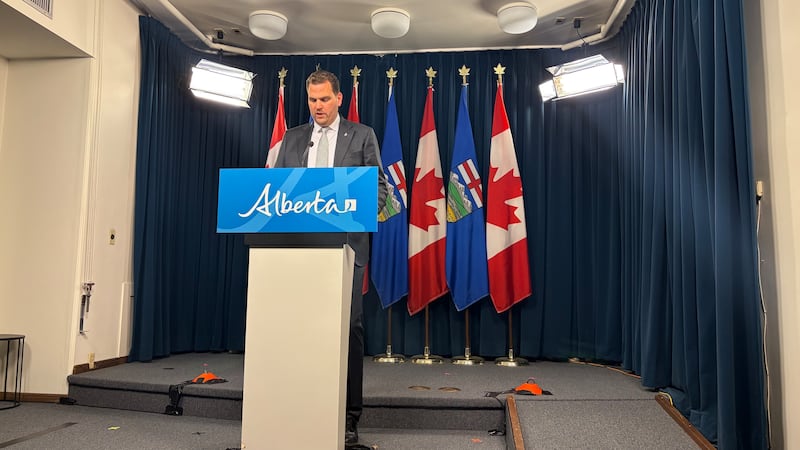
A project to build 54 new prefabricated transitional housing units for homeless women will soon take shape in western Montreal. The Société d’habitation du Québec will transfer a plot of land to Communia, an organization specializing in real estate development and a partner of the Montreal municipal housing office, for the construction of these units. The project was announced on Wednesday in the presence of Housing Minister Karine Boivin Roy and Lionel Carmant, Minister responsible for Social Services and the Fight Against Homelessness. The site in question was previously occupied by a social housing building that was destroyed by fire on Elmhurst Avenue in the Côte-des-Neiges-Notre-Dame-de-Grâce borough. The lot already has infrastructure in place, so it is ready for the construction of new housing units, said Caroline Braun, the City of Montreal’s executive committee member responsible for housing, during a press conference. She expects the project to be completed within the next year. Although the units will be prefabricated, they will be “durable,” said Braun. “That is to say, it will stand the test of time, and it will look beautiful from the outside. (...) We’ll be able to deliver this at a lower cost,” she added, though she did not provide an estimate of the total cost. The project will be fully funded by the City of Montreal. For its part, the Province of Quebec will offer the 54 women access to the Rent Supplement Program (PSL) to cap their rent at 25 per cent of their income. This additional assistance is funded 90 per cent by the Société d’habitation du Québec and 10 per cent by the City of Montreal. Access to the PSL will also come with support provided by the Old Brewery Mission, Carmant said. The organization draws on its expertise to support people experiencing homelessness to ensure they remain in their housing and never end up on the street again, said its president and CEO, James Hughes. “Support workers will help them at all times to ensure they are able to pay rent, get along well with the neighborhood in general, and find meaningful opportunities in the community—in other words, to have a sense of purpose,” Hughes said to reporters. Future residents of these units will also have the opportunity to access services provided by the Ministry of Health and Social Services. This report by The Canadian Press was first published in French on July 16, 2026.