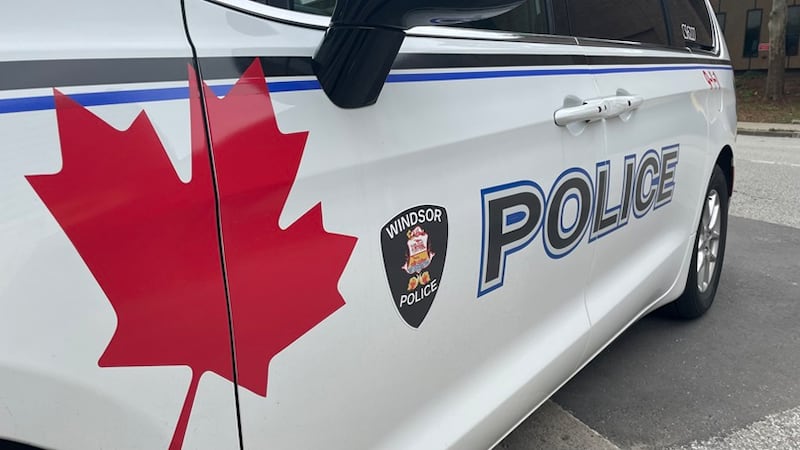
London City Hall has expanded its Coordinated Informed Response (CIR) to the homelessness crisis by adding a new Downtown Response Team, however, some online feedback and a long-time downtown business owner question if their uniforms and vehicle too closely resemble police. “We have evolved to suit the needs of the city,” says Manager of CIR Debbie Kramers, recalling her frontline role in a pilot project responding to core area homeless encampments in 2018. The initiative would eventually become city hall’s CIR program that responds to homeless encampments and offers support to individuals citywide. The new Downtown Response Team is part of the quick-start actions contained in London’s new Downtown Master Plan. It dedicates two of the CIR’s specially-trained enforcement officers to a stretch of Dundas Street between the Thames River and Quebec Street in the Old East Village. They engage with homeless Londoners and business owners, promote the Trespass Agreement Program, and offer storefront safety/security audits. “It’s proactive engagement, and that means with community, business owners. Anyone and everyone who is in the downtown area,” Kramers explains. “They’ve come in,” says gallery owner Jonathon Bancroft-Snell. “They were very articulate. They were very compassionate in the ways that they talked about what they were planning to do.” But Bancroft-Snell worries the tactical vests, shoulder badges, and policing edition SUV might impact how homeless Londoners respond to engagements. “When they walked in at first, I actually thought that it was the police coming in,” he admits. “I don’t know that the outfit they’re wearing. If I was a homeless person it’s not going to make me feel secure.” A social media post by London City Hall sparked concern in the online comments section because of a police-style patch. City Hall later responded in a statement, “The patch shown in the photo was not part of the approved uniform and is not permitted. The patch was addressed and removed from the image, and we will be reinforcing uniform expectations with staff and monitoring this more closely moving forward.” Kramers explains that vests and shoulder badges are part of the uniform worn as Community Enforcement Officers, not specifically linked to the new role. She emphasizes that all of the engagements between the Downtown Response Team and homeless Londoners begin with a conversation. If a situation persists, they can request an outreach worker attend the storefront or public space. Only if there is still no resolution, police could be contacted. “It isn’t drug enforcement or substance use enforcement,” she adds. “It isn’t anything that would fall under the police purview of criminal activity. It is to support the city, support the by-laws, enforce the by-laws, and to support our businesses and community.” The team offers information about where resources are available for homeless Londoners, so they are directed to appropriate services and supports. “We have a really great team. They are compassionate,” says Kramers. “They have relationships with everyone out on the street (because) they’re also out here every day. So they know the folks (and) they know what folks need.” Bancroft-Snell emphasizes the need for compassionate connections that direct people to effective programs and long-term recovery. “They’ve got just as many fears and wishes as the rest of us, and I think we really have to connect with them in some way,” he says.