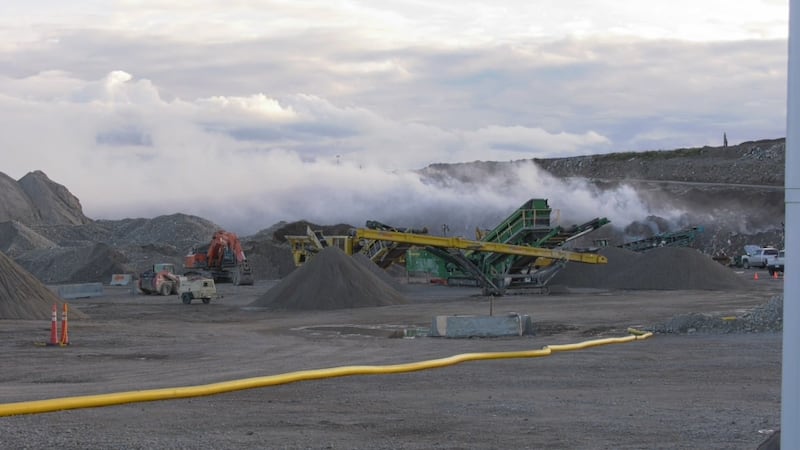
Construction on a new reservoir in southwest London is nearly complete. It’s designed to maintain a secure water supply for the city for decades to come. Construction on the new Springbank Reservoir 2 has been underway since the spring of 2024 after the former reservoir was demolished. The new addition will be nearly double the capacity of the previous reservoir according to Aaron Rozentals, the City of London’s Water Engineering Division Manager. “We’re going from about 45 million litres to 88 million litres,” said Rozentals. The project was based on recommendations that came from of a 2019 Long Term Water Storage Environmental Assessment. “As the city grows, we need, be able to store more water. And as well, the old reservoir, which was built around World War One, was at the end of its life,” said Rozentals. There are three reservoirs along Commissioners Road at the top of Snake Hill, just east of Springbank Drive. Reservoir 3 is on the south side of Commissioners at Longworth Road. Reservoir 1 is immediately to the west of the new Reservoir 2. Combined the three units hold about 250 million litres of water. They’re fed from Lake Erie and Lake Huron, where the water is treated and made safe before being pumped to the reservoirs. The city’s first reservoir was built in the same area back in 1878. That’s because it used the same simple strategy that still works today, said Rozentals. “We’re up on a hill. So, actually, from here, it’s by gravity that most of the city gets their water pressure from,” he said. Crews have been working from west to east, creating the massive structure that will be filled with water reaching up to a meter from the ceiling. The water is funneled to homes and businesses throughout the day and replenished at night. The concrete work should be complete this spring and after testing on the reservoir throughout the summer it will become operational in the fall. The mandate is to ensure a secure supply of water, even in an emergency situation. Rozentals said a prolonged power outage would be one example. “We try to keep a big reserve so that if anything happens, everybody still has drinking water. And we’ve been very successful at that to date. We have about a two-days worth supply of water stored,” he said. When it’s done, the reservoir will be covered in soil and grass to become parkland that overlooks the city.