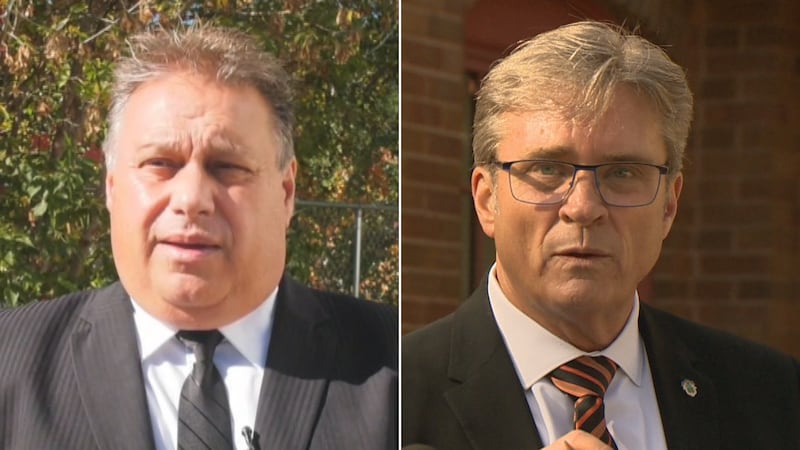
A lawyer representing the Guelph Police Service is making the case as to why they should be able to dismiss an officer who previously admitted to striking a teen who was handcuffed to a hospital bed. The penalty hearing resumed Wednesday for Constable Corey McArthur, 48, with Jessica Barrow making closing submissions. She described McArthur’s behaviour as “egregious” and said he could not be trusted as an officer in the community. On Sept. 19, 2016, the teen was taken to hospital because of concerns he could harm himself. Barrow argued that the teen was only a danger to himself, and was in a vulnerable position, when McArthur struck him. The teen was left with a 3.5-centimetre laceration under his right eye, bruising and swelling on his face, as well as marks on his eyes and neck. Barrow said it was not clear if McArthur’s strike caused all these injuries or aggravated preexisting ones but said, in the video of the incident, new injuries and a new pool of blood were obvious. Barrow noted that, at the time, McArthur told staff at the hospital the teen’s injuries were self-inflicted. The assault only came to light after hospital staff viewed security video of the incident and reported it to Waterloo Regional Police. Barrow described the video, which was previously shown at the hearing, as “the aggressive assault of a boy who was defenseless to that assault.” McArthur pleaded guilty in 2018 and the Guelph Police Service is still trying to fire him, more than a decade after the assault was caught on camera. This is McArthur’s second penalty hearing. During the first one, it was determined that McArthur should be dismissed. That decision was later overturned on appeal. On Tuesday, McArthur’s lawyer argued that, at the time of the incident, his client was suffering from undiagnosed and untreated PTSD, which developed over years of policing and largely triggered by the death of his colleague, Jennifer Kovach. Kovach was responding to McArthur’s call for backup when her cruiser collided with a Guelph Transit bus in 2013. The defense said McArthur went through treatment and rehabilitation over the last decade and should be able to return to front-line policing. Barrow noted that the police service does not dispute the diagnosis of PTSD, but disagrees with the defence’s argument that McArthur’s actions could be blamed on hypervigilance and an instinct to protect his female colleagues. “That suggestion makes no sense,” she argued. Barrow insisted McArthur got angry, overreacted and then committed the assault. She also said that, in spite of his guilty plea in court, he hadn’t shown remorse or full acceptance of responsibility. Barrow argued an assault by an on-duty police officer is a fundamental breach of public trust. “Can the community tolerate and trust the return of this individual to policing?” Barrow asked. She noted that McArthur was charged with assault in 2008 for another on-duty incident, suggesting the 2016 attack was not an isolated incident or out-of-character for the officer. “If this was Constable McArthur’s first offense we wouldn’t be here,” she posited. She asked the hearing officer to consider the damage caused by McArthur’s actions in 2016 and what would happen should he remain an active member of the service. “Rehabilitative potential is not a trump card,” Barrow stated. McArthur’s credibility, she added, was irreparably damaged and his continued employment with the Guelph Police Service was untenable. The penalty hearing continues on Thursday.