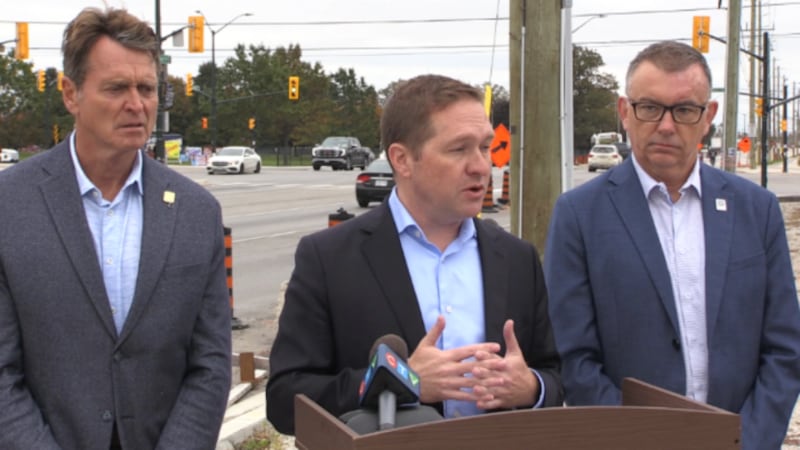
The UCP government has launched a new program that aims to make it easier for Albertans to file police complaints to “ensure accountability.” The Police Review Commission (PRC) will manage the full complaints process from receiving and assessing, to investigating and resolving complaints related to police conduct, including serious incidents and statutory offences, the province said in a news release Monday. “These changes are part of a broader paradigm shift where police are no longer seen as an arm of the state, but rather an extension and a reflection of the community they serve,” said Public Safety and Emergency Services Minister Mike Ellis. “As an independent agency, it is committed to fairness, accountability and public trust, ensuring every complaint is investigated impartially and resolved openly.” The PRC will handle complaints in three categories: Complaints that fall outside the three categories will be referred to agencies for review, Ellis said. Those other agencies include RCMP, sheriff or peace officer complaints. The PRC is required to complete investigations within 180 days. If more time is needed, the chief executive offer must publicly report on delays and justification. “For an officer who may have simply made a mistake, they may learn to appreciate the citizen’s perspective or get additional training to address what led to the mistake, both of which will help them be better at serving and protecting their communities,” said Michael Ewenson, interim chief executive officer of the PRC. The PRC will be able to initiate system review related to police conduct, or emerging trends without the need for a public complaint, the province said. These reviews will be required to be public. Starting Dec. 1, the Alberta Serious Incident Response Team (ASIRT) will be operated under the new PRC. ASIRT investigates events where serious injury or death may have been caused by police and serious or sensitive allegations of police misconduct. Will the PRC be effective? Dan Jones, chair of justice studies at NorQuest College, says the PRC is a good way to civilianize investigations. “I think that’s the goal, to try and expand on or have at least significantly more police legitimacy and the police not investigating the police,” Jones told CTV News Edmonton. Since the death of George Floyd in 2020, there’s been a reduction in police legitimacy, including in Edmonton, Jones said. He pointed to the case of Pacey Dumas, an Indigenous teen who was kicked in the head by an Edmonton police officer in 2020. The Crown ultimately didn’t lay charges on the officer, even though it was recommended by ASIRT – a problem Ellis acknowledged during Monday’s news conference. While Jones is happy to see the provincial body overlooking serious police events, he questions who will be making up the people behind the PRC. “Who are they? Are they former police officers that served in the agencies in which they’re investigating? And are they actually changing anything?” Jones said. Jones says there has to be an arms length of separation in order for the commission to be effective. “There definitely needs to be some time of a person that has an investigative background but does that necessarily have to be background from Alberta? Or could it be some background from other provinces?” Having someone with a career in law enforcement is important to have the right expertise looking at the files, the province said Monday. “We do want to see over the years our civilian complement get larger and larger and larger, but the first thing that we need to do is get the agency off the ground and running and do good investigations,” Ewenson said. People can file a complaint and check the status of their submissions online.