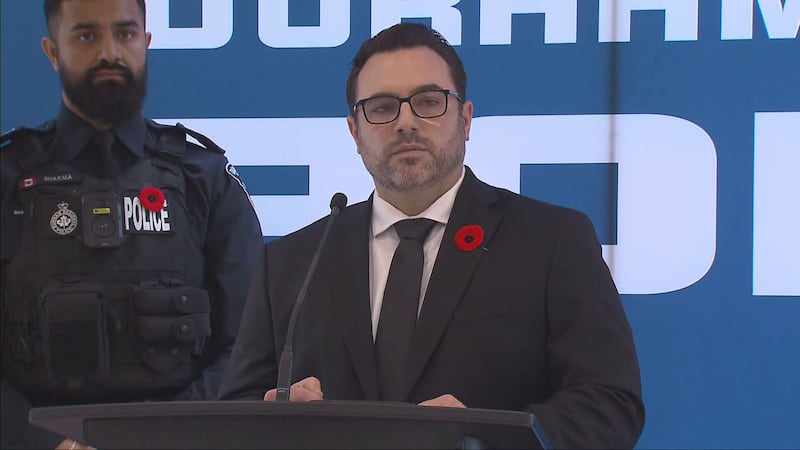
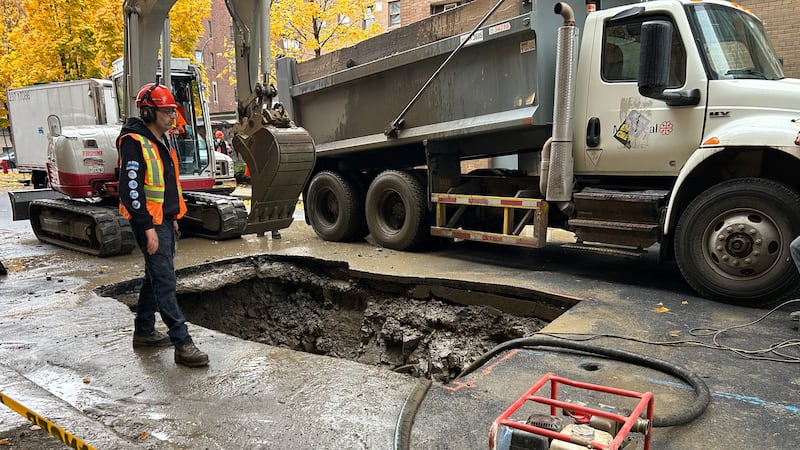
The failure of Calgary’s largest water main was due to decades of mismanagement, underspending and “irregular and improper” handling of a 2015-16 water system review that could have addressed some of the issues far before the pipe catastrophically ruptured, a new review ordered by the Alberta government concludes. In March, the province enlisted former Alberta Energy Regulator chair David Goldie to conduct a deep dive into the city’s management related to the Bearspaw South feeder main (BPSFM). The water line, which carries about 60 per cent of Calgary’s fresh water, ruptured twice within 18 months — in June 2024 and again in December 2025. “The critical BPSFM failures in 2024 and 2025 were not simply failures of a pipe,” Goldie writes in his report, released publicly on Thursday. “They exposed weaknesses in the systems through which the city identified critical infrastructure risks, decided what action to take, assigned accountability, funded and delivered the required work, and reported the resulting risks to council.” Reviews and analysis of the feeder main over two decades identified issues with the pipe, but the city didn’t properly inspect or repair those known issues, Goldie said. Goldie and his team reviewed more than 58,000 documents, emails and other records provided by the city — and 50 interviews were conducted with current and former city administrators, mayors, councillors and other staff members. “My task as an independent inspector was to examine what contributed to these failures, and what needs to change,” Goldie said at a Thursday news conference. “No city can guarantee that a pipe will never fail. Calgarians can reasonably expect that critical risks will be understood, acted upon, and clearly reported.” Water review ignored for a decade Nearly a decade before the feeder main ruptured and sent Calgary into a state of local emergency, an independent report into the handling of the city’s water system recommended changes in oversight and accountability -- but the majority of the recommendations never made it to council for decisions or direction. In January 2015, Calgary hired utility advisory firm Raftelis to conduct the review of the water system’s governance, finances and management. The report did not find the city’s water utilities were poorly run at the time, Goldie writes, but it did highlight structural weaknesses in financial management and governance as issues that could undermine decisions in the future. The Raftelis report made nine recommendations, but only four of those were sent to council for consideration. “Senior administration, led by (then) city manager Jeffrey Fielding, debated the recommendations, while (former) mayor Naheed Nenshi and his chief of staff were included in an advance briefing stream and were sent the draft-final report; there is no evidence it was provided to other councillors,” the Goldie report found. “Although the evidence does not establish that the mayor directed or knowingly approved the omissions, the mayor’s office was part of a pre-council briefing and consultation process in which it was informed, while council collectively was not." “The handling of the review was irregular, improper and improvident: Administration was entitled to disagree with Raftelis, but not to prevent council from considering major governance choices. “A decade later, the independent review panel and this inspection independently identified many of the same institutional safeguards, underscoring the continuing significance of the governance and financial-accountability issues Raftelis had identified.” Goldie found councillors were often not given a full picture of infrastructure risk, deferred maintenance and the consequences of delayed capital projects. Underspending on infrastructure Goldie’s report also identified that, for decades, Calgary’s water utility didn’t spend the money it had been approved for to maintain and replace infrastructure. “In most years, the utility significantly underspent its capital budget. Over the period 2006–2024, the utility underspent its capital allotment by an average of approximately 35 per cent,” the provincial review found. Goldie’s report is not suggesting spending would have prevented the Bearspaw South feeder main from rupturing in 2024, but “had the utility spent its annual budget, it would have compared more favourably with national averages, and growth in population and inflation.” Recommendations The newly released provincial report sets out 20 recommendations to be considered, ranging from governance improvements to asset management plans and better financial planning. Goldie also endorses a move to create a municipally controlled corporation to better handle the oversight of the complex water system. In the long-term, integration into Enmax should be considered as well. The 124-page provincial report cost $1.2 million, with about half of that so far going towards paying for legal and IT costs, along with paying a team of subject experts for analysis. ‘No piece of infrastructure is foolproof’ Speaking at a news conference Thursday, Dan Williams, Alberta’s minister of municipal affairs, said while he has seen the report, he’s not taking any action just yet. “I have reviewed the report initially, but I have not made any final decisions on whether or not further action is appropriate, and I will take a matter of months to consider the report in its full,” he said. “I’m going to continue to review the report in its fullness before anything comes about. But make no mistake, my responsibility here as the decision maker, in the statutory sense, is to make sure that I review the report fairly, and that I make sure that municipalities, if they are governed improperly, improvidently, irregularly, that that doesn’t happen again.” Williams said technical failures can happen, which make planning vital. “No piece of infrastructure is foolproof, nor lasts forever, and no city or infrastructure or utility system is immune from these challenges. “What matters is how a municipality prepares for those failures, how it responds when it comes, and the governance of that municipality surrounding these incredibly essential core services.” Williams said the $1.2 million price tag for the report was “on par with municipal inspections of its size.” “I can tell you this is normal in terms of scope and scale,” he said. “The City of Calgary and the water failure was very large. There were over 58,000 documents that we had from the City of Calgary to review, and the money that was used was used for contractors and others, largely disproportionately, to make sure we delivered on what Calgarians need, which is clarity in that report.” Williams said while the conclusions of the provincial report and the Raftelis report “may look very similar” -- there are differences. “I’d say one of the important differences is that I asked an independent inspector who has the powers and privileges of a commissioner in the province of Alberta, who can compel witness testimony and interviews, and also had access to 58,000 compelled documents from the city, from over a decade of correspondence and documentation surrounding it,” he said. “So, Mr. Goldie and his report was able to pull from that.”