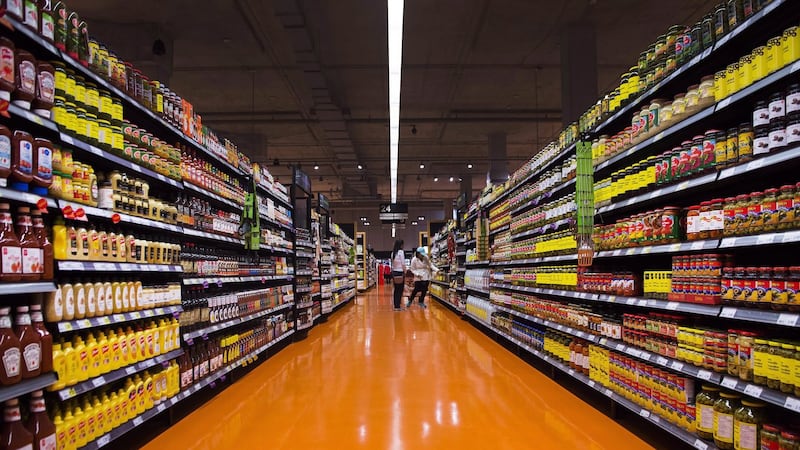
A food business selling imperfect produce at lower costs than grocery stores has established its first warehouse in Edmonton after seeing a push for more affordable, if not a tad uglier, fruits and vegetables. Odd Bunch was first created in Ontario by Divyansh Ojha, whose vision was to create an online grocery delivery service that reduces food waste at the farm level by marking down fruits and veggies that grocery stores might otherwise throw in the trash for “superficial reasons.” “This could be an undersized apple, it could be a misshapen pepper,” Ojha said in an interview from the Edmonton warehouse last week. “Perfectly good to eat, but maybe it just doesn’t look perfect.” In January, Prime Minister Mark Carney launched the Canada Groceries and Essentials Benefit, a quarterly GST payment meant to tackle an increasing number of households nationwide facing food insecurity. Ojha said Odd Bunch did a soft launch in Edmonton months ago to test the market, which went “phenomenally well.” “It’s bittersweet,” he added. “We kind of dream of a future where a business like ours doesn’t need to exist.” Odd Bunch operates by paying suppliers directly for their produce and assembling boxes of “ugly” produce. Jennifer Lee, an assistant professor in nutrition at Toronto Metropolitan University, said the concept is a “great” way to increase Canadians’ access to a range of fruits and veggies. “I think it’s intuitive for us to think of imperfect food as less nutritious or less healthy … (but) how they look doesn’t necessarily tell us how nutritious they are,” she said on Tuesday. “We would want to watch out for ensuring the quality is good … we can rely on our senses and the visual appearance to spot spoilage or bruising or things like that.” Ojha said that when Canadian climate allows it, the company works within a “very hyper-local supply chain,” sourcing much of its Alberta produce from south of Calgary, Medicine Hat and Lethbridge. Produce that can’t be grown in Alberta is outsourced from areas of B.C., he added. “We definitely know (food waste) is a problem that’s not local to Ontario or Canada for that matter … We came out here and really looked at the ways that we can make it work. Met with growers and suppliers and distributors,” Ojha said. “So far, so good. It’s been well-received by the local population.” With files from CTV News Edmonton’s Miriam Valdes-Carletti