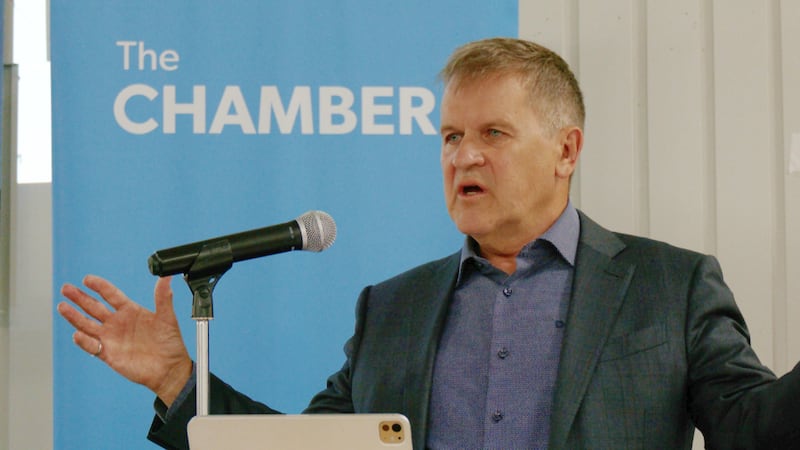
In what’s likely to be a significant discussion by city council this fall, its infrastructure committee on Wednesday grappled with the true scale of Edmonton’s overall maintenance needs. Specifically, a $2.8-billion gap in the upcoming 2027-30 budget cycle between what the city would ideally spend on infrastructure renewal – on everything from roads, recreation centres and aging city buildings to bridges, swimming pools and LRT stations – and what it has earmarked for it. That gap is expected to climb to $10 billion in 10 years. Mayor Andrew Knack said a part of what city administration is trying to determine is the “right allocation of funding” while city council mulls ways to partner with other interests – “Can we partner with the community? Can we partner with the private sector?” he pondered to media – “to still ensure we have an amenity.” “These are all conversations that we need to have based off the renewal deficit that exists, but at this point, we’re not going to start picking on individual spaces because there’s a holistic conversation coming later,” Knack said on Wednesday. A report by city administration presented to the infrastructure committee recommends the approval of a dedicated reserve fund to address the widening gap. Talk of creating such a fund started three years ago. The report says the reserve fund would supplement existing funding for city assets not covered by other sources. City administration has produced a priority list of projects for the 2027-30 budget cycle, among them 98 arterial roads in need of re-paving or a full rebuild. Staff say there’s only enough money to do 40 of those projects by the end of the decade and that it would take another $266 million to pay for all of them. And that’s just one example. There are similar renewal deficits in other city categories such as transit, parks and facilities. Coun. Erin Rutherford says council can help the city catch up on maintenance by limiting new projects during budget discussions this fall. “That’s the biggest way we’re going to enact change, is being really judicious on what we approve from a growth perspective, so that we can allocate an even bigger ratio towards renewal in this next budget and actually make a dent on that $2.8 billion,” Rutherford told media. With files from CTV News Edmonton’s Jeremy Thompson