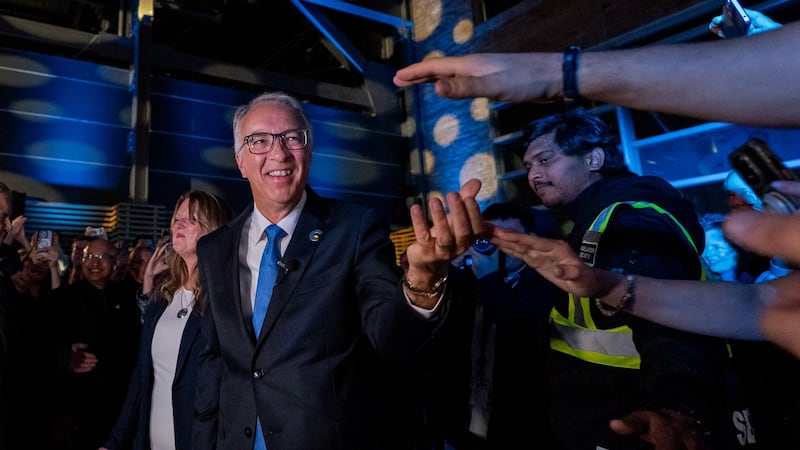
Alberta’s new finance minister will deliver his quarterly update over the summer, triggering a conversation that municipalities will most likely be part of, especially if the province is in a surplus position. Mayor Andrew Knack joins Alberta Primetime’s Michael Higgins to discuss his thoughts from an urban and rural leader perspective. This interview has been edited for clarity and length. Michael Higgins: You are about to host the Federation of Canadian Municipalities, the annual convention, what’s that bringing to the Alberta capital? Andrew Knack: It’s bringing about 2,900 delegates from across the country. Municipal leaders and municipal administrators get a chance to learn from one another, share what they’re doing well in their municipalities, learn from other municipalities about what they’re doing well, then also to come up with joint advocacy on different issues including municipal finance. MH: There’s a significant milestone anniversary as part of this particular conference, is there not? AK: This conference (FCM) has been going on for a very long time. It’s just one more opportunity to bring together municipal leaders. I’m very excited about this particular one because it’s the first time since 2015 that we’ve hosted. MH: I understand as well that it’s the 125th anniversary. With all of that in mind, what makes this a feather in the cap for Edmonton to be hosting? AK: Since it’s been since 2015 the last time that we hosted, this is our chance to really showcase a lot of the great things that we’ve been doing. Edmonton is leading the way when it comes to building housing. We are the most affordable major city in Canada and while there’s a lot of other great things, that’s a big area of conversation that’s been happening across the country. So we’re very excited to showcase how we’ve been able to reach that point, noting that it really has taken about 10 years for us to achieve this. This didn’t happen overnight, so being able to showcase that is one of many great examples that we’ll be showcasing throughout this conference. But many other study tours about the great things that are happening, from our transit system to waste management to our partnerships with community and industry, those will be all on display as we welcome all the delegates. MH: How much of a conversation do you expect to have with your counterparts this week over the funding of municipalities? AK: It’s really foundational to what municipalities are working on right now. This is a line that is often repeated but it needs to be repeated, which is municipalities are responsible for about 60 per cent of all of the infrastructure and yet are only funded about eight to 10 cents on every tax dollar people pay. There is this huge gap that exists between what we’re responsible for and how we get funded, so municipalities are often left begging for grants to fund what we need to fund for the people that we serve. It’s time for us to talk about how municipalities are funded, both federally and provincially, so that we can make sure we’re better planning for the long term, we’re better responding to the growth that we’re seeing, particularly in Alberta because without that better foundation, then we continue to have to put a heavy reliance on property taxes. Which is a challenge for a lot of municipalities across this country. MH: Any other top of mind issues that urban or rural municipal leaders will be bringing up? AK: We know we’ll be talking about safety. It continues to be a concern. There is still a significant challenge in a mental health and addictions crisis, while each province is responsible for a lot of that work, there does need to be broader work federally. I know here in Edmonton we’re facing an issue that is common across other spots as well, just around making sure that folks are being taken care of. It can’t be left to the municipalities to help those who are facing those significant challenges because we don’t have the legislative authority to create the solutions that are needed. It very much requires us working together as a collective to address these very real issues that people are seeing day in and day out, and frankly, are hitting that point of frustration because they’re not seeing the level of action that is needed to address what we’re seeing across the country. MH: How do you see the issue of Alberta debate over separation and the pending referendum maybe factoring into conversations with your municipal counterparts from across the country? AK: I want to use this as an opportunity to remind people from across the country that Edmonton is vital to Canada and we’re not at all interested in separating from this country. It is a small number of people and we need to stay focused on the issues that matter most to Canadians and Albertans. We want to focus on affordability, safety, housing, those things that matter. The last thing I want to see us do is waste time on an unnecessary referendum for a possible referendum. We have far more important things to be doing right now and that’s going to be a message to our delegates. Edmontonians are proud Canadians and we very much look forward to continuing to be a part of this country and working together to solve the challenges that people are facing. MH: From a personal standpoint as Mayor of Edmonton, you’re preparing to engage Edmontonians and Albertans through the summer on this particular issue. Are you not? AK: Absolutely. I’ve already started, as frustrating as having this referendum is, I think it’s completely unnecessary. The fact is, it’s happening now, and therefore we need to get Edmontonians engaged. We’ve seen the polls, Edmontonians overwhelmingly want to remain a part of Canada. They believe in what Canada is, they believe in this country. I’m a proud Canadian and I’m happy to be a part of this country, but the risk that we have is that Edmontonians are complacent and they think “there’s no chance of this getting approved, therefore I’m not going to vote. I’m not going to engage my neighbours. I’m not going to get involved.” We cannot have Edmontonians sleeping on this. We need people heavily involved and actually getting out to vote and working to engage as many people to get out and vote. I wish we didn’t have to go through this and spend a lot of time and attention on issues that are more important. The fact that we are doing this means people need to get out and vote, so I’ll be continuing to engage people over the next five months. MH: What’s the likelihood of hearing from other levels of government through the convention? Is the premier on the agenda? Could the prime minister be dropping in to address delegates? AK: Those are usually last-minute decisions for everyone. We know there’s going to be federal ministers and provincial ministers. I’m excited to welcome everyone from across the province and country, not just municipal leaders, but provincial and federal leaders. Whoever shows up, we’re going to be ready to show them a warm welcome and be able to learn from one another, then advocate on the issues that we can collaborate on together.