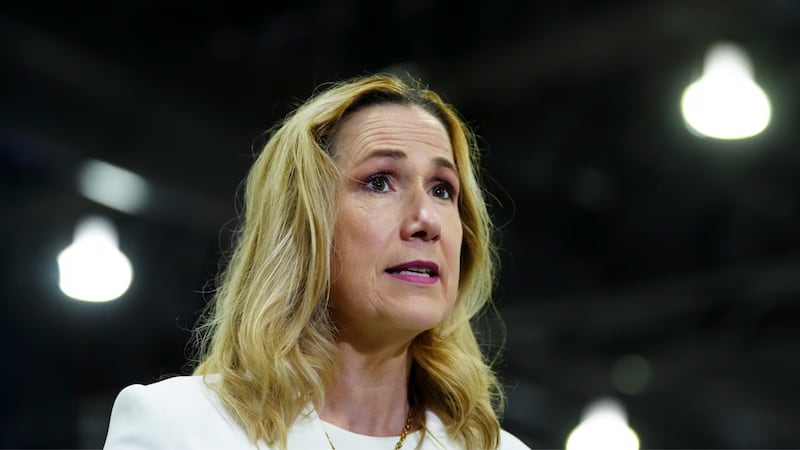
Edmonton’s mayor and the head of the city’s chamber of commerce are seeing eye-to-eye on several business-related fronts. Mayor Andrew Knack gave his first State of the City address to the business crowd Thursday at their downtown headquarters, touting Edmonton’s strengths – including economic growth that’s forecast to grow more than any other Canadian city this year, a young workforce, a supportive environment for entrepreneurs, and affordability. He pointed out the average Edmonton house costs about $200,000 less than Calgary, the next most affordable major city in the country. “We didn’t get here by mistake,” said Knack, who was elected mayor in October after 12 years as a city councillor. “We reached this point through deliberate decisions over the past decade, and we will continue this work to retain our housing affordability advantage.” The chamber’s leadership is encouraged by city council’s stated priorities – economic development, growth management, quality services and safety — issues that will guide councillors through their new “ground-up” budget process this fall. “This is a really good first step,” Doug Griffiths, the chamber’s chief executive officer, said to media after a moderated one-on-one talk with Knack on stage in front of the luncheon crowd at the Edmonton Convention Centre. “The mayor’s commitment in our conversation that measurable performance is critical ... I think this city is optimistic about where the commitment seemed to be with this council, and it just shows that the same mix of people can have a shift in priorities. I think they’re all starting to recognize just what the opportunities of this city are and that they’re going to take advantage.” Just one point of contention stood out between the mayor and the chamber: the business community’s desire to see City of Edmonton workers return to the office full-time. The chamber, along with other business groups, wants the city to bring its 2,500 employees back to their downtown offices five days a week to help improve safety and economic growth. Griffiths pointed out the provincial government brought all 12,000 of their workers back to the office full-time and that the federal government is doing the same, although it’s wrangling with office-space issues, something the city would have to address as well. “I know the city is going to have the same issue (as Ottawa), but a commitment that recognizes that the city is going to lead by example to bring people back downtown I think will have a psychological benefit to this community, and an economic benefit and a safety benefit.” Knack says moving to bring workers back full-time would violate an agreement with its unions to allow hybrid work and would require $5-10 million to lease enough office space. He wondered if it would be better spent in other ways. “Is that money best spent on that, where you would bring in an additional 2,500 people back two more daytimes a week, or is it better to take $5- to $10-million and use it towards the actions within the downtown action plan that were also supported by pretty much everyone in that room?” Knack said.