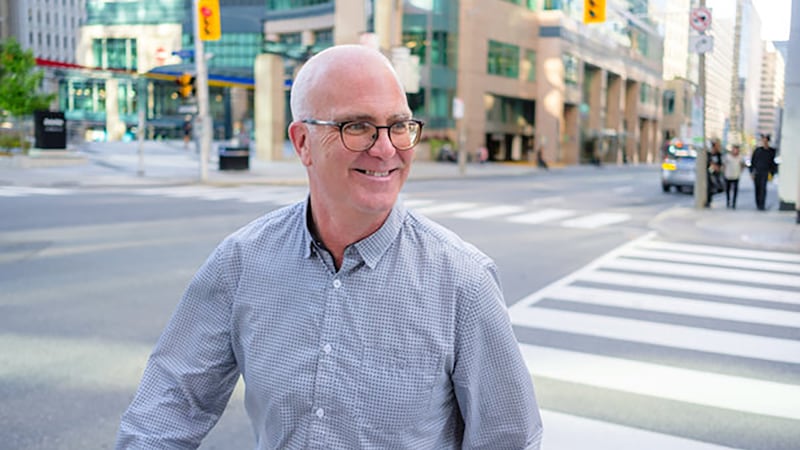
As Edmonton’s municipal election draws near, the mayoral race is seeing no clear front-runner for the incumbent-lacking position. CTV News Edmonton’s Jeremy Thompson sat down with the five mayoral candidates leading a popularity poll commissioned by the Chamber of Commerce earlier this fall to talk about the top issues on people’s minds. Those include tax hikes, cost of living, the infill debate, public safety and city planning. There are 13 candidates for the city’s top job and five of them were identified to be garnering the largest percentage of voter interest in September. The state of things In a province with now the lowest minimum wage in the country, Edmonton’s cost of living and affordability concerns have gone hand-in-hand with the city’s recent boom in population growth. For example, the Edmonton Food Bank is seeing an all-time high number of requests. Edmontonians are feeling a hike in taxes. Hot-ticket issues in September’s mayoral debate included whether Edmonton still had an affordability advantage as an average of 50,000 to 70,000 new people move to the capital city each year, increasing resource strain despite contributing economically. The need for provincial and municipal services has perceivably risen, and homelessness was up 47 per cent in 2024, according to available data. Edmonton is currently using a four-year operating budget approved in 2022 that laid out a plan for five-per-cent tax increases each year through 2026. At the end of April, city council approved a municipal property tax rate of 5.7 per cent in 2025. The increase was accompanied by a provincial bump to the education levy, which is collected by the city with property taxes and accounts for about 30 per cent of education funding throughout Alberta. Municipal property taxes, according to the City of Edmonton’s website, increased five per cent in 2023 and 8.9 per cent in 2024. Taken together, if the previously-approved 6.4 per cent increase is maintained next year, Edmonton property taxes will have gone up roughly 28 per cent from 2023 to 2026. Tim Cartmell, Andrew Knack, Rahim Jaffer, Omar Mohammad and Michael Walters each have different plans for affordability in the city should they become mayor. Some of their ideas overlap, some of them work off of each other, but all of them acknowledge that Edmontonians believe something needs to give. Below is a list of each mayoral candidate, a link to their affordability platform, and a basic list of what they’re campaigning for. Tim Cartmell Rahim Jaffer Andrew Knack Omar Mohammad Michael Walters A ‘spending problem,’ not a ‘revenue problem’ Each mayoral candidate CTV News Edmonton spoke to mentioned, in one way or another, the concept of city council’s spending being exorbitant at times. Knack is running on a platform previously seen as more “moderate” than other candidates’ ideas on where to make cuts. “I think every other candidate is trying to promise the world, that you can have all of these incredible services and amenities and we can cut your taxes. That’s not realistic. That’s actually misleading,” he said. Knack said he would create a motion that would crowdsource affordability ideas by talking to Edmontonians before a budget is made. Jaffer, too, said council has a “spring spending problem.” “The constant theme I’ve heard is that people are really concerned that they’ve seen a consistent rise in back-to-back increases over the course of the last couple of years,” he said. “But they look at the potholes, they look at potential snow removal, garbage, police … they don’t see the return on investment that most people would like to see.” Mohammad’s approach is to start from nothing and cut the extraneous spending. He told CTV News Edmonton that it comes down to “fiscal responsibility.” “They have this catchline: ‘We don’t have a revenue problem. We have a spending problem,’” he said. Essentials like firehalls, he said can be made nice, but didn’t need to break the bank. “Run it like you would your household. Don’t buy Ferraris when there’s no milk in the fridge,” he said. Zero-based budgeting Zero-based budgeting, simply put, is the process of starting from scratch on each year’s budget. This is different from the status quo of city council, which typically builds on the budget of the previous year when deciding spending. Earlier this term, council told city staff to lay the groundwork for zero-based budgeting to begin when the new council builds the next four-year budget starting in late 2026. Cartmell believes the current approach will give administration too much control over the process, arguing council should have more direction. He told CTV News Edmonton that it’s been unrealistic to ask administration to cut their own budgets because “to them, everything is a priority.” “I don’t fault them for that. If you really love your work, if you’re really guarded about your work, that’s what you do,” he added. Business incentives and cost of living Walters told CTV News Edmonton he wants to make it easier for businesses to move to the city, stay, and become successful, which he said would result in a more “balanced tax base that’s fair for everybody.” “I think we have to be really careful about making sure that Edmonton has a strong climate for investing … we need to be realistic about what it takes to pay for growth,” Walters said. He added that making business growth more desirable in the city would take the pressure off residential taxpayers who are making difficult financial choices and is campaigning on a goal to attract 10 new businesses to Edmonton. Knack also spoke of upgrading unserviced industrial areas that account for large portions of land and referenced council’s Industrial Investment Action Plan, which aims to create better supports for businesses and attract investment into the city. Cartmell’s downtown revitalization plan similarly aims to add value to the area and take pressure off of suburban businesses. Cartmell also wants to accelerate the city’s existing Downtown Investment Plan, which relies on projected money through the provincial Community Revitalization Levy project. Each candidate, naturally, agrees that Edmontonians should be able to afford their mortgages, food, education and retirement while also having some room for the occasional Oilers game. Mohammad, for example, has been advocating for a city-supported discount grocery store to address food insecurity. That pilot project would use provincial and federal grants to sell groceries at a deep discount for those in need while collaborating with local farms, co-ops, private grocery stores and wholesalers. His approach to affordability, he said, is based on his own experiences with debt. “I can’t stand and watch when I see and hear all the issues, that 47,000 Edmontonians are using the food bank each month,” he added. Jaffer said Edmonton is still “somewhat” affordable compared to Toronto or Vancouver, and the key to keeping that affordability is to find “non-property-tax revenue generated from a healthy economy.” “People coming here, how do we give them proper housing? How do we give them economic opportunity?” Each candidate identified other platform topics that intertwine with Edmonton’s affordability and taxes. CTV News Edmonton is compiling mayoral candidate thoughts on public safety, city planning and the infill debate in the coming weeks. Election day is Oct. 20 and advance voting polls open next week. With files from CTV News Edmonton’s Jeremy Thompson