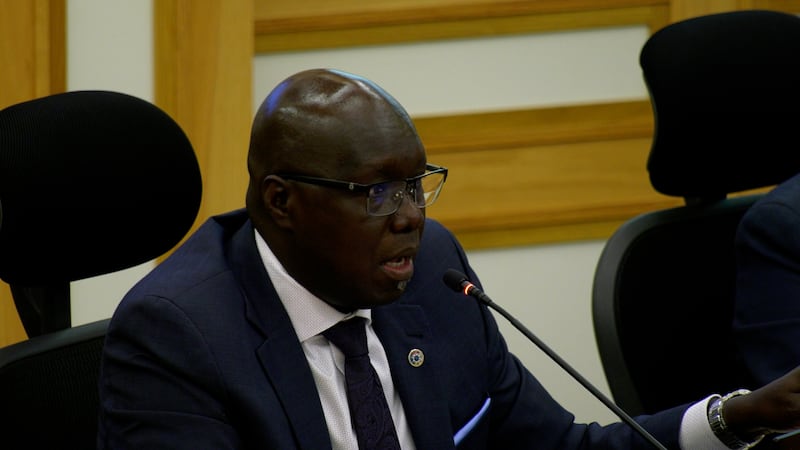
Traffic delays, especially in the west end, have made construction a major focus of Edmonton’s upcoming municipal election. Some mayoral candidates say disruptions could have been limited through better planning and coordination. All have ideas about how to avoid these problems in the future. CTV News Edmonton’s Jeremy Thompson spoke to the top five hopefuls, as determined by the Edmonton Chamber of Commerce, about how Edmonton would build under their leadership. Tim Cartmell Tim Cartmell, an engineer and city councillor in southwest Edmonton since 2017, is promising a coordinated infrastructure plan with public timelines in order to prevent a single neighbourhood from being affected by multiple projects. Under one grand plan, major closures would be phased and timed according to traffic impact analysis. He says this will also increase transparency for all parties. “If I actually have to get the map and my pens out to figure out what the sequence is, I’ll bloody well do it,” he said, pointing to snarls in west Edmonton due to LRT construction. “This is not happening again.” Cartmell would also try to shorten project timelines by using every hour of daylight during the summer. He would apply a zero-based budget to infrastructure, and prioritize renewal over expansion, amid a $1.8-billion gap to maintain basic city infrastructure. As for bike lanes, Cartmell wants to wrap them into larger projects like what has been done with the expansion of Terwillegar Drive. “This is the right way to do bike infrastructure and there’s no one out here with torches and pitchforks.” Rahim Jaffer Former MP Rahim Jaffer says he would work closer with the city’s planning department to ensure construction doesn’t tie up traffic. He is looking to increase efficiency in other ways, including using artificial intelligence where possible, perhaps during the initial steps of permit approvals. This supports an idea that is unique to his platform: a 30-day permit approval guarantee under which all permit applications would automatically be approved if city staff don’t get to it in that timeframe. “Ultimately, this lights a fire under our permitting department process,” he told CTV News Edmonton. “If you can’t get it done in 30 days, we’re not going to let businesses incur costs.” Jaffer would freeze spending on bike lanes, at least while property taxes are going up. He is also campaigning on a plan to better capitalize on the Edmonton Expo Centre by building an attached hotel and repurposing the Northlands Coliseum land. Andrew Knack West Edmonton councillor Andrew Knack is very familiar with the delays LRT construction has caused. He says a lack of investment and proper maintenance in the past resulted in a pile of projects needing to be done. But he otherwise used the LRT project as an example of success. Earlier this year, he supported a pitch by the contractor to allow crews to work 20-hour days, fast tracking closures along Stony Plain Road. “Under the old plan, the Wellington Bridge would have closed and we would have seen Stony Plain Road and 142 Street in a state of disarray at the same time,” he said. “Now that this has worked, now that we’ve been seeing how quickly they can finish these projects, we need to apply that to other construction projects across the city.” Knack’s platform also consists of upgrading unserviced industrial areas to grow that tax base. He says as mayor he would incentivize investment in advanced manufacturing, artificial intelligence and technology, food processing, health and life sciences, transportation and logistics, energy and clean technology, and emerging industries. Speaking of a business that wanted to set up in Winterburn Industrial West but needed municipal services, Knack said, “We worked on a cost-sharing agreement that allowed them to expand their facility, hire hundreds of more people and now create a great hub in that space.” To attract business, he would also clean up outdated and unnecessary regulations and automate permits for routine and low-risk applications. Omar Mohammad Like Cartmell and Knack, Omar Mohammad would plan infrastructure projects according to a zero-based budget. Mohammad, a pediatric dental surgeon who sold his practice to fully commit to his campaign, believes the city needs to pause non-essential capital project proposals. “What I’m talking about is the luxury items we’re building, like recreation centres with very luxurious amenities, like velodromes,” he said, a reference to the $153-million Coronation Park Sports and Recreation Centre project. “To me, that’s like buying a Ferrari at home when I don’t have milk in the fridge.” Mohammad would prioritize renewing essential infrastructure over new projects, create a public progress dashboard, and mandate economic impact plans for every project which outline how to mitigate construction impacts to small businesses, be it with better signage or access points. He also agrees that projects need to be sequenced better. “Finish one project before you start the other one,” he said. “That’s common sense.” Michael Walters Michael Walters isn’t promising to be anything he isn’t. When asked about construction headaches, this candidate, who has experience in the non-profit sector and running a small business, and who served two terms as a councillor in east Edmonton in the 2010s, was direct: “I’m not running to be the city engineer; I’m not running to be a project manager. I’m running to be the mayor whose leadership is about good governance and holding our administration and the city manager accountable to success on those projects.” If elected, he wouldn’t hit pause on anything already underway, but he would focus elsewhere, including on “smaller, neighbourhood-based, everyday-destination projects” that increase Edmontonians’ quality of life. He believes “the era of big projects is a little behind (Edmonton) for a while.” Walters wants to make Edmonton the most investment-friendly city in the country. He sees this as the key to easing the burden on taxpayers. While he isn’t offering a 30-day guarantee like Jaffer, Walters is promising to reduce the industrial and commercial permitting process from months to weeks. He also says he would use local artificial intelligence companies to optimize construction plans and lessen the impact on residents. He would also push for faster progress on Blatchford and the Northlands Coliseum site, the latter of which he’d like to see sold and turned into housing.