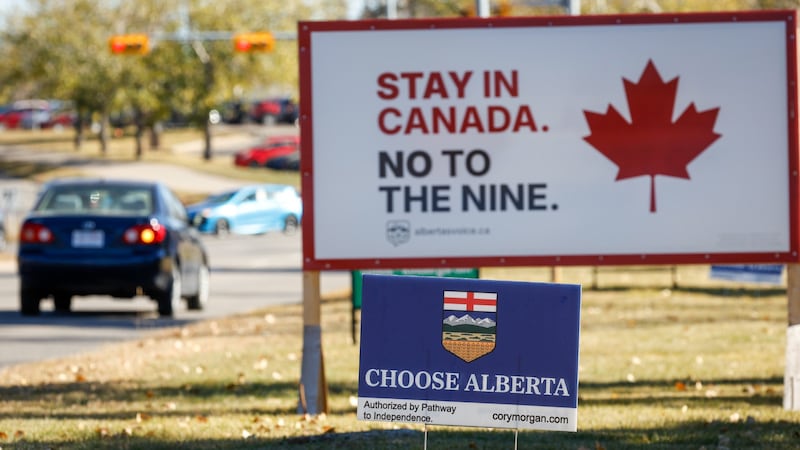
The Alberta government tabled a bill Thursday afternoon that makes amendments to several pieces of legislation, including the Citizens Initiative Act. Changes to the Citizens Initiative Act include measures to deter long ballot protests from happening in Alberta by increasing the number of signatures required for candidate nominations and prohibiting electors from signing more than one candidate’s papers. “In the recent federal election, which saw Pierre Poillievre elected, we saw over 200 people put their name on the ballot. Many had the same financial officer and the same group of electors signing the nomination papers,” said Alberta Justice Minister Mickey Amery at a press conference Thursday. Party names will also be restricted going forward, to avoid confusion amongst voters by expanding restrictions on party names and limiting new political parties from using similar names to existing legacy parties. This means the chief electoral officer would have to refuse to register a party or adjust the register to reflect a party’s new name if the party’s name uses a distinctive word or phrase that is uniquely associated with another registered party or one of its predecessor parties. “We are keeping space for people who are serious about being elected, while deterring those who are not,” said Amery. If passed, these amendments to naming restrictions would take effect retroactively on July 4. The amendment comes less than three weeks after the United Conservative Party filed a lawsuit against Peter Guthrie and Scott Sinclair, two of its former caucus members, accusing them of conspiring to damage the party’s image and mislead the public. The two former caucus members who currently sit in the Alberta legislature as independents have been trying to start a provincial party under the Progressive Conservative brand since they were expelled from caucus in 2024. “Some folks out there want to confuse people into voting for them based on the name ‘conservative,’” said Amery. “But this is not a partisan issue, let me be clear about that … There are people who will undoubtedly, based on what we’ve seen in the long ballot protests, try to take the goodwill and the hard work of political movements all across the province, and we think that’s wrong and it’s inappropriate to do so.” With petitions like Forever Canadian being initiated and eventually verified, the province will be making changes they say will aim to protect the privacy of individuals with increased penalties for misuse of information and strengthening identification and verification requirements when someone signs a citizen initiative petition. The bill also discontinues any court proceedings brought by the chief electoral officer under section 2.1 of the Citizen Initiative Act without costs to the parties or interveners. This means the Alberta Prosperity Project’s proposed separation referendum question will not move forward. Judicial review of the proposed referendum which asks if Alberta should become a sovereign country began on Nov. 19. The Alberta Prosperity Project, or any other petition before the courts, will have 30 days of the amendment coming into place to reapply without paying an application fee. “Albertans have expressed a concern with those seeking independence piggyback on the work of the Forever Canadian petition,” said Amery. “If those seeking independence believe they have support for it, this is their chance to prove it … we believe they should earn the ability to put that question to Albertans by going through the rigors of the process described in the act. “That means collecting the requisite number of signatures and filing the appropriate paperwork and the fees to do so. To proceed, they’ll have the opportunity to do the work without piggybacking off the hard work of a petition that is unrelated to it.” Jeffrey Rath, co-founder of the Alberta Prosperity Project, said he was surprised by the amendments, saying they specifically asked the premier’s office not to go forward with the legislation. “In our view, we were winning, and we were looking forward to a decision confirming that what we were doing was constitutional,” Roth told CTV News Edmonton. “The government felt that they should intervene and fix the problems in the Citizens Initiative Act … by saying we can resubmit the question.” With changes to the legislation, he said they’ll be looking to start gathering signatures in January. “It’s pretty much guaranteed that we’re going to have the ability to go out and gather signatures on our constitutional question … and that we’re going to be having a constitutional referendum on our question by fall 2026,” said Rath. Ability to provide advice, assistance and recommendations to applicants about proposals and proposed constitutional questions will be revoked from the chief electoral officer as well as referring questions to the court, which will be the responsibility of the justice minister. Questions about an initiative proposal will be referred to the court. Bill 14, the Justice Statutes Amendment Act, will also allow experienced justices to apply for an additional five-year term after their initial 10-year term expires. “This will help ensure that fewer court sittings are canceled so that Albertans can access court services where and when they need them,” said Amery.