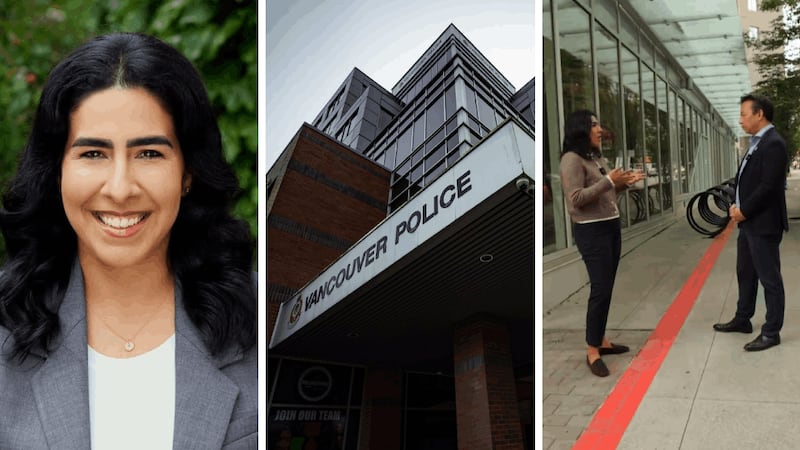
Alberta nursing health-care workers have begun to vote on whether unions should go on strike. The vote, which began at 8:30 a.m., comes less than a week after the province invoked the notwithstanding clause to send striking teachers back to work. The Alberta Union of Provincial Employees, which represents Licensed Practical Nurses (LPNs) and Health Care Aides (HCAs) in the province, is encouraging its members to vote “yes” to a strike. The strike would impact more than 16,000 LPNs and HCAs who operate in each of the four pillars of Alberta Health Services (AHS) providing direct patient care, assisted living support and acute care. “Their withdrawal of services would impact the health-care system all together, and the ability of Albertans to receive the care that they need,” AUPE President Sandra Azocar said. The union says that a “yes” vote would not necessarily mean an immediate strike, but that it would increase its bargaining power. “I think that’s going to be the only way that we can push this government to actually listen,” Azocar added. “We have repeatedly tried to negotiate with them and (get them) to recognize the importance of the work that our members do. Our members have had enough of the disrespect. Our members have had enough of doing work and not getting paid for what it is that they do.” Many in the profession are making substandard wages, Azocar said, and some are having to work several jobs to make ends meet. In a statement to union members, the AUPE negotiating team says that AHS filed a bad faith bargaining complaint on Oct. 16. The province passed back-to-work legislation this week, ending the three week teachers’ strike that had kept both teachers and children out of classrooms. The provincial government used the notwithstanding clause to send teachers back to work with an agreement they previously rejected. “We’re willing to basically stand up to some of these horrible decisions that this government has made when it comes to violating workers’ rights,” Azocar said. “We’re ready. So it’s not going into a situation where this government can be trusted not to continue to attempt to usurp the negotiation process and legislate rather than negotiate.” AUPE is calling for wage increases, improved work-life balance, improvements to benefits programs, more professional development support and better mileage and parking options at work. A better work-life balance for overworked employees is a key sticking point, the union said. It wants annual hours reduced to 36.81 hours per week. It’s calling for two consecutive days off and for its members to not have to work more than six days in a row. It also wants on-call pay raised to $7 an hour and a removal of the cap on overtime banks. The AUPE wants LPNs be paid 84 per cent of the wage earned by an RN. Its rationale is that an LPN can carry out 84 per cent of the restricted activities an RN can perform. The union says that wage inequities exist within AHS, where it says different jobs that all require a two-year diploma receive different wages. In a statement to CTV News, AHS says it “respects the collective bargaining process, including the right of these employees to participate in a strike vote. AHS remains at the table, committed to negotiating a fair and reasonable agreement that supports the staff while keeping health care sustainable for both health-care workers and patients.” On Wednesday, the Alberta Federation of Labour (AFL) announced its intention to start organizing a general strike in the province. Azocar says the AUPE is focused on making sure its strike action is well supported, but will be prepared for whatever comes its way. “If other workers at the time decide that this is something they want to support, depending on what happens in our bargaining and our strike, that’s basically a situation that can’t be controlled,” Azocar said. Any AUPE member who has worked at least one shift for AHS, Primary Care Alberta, Recovery Alberta, Assisted Living Alberta or Allen Gray Continuing Care 60 days before the vote deadline is eligible. They can do so online or in person at one of nine locations across the province. “Our hope is always that we’re able to resolve this at the bargaining table,” Azocar said. “But if we have a government who’s not willing to come to the table with a reasonable and a fair offer for our members, we’ll be ready to take strike action if the strike vote comes back in that direction.” AHS tells CTV News if a strike takes place, it “has plans in place to ensure critical services continue without disruption.”