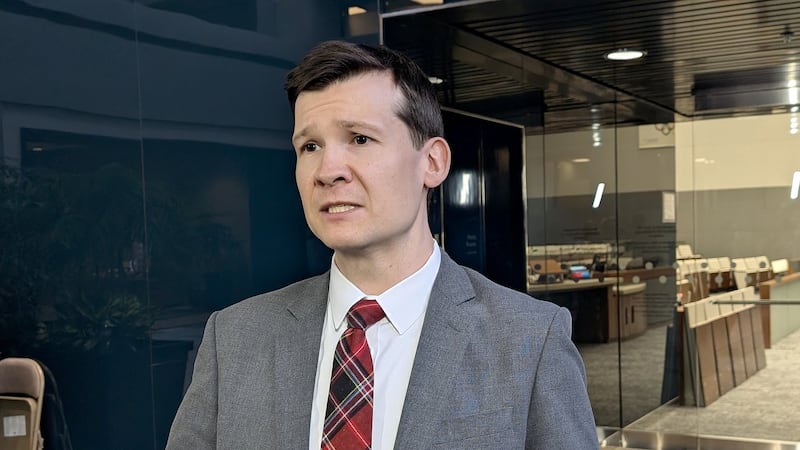
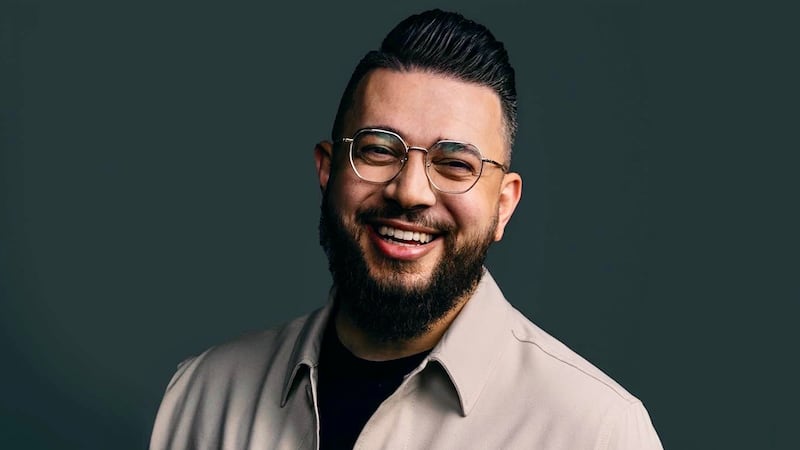
Calgary mayoral candidate Brian Thiessen joins Alberta Primetime host Michael Higgins to discuss his run for the mayor’s chair. Thiessen is a lawyer and former Calgary Police Commission chair. This interview has been edited for clarity and length. Michael Higgins: Let’s start on the recent budget preview. What’s your takeaway, given it’ll be up to the next city council to navigate that road forward? Brian Thiessen: I’m disappointed. I think this city probably deserved moving from an A- in financial transparency to a D+. They’ve earned that by not being transparent about how they’ve budgeted, not focusing on the priorities of Calgarians. So it’s another disappointing budget. The Calgary Party - my party - started with a budget choice exercise, and we consulted with Calgarians. 5,000 people joined us online to give us their priorities for Calgary. We are proposing fully transparent budgeting, getting back to our “A” rating in fiscal transparency and planning. Then we’re going to have to get serious about budgeting and property tax. One of the things we have proposed, which no one else is talking about, is the one third of Calgarians’ property tax revenue every year that goes to the provincial government - and doesn’t come back. The Alberta government picks the pockets of Calgarians, Edmontonians and municipalities across Alberta every year for over a third of our property tax dollars - even though the province has income tax, royalties, multiple sources of revenue. What I’m proposing is a serious negotiation during the next provincial election with the provincial government and a new city charter - which this premier ripped up. We want to get serious about returning Calgarians property tax dollars to Calgarians to be spent in Calgary. If we obtain those funds, we would not have to increase Calgarians property taxes - because we wouldn’t have a third of our dollars skimmed off the top by the province. MH: You mentioned the Calgary Party. You are one of two mayoral candidates tied to a municipal political party. Why are you taking that road? BT: I was with the 70% per cent of Albertans who didn’t ask for municipal political parties. The province listened to rural municipalities and only imposed them on Edmonton and Calgary. But as a lawyer, I look at the rules the way they are, not as I wish them to be. Municipal parties were going to happen. We thought, what good things could you do with political parties? Keeping in mind, political parties exist at all levels of government throughout democracies in the modern world. In fact, there are very, very few examples where political parties don’t exist. So what can we do with it? So, glass half full: we could form transparent policies. We could be held accountable by the public. We could build a team in a highly dysfunctional city council. This is Calgary’s most dysfunctional council, the least popular mayor and council in the history of Calgary. So we built a team. We have a full slate of candidates we’re running in every ward in the city. More importantly, we’ve learned how to work together to build policies. It’s a clean slate of candidates - people who’ve been working in business and community, deeply involved in their communities, but many of whom might not have had the opportunity to run without the benefit of a team like the Calgary Party. We’ve really given people an opportunity from across the political spectrum to run in the Calgary Party, and we are a centrist party. We have card carrying members of the UCP, NDP, federal Liberals, federal Conservatives, all running as candidates for the Calgary Party. We’re drafting real, meaningful policy because we don’t reject anything on ideological grounds. Everything is fair game. MH: Is there one issue that really does define the Calgary Party? BT: There’s a couple key issues that we’re really focused on - housing first. We have a very housing-oriented strategy because similar to other municipalities in Alberta, Calgary has 100,000 people coming per year to the city. 1.7 million people will be 2 million in the next couple of years. We want to prioritize housing and reform in every decision that we make at City Hall. We want to reform the approval process, streamline it. We are going to do a review of the regulations. We proposed a 3-3-3-1 regulatory approval process - so three days for a housing rental, three weeks for housing approval, three months for multi-family units, and a year for complex projects. We’ve put out a comprehensive housing tool kit to address the housing issue. The second priority for the Calgary Party that Calgarians are really focused on is public safety. As a former chair of the Calgary Police Commission, I’ve spent a lot of time working with the Calgary Police Service, and have sat down with mental health and addiction agencies. Our public safety policy is a balance of focusing with police on a housing first strategy to house the homeless, and 24/7 mental health and addiction individuals working with Calgary police and transit police. On the budget side, just this last year the provincial government defunded our police service by $28 million by removing photo radar. To give you some context for that - in the four years that I was chair of the Calgary Police Commission from 2016 to 2020, we worked very, very hard to get budget increases in every year. Over that four year period, we achieved a 6.4% per cent annual increase, or $25 million on a $400 million budget increase. In one swoop of the pen, the premier removed photo radar in Calgary and cut funding to Calgary Police Service that was tied to photo radar by $28 million. So a 7% per cent police budget cut handed to us by this premier when Calgarians are focused on public safety. Then the worst part - our city council and our mayor just handed us the bill. They didn’t fight for it. They didn’t push back and say, what are we doing? Why are we defunding the police at a time when policing is critical, and we have major public safety issues going on in our city? So we’re going to push back hard. We’re going to fight for Calgarians for funding on public safety and not allowing the province to overreach in that way. MH: How different of a relationship do you see Calgary city council – one led by yourself – having with the Smith government? BT: I see a difference in that I have one responsibility: representing Calgarians while negotiating with the province. What we have right now is a mayor who has been dominated in every negotiation, from the arena deal to the Green Line by this premier. The mayor of Calgary doesn’t answer to the premier. They negotiate as an equal level of government with the province, and it’s not too much to expect the same level of respect from the premier that she demands of the federal government. So it will be a different relationship - respectful. We can come to solutions on complex problems together, but as mayor of Calgary, my number one job is to represent Calgarians and their interests. And sometimes that’ll be a tough negotiation with the province.