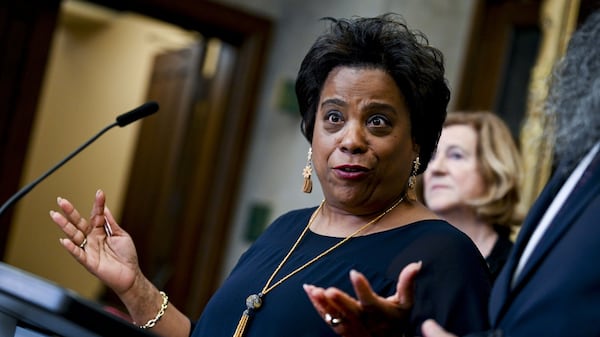
Indigenous communities in Canada are preparing for the return of sacred artifacts that have been held in the Vatican for 100 years. Since 1925, the Vatican City’s museum has held thousands of sacred cultural artifacts that belong to Indigenous peoples. In a few weeks, it is expected that the Vatican will announce the return of dozens of these items, which will eventually make their way back to Canada by year’s end. But the transfer won’t be straightforward. According to Cody Groat, an assistant professor of history and Indigenous studies at Western University, the artifacts are expected to be transferred from the Vatican to the Canadian Conference of Catholic Bishops (CCCB), with the Canadian Museum of History expected to be serving as a type of intermediary. Assembly of First Nations National Chief Cindy Woodhouse Nepinak described the items as “living, sacred pieces of our cultures and ceremonies” and said that they “must be treated as the invaluable objects that they are.” In an interview with CTV Your Morning on Monday, Groat explained that the artifacts and archival documents the Vatican has in its collection relate to an exhibit that took place in 1925. “As part of that exhibit, a catalog was published listing specific artifacts,” Groat said. “That’s sort of our starting point for this process, is the items listed in that catalog. And from there we’ll see what else might be in the collection.” Groat said the artifacts aren’t going to be put behind a glass, since they’re seen as “ancestors in their own right”. “When we repatriate these cultural items, we have to recognize that there’s ceremony associated with that,” he said. “This can’t just be a transfer from one box to another to an institution. These are ancestors that need to be welcomed back with ceremony and cultural protocol.” The Vatican’s plan to transfer the artifacts to the CCCB is intentional, Groat said, as they don’t want to set a precedent as an institution or as a state repatriating items to descendant communities. So the CCCB will then donate the items back to Indigenous people. However, what that will look like remains to be seen. Groat stressed that in all points of the process, Indigenous nations need to be involved in discussions, as there will be challenges to face. “It’s hard to clearly identify which descendent community these cultural items belong, to because when they were taken from community, that respect wasn’t really given to label them accordingly,” he said. Groat said that from his understanding, the items will go to the Canadian Museum of History and there will be a process of consultation. He added that it’s worth noting the museum, which is a crown corporation, has been working to repatriate some items itself. “It can seem like a valid step to have these go to an institution like the Canadian Museum of History as an intermediary, as long as we are recognizing that that intuition is also engaging in these repatriation dialogues and it’s not where it necessarily needs to be either,” Groat said. While the process is expected to be long and slow, it will also be a valid process and one that some may feel is long overdue. With files from The Associated Press