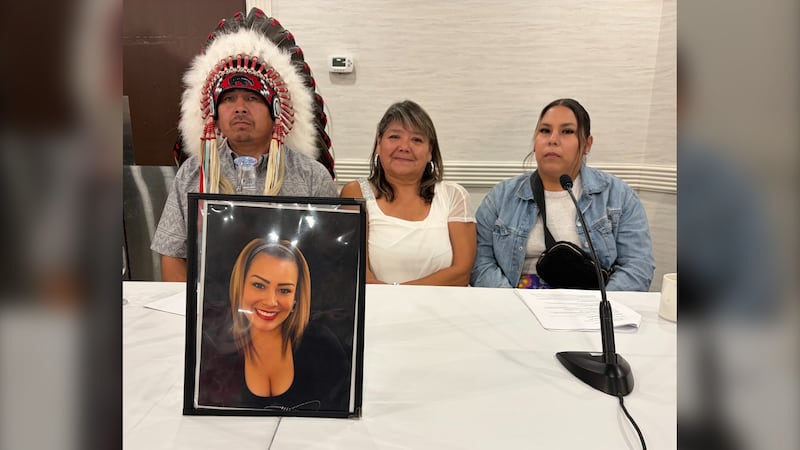
The case of an Ottawa family facing deportation is shedding light on the lack of support for temporary residents who fall victim to negligent licensed immigration consultants. Paulo and Leila Miera are Brazilian nationals who say they paid an accredited consultant about $3,000 in Jan. 2025 to renew their work permits and to help them apply for permanent residence. The family of five arrived in 2016 on a religious worker visa for Leila. Paulo later found work in construction. They say their consultant, Ana Raquel Aparicio Perdomo, ghosted them for months at a time, without responding to dozens of phone calls and emails. After working in Ottawa for the past nine years, Paulo and Leila say they are now unable to earn an income and must rely on the generosity of friends and crowdfunding to help pay their bills. Paulo told CTV News earlier this month that he was shocked to learn in August that their work permits were rejected and that they had lost their temporary resident status. The couple have three daughters, including one born in Canada. Immigration, Refugees and Citizenship Canada (IRCC) had sent out a letter in May to Perdomo’s mailing address, advising about the loss in status, but they say the consultant did not pass on the information to her clients. The application contained missing information and unpaid fees. The College of Immigration and Citizenship Consultants (CICC) revoked Perdomo’s license in June, after a different complaint from another client. In an email to CTV News, Perdomo said she was out of the country for medical issues and is working with the College to find a solution. Protecting the public from bad actors Across Canada, there are dozens of accredited immigration consultants who have put their clients’ futures at risk. According to its 2025 annual report, the College is investigating 1,375 complaints of consultants who are not complying with its code of professional conduct. The College says 126 consultants, or 1 per cent of licensees, are responsible for 68 per cent of the complaints. CICC says it has 11,994 registered members in “good standing.” Eoin Logan, a lawyer in Surrey, B.C., has represented dozens of people targeted in negligent immigration cases. He says the regulator needs to do more to protect the public. “They’re not doing anything to help these people who were adversely affected by the regulated professional that they’re meant to regulate,” said Logan, with the firm KSW lawyers. The lawyer points out that victims are often refugees or temporary workers in precarious financial situations with no money to seek legal help to refile their immigration applications or recoup costs. Logan is calling on the College to use its $10 million in reserve funds to help people like the Meiras. “It’s not enough to say they’ve revoked a license… (the Meiras) are looking at their whole life being uprooted.” CICC says they can’t yet compensate victims because the funds haven’t been approved for use. In a statement to CTV News, CICC spokesperson Stef Lach urges the public to report cases of misconduct by consultants, but Lach says the “eligibility criteria” for the compensation fund are part of regulations that “have not yet been finalized by the government and are not in effect.” The federal government established the College in 2019 through an act of Parliament. IRCC published draft regulations on December 20, 2024, in the Canada Gazette. The regulations called for unscrupulous consultants to be fined up to $50,000 and to create a fund for clients who lost money because of the “dishonest behaviour of a licensed consultant.” In a statement to CTV News, IRCC says it cannot provide details about when the compensation may be approved because it is “subject to cabinet confidence and cannot be shared publicly until final publication.” The Meiras could be deported from Canada before the regulations are even approved. The community has raised funds to help the Meiras hire immigration lawyer Adolfo Morais to fight the removal order. He has filed an urgent application for a temporary residence permit (TRP), but Morais has told the family it is a long shot. “This will be very challenging… I do believe that there are circumstances to justify a TRP but whether or not my argument will be accepted as valid will be up to the (immigration) officer.” After looking over the file, Morais says the renewing the work permits for Paulo, Leila and eldest daughter Ester should have been routine work and taken about “30 minutes max” for each applicant. Morais says it is likely the work permits would have been approved for renewal “if these applications were filed in time with the correct information with everything that was required.” Instead, the family’s future in Canada remains in limbo.