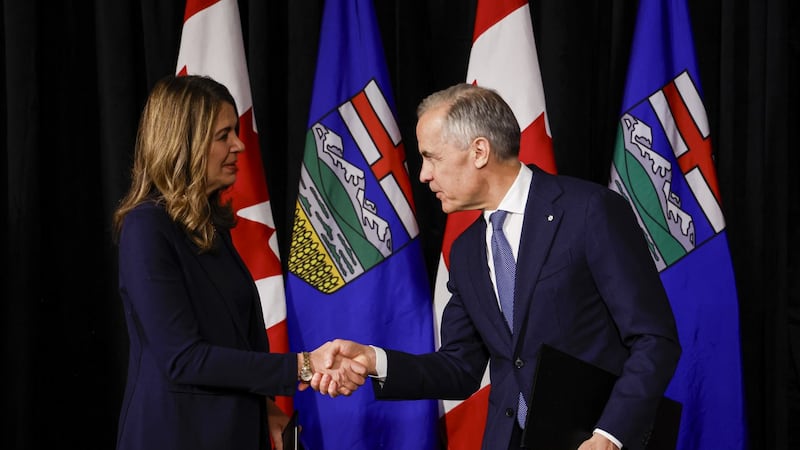
Reaction to the federal–provincial memorandum of understanding on a potential Alberta-to-B.C. bitumen pipeline is rippling across the province, far beyond political circles. The MOU, signed this week in Calgary, drew a rare standing ovation for Prime Minister Mark Carney from oil and gas executives, signalling what some called a thaw in an often-frosty relationship between Ottawa and Alberta’s energy sector. Many Albertans say the agreement gives them something they haven’t felt in years: hope. “It’s great for the economy,” said one Calgary resident. “We need to diversify during this time of crisis with the situation with the tariffs.” “It’s a start in the process and it gives them the opportunity but there’s going to be a lot of work to be done,” added another. The agreement lays the groundwork for a potential pipeline that would move Alberta bitumen to British Columbia’s coast and open access to Asian markets, a region where demand for heavy oil is growing. “Asia is the focus of oil demand growth,” said Heather Exner-Pirot, director of natural resources, energy and environment at the Macdonald-Laurier Institute. “Four and a half billion people are getting richer and they’re growing, and they actually like heavy oil.” Canadian manufacturers also see economic opportunity. “The MOU leads to building of major projects, whether it’s the carbon capture or the pipeline, that means thousands of jobs and millions of dollars in business for the manufacturing sector,” said Dennis Darby, CEO of Canadian Manufacturers & Exporters. But despite the optimism, the deal is facing pushback from environmental groups and some First Nations. “It sets back climate progress in Canada significantly,” said Keith Brooks of Environmental Defence. “It pits province against province. It’s a blow to reconciliation, going against the wishes of coastal First Nations.” Indigenous approval and co-ownership are among several conditions required before any pipeline can proceed. British Columbia must also see clear economic benefits. In addition, Alberta must increase its industrial carbon price to cut methane emissions and construct and finance the Pathways Alliance carbon capture project. In return, Ottawa has agreed to pause its proposed federal emissions cap, suspend Alberta’s clean electricity requirement, and offer an exemption to the federal tanker ban on the West Coast. The long list of requirements has left some wondering whether the project will ever materialize. “They’ve got such a long way to go and so many approvals,” said one Calgarian. “I’m not holding my breath.” “I don’t know ... they need private money to invest, and that’s going to be one of the big slowdowns,” said another. After a decade of what they call punishing federal policy, private investors remain wary. “There needs to be a detailed path forward,” said Gurpreet Lail, president and CEO of Enserva. “What does the regulatory framework look like moving forward for investment to come back and confidence to come back for proponents to step up?” Alberta plans to submit its official pipeline application and proposed route by July 1. If approved, shovels could be in the ground by 2029 at the earliest.