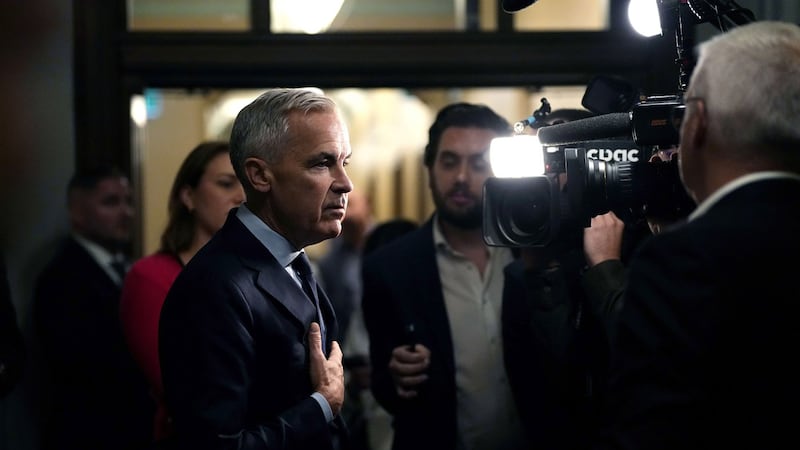
As Canada builds its military industrial complex to spur the economy and meet its NATO commitments, Mark Carney’s government is transforming the fledgling Defence Investment Agency (DIA) into a Crown corporation. The Liberals are trying to accelerate the pace of military procurement by tabling Bill C-40 – called the Strengthening Canada’s Defence Sector Act. The legislation was introduced in the House of Commons Tuesday. In a backgrounder, the DIA says becoming a Crown corporation would provide the agency “with a clear mandate, a permanent structure and dedicated ministerial leadership focused on defence procurement production” to support National Defence and the Canadian Armed Forces. The new organization aims to give the DIA the ability to make decisions more quickly, reduce, fragmentation and provide predictability across defence acquisitions. “With the introduction of this legislation, we are making clear that large-scale, agile defence production and procurement is here to stay. Procurement and investment must live together, by connecting the capabilities our armed forces need with the investments that will deliver them and the industrial capacity that will sustain them,” said Joel Lightbound, the minister of government transformation, public works and procurement. Lightbound sponsored the bill in Parliament. Since it was created over a year ago, the DIA has selected TKMS of Germany as the preferred supplier to replace Canada’s aging submarine fleet. The contract for 12 submarines, once finalized, could be valued at about $100 billion over the lifespan of the fleet. It has also announced smaller contracts. The draft legislation would change the name of the DIA to the Canadian Corporation for Defence Investment. It would operate at arm’s length under the national defence portfolio reporting to a new Associate Minister of National Defence of Procurement. The bill would allow the DIA to operate more like a company and less like a federal department. According to a background briefing, the Crown corporation would have its own board of directors and have greater independence and authority to manage defence-related investments, procurement, and production activities. Currently, Stephen Fuhr, a former fighter pilot and Liberal MP, is the Secretary of State for Defence procurement. “Canada is making a generational investment in our defence and security and we need institutions built to match the scale and urgency of that ambition,” Fuhr said in a news release announcing the transition. As part of its commitment to NATO, Canada plans to substantially increase defence spending over the next decade. Canada currently spends two per cent of GDP on defence. By 2030, that will increase to four per cent and rise to five per cent by 2035. According to new analysis by the Office of the Parliamentary Budget Officer, the federal government would have to spend $164.6 billion in 2035-36 to meet the five per cent target. This fiscal year, Canada is spending approximately $75 billion on defence. In a decades time, the PBO projects, Canada will have to more than double its military spending to meet its NATO commitments.