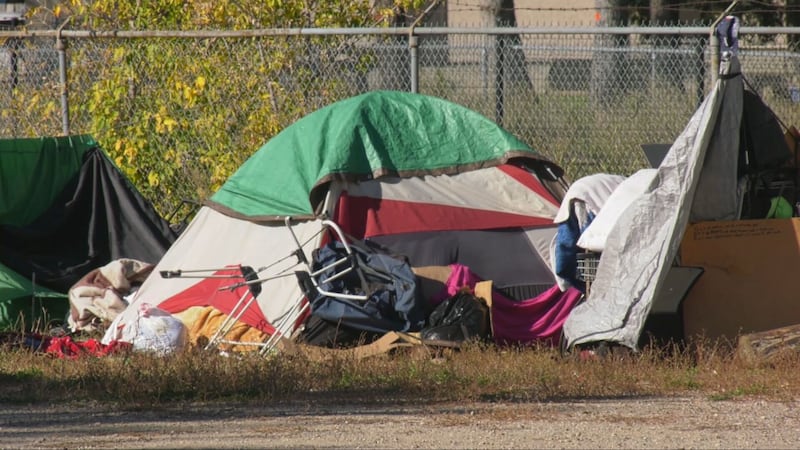
The City of Saskatoon has decided to forgo part of the annual Point in Time Count, following escalating tension with protesters advocating for a growing encampment on 20th St. West. “I want to be clear, the situation that we’ve seen is not around our volunteers engaging with people that are unhoused in our community. It has been the concern around the aggressive protests and advocates that we’ve seen out there, and the situation caused by that,” Lesley Anderson, director of planning & development for the City of Saskatoon, said. The Point in Tim (PIT) count is an annual survey of Saskatoon’s unhoused population. The survey is intended to help gain an understanding of how many unhoused people are in Saskatoon, and where they’re located. While this year’s count will still include those located in places like shelters, prisons, hospitals, and transitional housing, the count of those who are unsheltered will not take place. The decision comes after 250 volunteers, including Amanda Gannon, received training to prepare them to go out in the community for 12 hours to collect data from those who are unhoused and unsheltered. “I was trained, I was ready to volunteer, and then I received an email saying that my services were no longer needed. The City canceled the unsheltered count because it believed there was going a risk of safety because of protests going around in regards to the encampments,” Gannon said. According to the city, interactions in the encampment with protesters have become increasingly ‘volatile’ following attempts to clear out the tents after a notice was posted informing those living on the property they must vacate. “We had 250 volunteers lined up and trained to do the count this year, to go out for a 12 hour period of time in Saskatoon to help do this survey,” Anderson said. “The city would be responsible for those volunteers. So seeing that aggression and the concern that raised for us, we just couldn’t put people in that situation.” Gannon shared she did not have concerns regarding her safety in the encampments, but she’s now concerned about the impacts that this gap in information will have. “It’s really creating this hostility towards the people who are unhoused in our community right now. And it’s not going to make the issue any better if we just ignore them. That’s what we do, and we’re not collecting data, we’re ignoring those people.” Gannon added that the data gathered by the unsheltered count is very important, as organizations and all levels of government make decisions regarding how to address the issues of houselessness. “To know that those numbers aren’t going to be counted this year, it could sway the data to show that maybe the problem that we have in the community is not as bad as it seems. If you’re not counting the people, then they don’t really exist in the data.” The city intends to work with the Saskatoon Fire Department to develop an estimated number of the unsheltered population. “Because of the work that [SFD] does in our community every day, we have a good sense of the number of people living in encampments right now that will also be used for this piece of work,” Anderson said. Gannon shared disagreement with the decision. After the SFD was tasked with posting notices and attempting to clear the encampment, she believes that PIT Count volunteers would be a more appropriate route for communicating with those in the encampments. “To have other people from the community, that don’t have this inherent tension with them already, they’re not already at odds with them. It makes it so the data collection process is a lot smoother, and it is more trauma-informed in that way,” Gannon said. While the city plans to go through with the more comprehensive PIT Count scheduled for next year, Anderson says the city was not comfortable sending volunteers out at this time. “It’s unfortunate that we’re in this condition right now. But just with the context that we see, we really couldn’t put our volunteers into a situation where there’s some volatility when they’re really volunteering just to help the community understand the situation,” Anderson said.