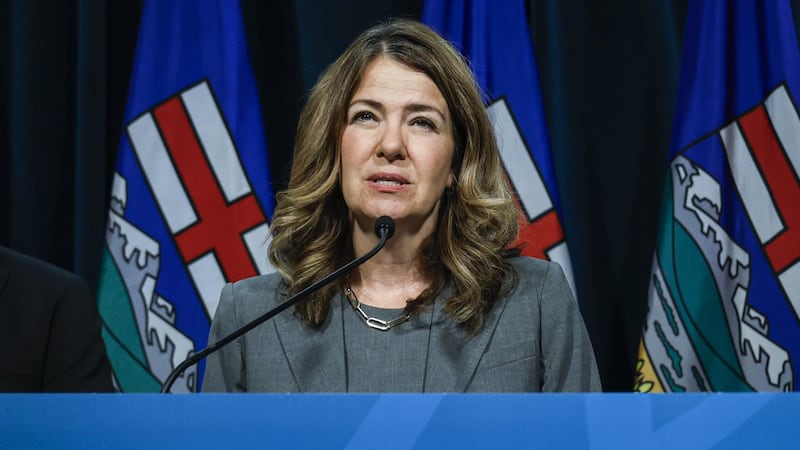
Growing concern over how companies use personal data to set prices is sparking debate across Canada, including among Alberta consumers, after a federal push to ban the practice failed in Parliament. So-called “algorithmic” or “surveillance” pricing is where businesses may adjust prices based not just on demand, but on individual consumer data such as browsing habits, location or purchasing history. While some experts say the practice remains difficult to detect and prove, many Canadians, including travellers passing through Calgary International Airport, say they’re already feeling its effects. “Yes, I have,” said Keith Marsh when asked if he’s noticed price changes while searching for flights. “You can always tell when there’s dynamic pricing involved, you just have to clear your browser from time to time.” Marsh adds that he believes his personal data may be playing a role. “Without a doubt in my mind, they are targeting that all the time,” he said. Others like Trevor Leuck agree that the unpredictability of pricing adds to the frustration. “You never really know what the prices are going to end up as,” he said. “It’s kind of at the mercy of whatever it says, it’s hard to combat, but I think that there’s just way too little oversight, it’s just kind of a free-for-all,” he said. Diane Chafe said the idea of prices changing based on behaviour also doesn’t sit right with her. “You should be able to search and not have to be charged extra,” she said. “It shouldn’t change.” How algorithmic pricing works and what consumers can do Experts distinguish between traditional dynamic pricing — such as higher ride-share fares during peak demand — and more personalized forms of pricing. “The difference with algorithmic pricing is it’s tailored to your personal characteristics,” said Tom Keenan, a cybersecurity expert and professor at the University of Calgary. “Maybe your socioeconomic status, maybe something you’ve bought before, or maybe something else that the company knows about you, so as a result different people pay different prices.” Keenan says the practice relies on the vast amounts of data consumers routinely share online. “The reality is that they have your complete history,” he said. “Companies are in business to make money. If they can think of a way to tailor their prices, they’re probably going to try to do it.” He adds some travellers try to limit how much information is used against them by clearing browser cookies, using private browsing modes or even virtual private networks to mask their location. Keenan notes that it’s not clear how effective those measures are and proving whether it’s happening can also be difficult. “You’re going to need proof and of course, you don’t see what other people are paying,” he said. Gábor Lukács, president of Air Passenger Rights, says in the case of airline tickets, price fluctuations are often tied to supply and demand rather than individual data. “With airlines, the pricing is done based on demand,” he said, explaining that different fare categories can sell out quickly, pushing travellers into higher-priced options. “What may happen is that while you are looking at an airline’s website, the lower price tickets are sold,” he added. Lukács says consumers should take steps to protect themselves during the booking process, including documenting what they see. “My instinct would be to always take screenshots,” he said, noting that keeping a record of prices and steps taken can help if there is a dispute later. He adds that if a discrepancy arises, travellers should follow up directly with the airline. “Buy a ticket at a higher price, then go to the airline and say, look, there was a problem, please explain yourself,” Lukács said, noting consumers can request a refund of the difference. If the issue isn’t resolved, he says further action may be needed. “If they refuse, Small Claims Court is your remedy,” Lukács said. He also noted airlines are generally required to honour confirmed purchases. “Once you have tendered payment, they have to respect that price.” Federal push to ban pricing practice falls short A motion introduced this week by the federal New Democrats sought unanimous consent in the House of Commons to ban the use of personal data to set different prices for consumers. The proposal, brought forward by NDP parliamentary leader Don Davies, was defeated after multiple MPs opposed the motion. NDP Leader Avi Lewis has been vocal in calling for a crackdown, arguing the practice amounts to unfair price gouging driven by data collection. “Big Tech is teaming up with retailers, including grocery giants, to spy on Canadians and gouge them even more,” said Lewis. “This is unfair. It’s a rip-off. And it’s downright creepy.” The proposal formed part of a broader push to address affordability and transparency in pricing. Manitoba has already introduced legislation banning the use of personal data to set individualized prices, making it the first province to move ahead on the issue. Experts say the political momentum reflects increasing public concern. “We’re seeing increasing demand for action, and governments are going to respond,” said David Coletto, CEO of Abacus Data. Alberta government sees no immediate need for change In Alberta, the provincial government says it has not heard significant concerns about algorithmic pricing affecting consumers and is not considering regulatory changes at this time. In a statement attributed to Service Alberta and Red Tape Reduction Minister Dale Nally, the province said such pricing mechanisms are often linked to loyalty or rewards programs. “We have not heard that this is a concern in Alberta,” the statement said, adding that in many cases the practice is used as part of “a loyalty or rewards program” and is “not currently under review.” The government also emphasized that while businesses are allowed to adjust prices based on demand or competition, consumer protections remain in place. “Businesses can adjust prices based on demand or competition, but unfair practices are prohibited under the Consumer Protection Act,” the statement said. It added that where companies cross the line, including through pricing that is misleading or not clearly disclosed, consumers have recourse. “If a business crosses the line, including through pricing that is misleading or not clearly disclosed, the consumer should file a complaint with the consumer protection unit and we will take action,” the statement said. Officials say consumers who believe they have been treated unfairly can report concerns directly to Alberta’s consumer protection unit for review. Many Canadians see pricing as unfair: poll A recent Abacus Data survey suggests many Canadians are uneasy with the idea of algorithm-driven pricing — even if they don’t fully understand how it works. “We learned that about half of Canadians say they believe this is happening to them, that the price of things that they have to pay for is being affected and changed automatically,” Coletto said. “When we ask them whether they think this should be allowed, a majority (52 per cent) say no, and another third (31 per cent) say it should be something the government regulates more strictly.” The online polling, which surveyed 1,931 Canadians, also points to a broader concern about fairness. “Fundamentally, consumers believe this is an unfair practice that if you are, regardless of who you are, you should be able to get a service or product for the same price no matter what,” Coletto said. He added that concerns extend beyond pricing itself to how personal data is used. “If businesses know what websites customers have visited in the past it would affect the price they pay. I think is concerning, especially at a time when so many Canadians are worried about the cost of living.” Airlines push back on claims The airline industry is often cited in discussions about algorithmic pricing, particularly when travellers notice fares changing during searches. But Canadian carriers say those fluctuations are not tied to personal data. Air Canada dismissed the idea outright, calling it an “urban legend.” The airline says it “does not engage in surveillance pricing and does not possess such technology to do so,” adding fares change dynamically “based on demand and supply of seat inventory, as well as historical patterns.” As a result, the airline says prices “can change constantly and are not guaranteed until a transaction is complete.” WestJet echoed that position, saying it does not use personal data to determine fares. “WestJet doesn’t use any PII (personal identifiable information) to price our products,” the airline said in a statement, adding prices are set using “supply/demand variables rather than personal data.” Regulators monitoring, but limits remain The Competition Bureau of Canada says it is aware of growing interest in algorithmic pricing and is continuing to study how the practice may affect competition in Canada. In a statement, the bureau said it recently heard from businesses and consumers through a public consultation process on algorithmic pricing, and noted the issue is being examined in other jurisdictions as well. However, it stressed it cannot change or create legislation. “The Bureau’s role is specifically to enforce the Competition Act,” the statement said, adding it has “no authority to change legislation,” which is the responsibility of federal policymakers. Officials also noted the Competition Act does not explicitly prohibit algorithmic pricing, describing it as a “principles-based and technology-neutral” law designed to apply across evolving market practices. The bureau says it will continue to monitor how pricing algorithms are used and will act if competition concerns are identified, while encouraging Canadians to report potential anti-competitive behaviour.