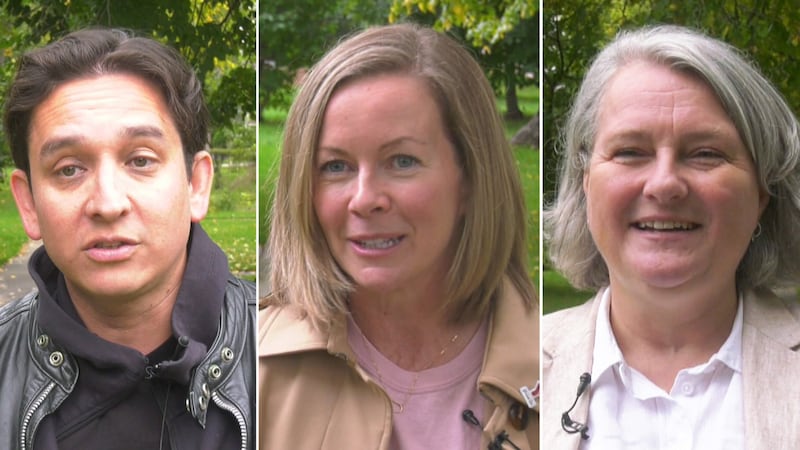
Inside a private home salon in Calgary, there are moments of grief, laughter and transformation and it’s all centred around something many people take for granted: hair. For Joanna Goodman, those moments have become the focus of her work. The owner and operator of JE Salon YYC specializes in custom wig fittings for people experiencing hair loss due to cancer, alopecia and other medical conditions. Now, she’s taken an unusual step to better understand her clients — shaving her own head. “I shaved my head, to create awareness around how prevalent hair loss is,” Goodman said. “I do wig fittings and wig customizations for people day in and day out, But I wanted to be on the other side. I felt by doing this and documenting it, I would be able to better support my clients and show them the options that are out there,” she added. A deeply personal loss Hair loss can be sudden, emotional and deeply personal — something Goodman says many people don’t fully understand until they experience it. “It’s devastating for our clients,” she said. “It is not an easy process. There’s often shame and guilt surrounding it… and it’s normally quite upsetting.” For many, hair is closely tied to identity. “Hair is important because it’s often viewed as your hat that you’re wearing every day out in the world,” Goodman said. “And sometimes when that’s taken away, you feel like you’re losing part of you.” That sense of loss is something clients like Michelle Czank know all too well. “When you first lose your hair, it was a traumatizing experience for me,” Czank said. “Your private struggle all of a sudden becomes very public.” Czank is currently undergoing cancer treatment and has been wearing a wig for about two months. “Your hair is so much of your identity that it was a very hard experience,” she said. “Some people will say it’s just hair… it’s much more than that.” “You’re going through your whole experience of cancer, and the loss of control, and it just kind of adds another layer to that,” she added. Finding control and comfort For some clients, reclaiming a sense of control becomes an important part of coping. Czank said she chose to turn the experience into something positive. “I had four or five of my closest girlfriends… we made it into celebration,” she said. “It was really important to me to be surrounded by love.” “I really, in that moment, took control of what was happening to me,” she added. Goodman says creating that kind of environment is central to her work. “Having our own private space here in my home creates a really safe space for people to come, whether they’re processing grief and tears or whether we’re having celebrations and laughter,” she said. For many, the moment they put on a wig can be transformative. “It’s life changing to see,” Goodman said. “It’s the most fulfilling work I’ve ever done.” Feeling like yourself again Melissa Brown, who lost her hair due to breast cancer, said it had always been a defining part of who she was. “I had very curly hair my whole life,” Brown said. “To come to terms with having to change… it’s a huge part of me.” Without it, even everyday interactions felt different. “When I go into public now and I don’t have my curly hair, I feel like people don’t recognize me anymore,” she said. Finding a wig that matched her natural look made a significant difference. “Joanna helped me with customizing a wig for me that we could make curly, so then I feel more like myself,” Brown said. “I feel like I can go out and no one’s going to second guess me… I feel like I can just blend in,” she added. For Brown, that sense of normalcy is especially important when she’s with her son. “It’s important for me to feel normal and for him to feel normal,” she said. When he first saw her wearing the wig, the reaction was immediate. “He said, ‘Mom, you look just like you did,’” Brown said while wiping away a tear. “He rubs my bald head, and he still tells me I’m beautiful and I’m cute.” A child’s perspective For four-year-old Lily Loucks from Regina, hair loss isn’t something to hide, but it’s simply part of who she is. Her mother, Kristi Loucks, says Lily was born with hair, but that changed within her first year. “Her body just decided, ‘You know what? We don’t need this anymore,’” Dundas said. “But she doesn’t need to change anything about her body, she’s smart, beautiful, funny, really athletic and very special.” Lily has alopecia, an autoimmune condition that causes hair loss across the body. But unlike many adults who struggle with that change, her perspective on wearing a wig is refreshingly straightforward. “I can wear it sometimes, but I don’t have to wear it all the time,” Lily said. And for her family, having a wig isn’t about covering up – it’s about giving Lily choice. “It gives Lily that freedom,” Loucks said. “If she decided one day she wants to dress up we have that option now.” That option came after Loucks began searching online for support and resources — eventually finding Joanna Goodman through social media. The family later travelled to Calgary so Lily could be fitted for a custom wig. “It was very isolating at first and the community is very, very small,” Loucks said, describing the early days after Lily’s diagnosis. “You don’t really know where to go or who to connect with.” Much of that support, she says, had to be found through online searches and social media connecting with other families going through similar experiences. Now, Loucks hopes speaking publicly will help others feel less alone and point them toward available resources. “There are good resources and if we can help other people that were in the same position as we were four and a half years ago, that’s a blessing,” she said. As for Lily, her message to others living with hair loss is clear and confident: “You are special. You are beautiful. You are perfect the way you are.” Navigating an overwhelming process Goodman says one of the biggest challenges clients faces is simply navigating the many options available. “The online can be very overwhelming. There is so much information out there,” she said. Her approach is to guide clients step-by-step. “What I do here that is different is really hold people’s hands and walk them through all the different terminology around constructions of wigs, hair types, colours, customizations,” she said. That hands-on experience can make a significant difference. “It was definitely very, very challenging looking online,” Brown said. “There are hundreds, if not thousands of options.” “Coming and finding Joanna and being able to sit down and physically put something on like this, it’s something so personalized,” she added. Goodman is also working to expand access through an online platform for people in smaller or remote communities. “What is happening is that there’s lots of people that live in small areas that don’t have access to a wig store,” she said. “So, what I wanted to do was be able to create an online system where people can get access.” Building empathy For Goodman, shaving her head has already shifted her perspective. “Because I know this is a choice that I’m making, I feel kind of excited,” she said. “But I know when people are experiencing hair loss, it often doesn’t feel like that because it’s not a choice.” That understanding is exactly what she hopes to bring into her work. “By doing this, we will be able to kind of walk hand in hand with them as they go through the process.” She also hopes to change how people think about hair loss as each wig fitting is a reminder of the impact it can have on others. “It really is life changing,” she said.