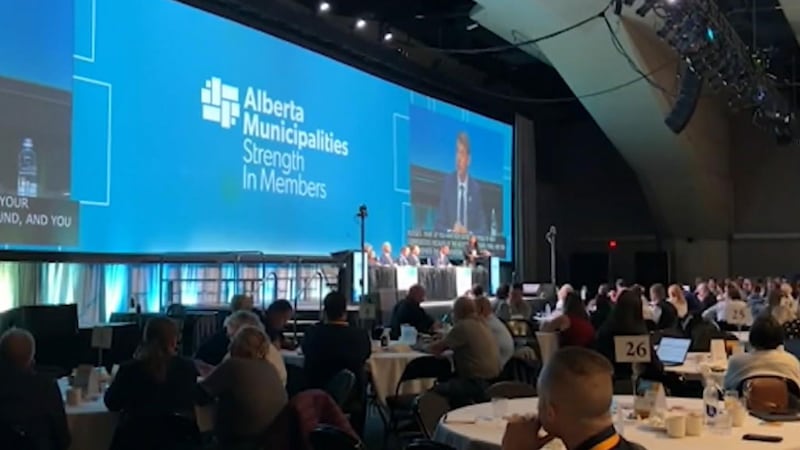
More than 360 Calgarians have signed up to speak on the blanket rezoning reboot ahead of a council decision about whether to repeal the contentious land use rules. Blanket rezoning was passed in 2024 after a marathon meeting as one of dozens of strategies to boost housing supply in the city. In December 2025, a new-look council voted to start the process to scrap rezoning. “I would like a full, complete repeal of blanket rezoning,” said Tracey Cherniawsky, one of the first speakers to address council on Day 1 of the public hearing on Monday. “I think this whole concept of blanket rezoning lacked any kind of thought behind it. It creates chaos, and it creates so many problems for the people living in the neighbourhoods.” In addition to the hundreds of speakers signed up to appear in council chambers this week, more than 2,400 written submissions were provided on the issue. “I really love the city, and I would really like to continue living here after I graduate university, and I think a major proponent of that is going to be the rezoning for housing,” said Marin MacKenzie, who is in favour of keeping the current zoning rules. Blanket rezoning was approved two years ago to streamline the process to build more housing units and different types, including rowhomes and townhomes. According to city officials, more than 630 projects have moved forward since blanket rezoning was passed that would have each required individual land use amendments and hearings under the previous rules. “I think it’s great to hear from Calgarians. It’s not just about whether or not we should keep or scrap blanket rezoning; it’s more about how we can continue to grow,” said Mayor Jeromy Farkas. Blanket rezoning became one of the main campaign issues during last year’s municipal election, with many of the councillors who were elected vowing to go back to the old rules or significantly change the current process. “I campaigned on fixing it, so I’m listening intently to the comments. We’ve tracked all the correspondence that we’ve received so far and the nature of that correspondence. So there was some appetite for looking at different ways that we could make this work,” said Nathaniel Schmidt, the councillor for Ward 8. With 73 panels of five speakers each, council has scheduled each day to continue from 9:30 a.m. to 9:30 p.m. After the public hearing, debating and voting on amendments to the bylaw will begin.