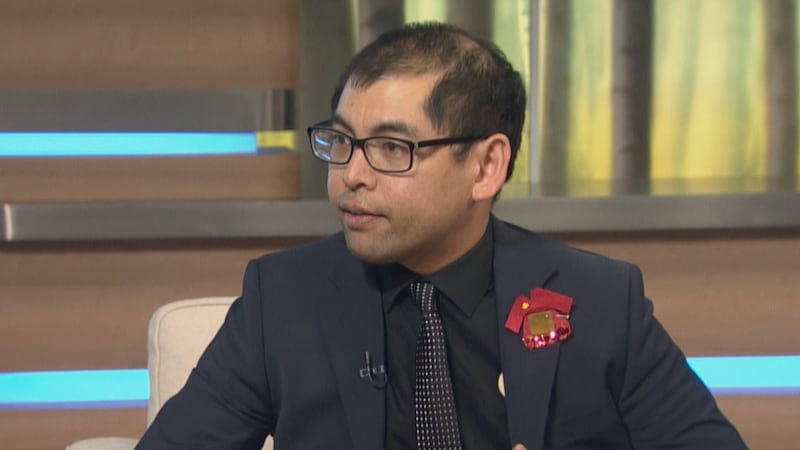
It was a big year for female athletes in Canada, with interest in professional women’s sporting leagues rising throughout the country. One expert says a spike in viewership both on screen and in person is signaling a bright future. “What we see though in the data is that it’s not just anecdotal,” says Allison Sandmeyer-Graves, CEO of Canadian Women and Sport. “This is a rising commercial engine here in Canada. It’s doubled in market size in just two years and it’s set to surpass half-a-billion dollars in sizing of market by 2030, so just a few short years away.” Sandmeyer-Graves says this year has been a success for the Professional Women’s Hockey League that started in 2024 and a newfound success for the Northern Super League that played its first game in April. “We can see on our screens in our own communities the fact that we now have women’s professional hockey, we have women’s professional soccer and coming soon in 2026 we’ll have women’s professional basketball,” she says. Sandmeyer-Graves says the PWHL is a prime example of what a successful female sporting league looks like. “The PWHL is just building on strength at this point,” she says. “People are coming out in droves. They’re wearing the jerseys. They know the players’ names. They’ve got their favourites. The rivalries are taking shape. It truly has all the hallmarks of a great league.” “I think it’s wonderful the way they’re approaching this and this tells us there’s some real staying power which is of course what we want in Canada.” The NSL has also seen a lot of success in its first year with six founding clubs from Halifax to Vancouver, and more than 275,000 people purchasing tickets for its first season. The league ranks within the top five globally for average professional women’s soccer attendance. “What a great, Canadian-made, coast-to-coast experience of soccer, really setting the bar very high and giving the fans a lot to cheer for,” says Sandmeyer-Graves. “So this is the sort of thing we’re excited to see in this country.” “Now our job is to rally behind these teams and this league and really support it to make sure it’s here for the long run.” Sandmeyer-Graves says work is still being done to ensure women get an equal chance to compete. “There’s been some great work happening across the Maritimes,” she says. “We’ve had the chance to work very closely with many organizations and leaders who are truly dedicated to looking at the sports system and saying, ‘what about this is really good for girls and women and what is holding them back?’” Sandmeyer-Graves say that means putting more women in leadership roles contributing to the decisions that create those spaces. “It means coaches getting more training to be the best coaches they can be for those girls,” she says. “It means looking at how we share our resources across all the people who are using them, whether it’s our fields, our pools, our primetime TV slots and say, ‘are we giving women and girls a fair chance here?’” Overall, Sandmeyer-Graves says it’s most important for us to show support to these teams and to ensure the athletes have a future. “The core priority right now is ensuring this is here for the long run, really getting those sustainable, thriving teams in the league overall is the goal.”