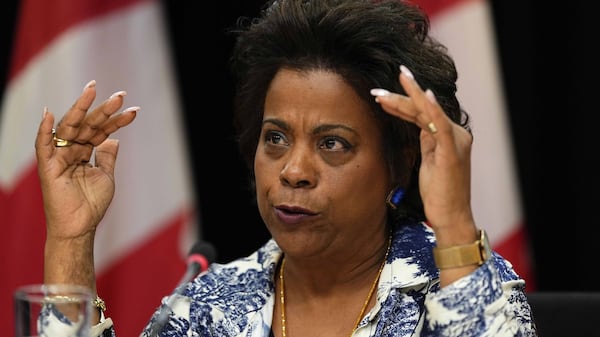
Leadership at the University of Manitoba believes this is a critical time for the province to step up and contribute more research dollars in order to attract more investigative talent to Manitoba. “I think this provincial government got elected on a bit of a different mandate, but the times have changed,” said Michael Benarroch, president and vice chancellor at the University of Manitoba. “What’s happening in the United States has put a focus on research, has put a focus on talent. I think the first step to this is convincing the government that this is important.” Benarroch said he thinks the provincial government is taking notice of this issue, following Premier Kinew’s address towards attracting more academic researchers to Manitoba. He said Manitoba’s current provincial per capita research funding ranks last in Canada. It’s a concern he would like to see addressed. “Our infrastructure is aging around research,” Benarroch said. “Our researchers aren’t being supported the way they need to be in order to be competitive nationally. It concerns me that we don’t have the funds in Manitoba to be able to match federal funds when there’s a matching requirement.” He said for Manitoba to attract top talent and to properly train graduate students, a larger investment is needed from the province. Benarroch said that in 2023-2024, 38 per cent of the University of Manitoba’s research income came from federal sources, 57 per cent came from foundations and grant sources and only five per cent came from provincial funding. “I think it’s now a matter of working together and finding those areas where the provincial government wants to invest in the research areas that are important to the province of Manitoba, that are important to the University of Manitoba,” Benarroch said. He said he is also concerned about the reduction of funding for Research Manitoba. Benarroch said the organization’s budget has been cut from $17.1 million in 2016 to just $12 million in 2023. “It’s at a level that it really can’t support the needs of the post-secondary sectors here in Manitoba,” he said. Benarroch and his colleagues recently conducted an economic impact study finding that for every $1 spent on research in the province, $4 comes back to the local economy. “When you do research, there’s a dynamic aspect of this. It’s not just you spend one dollar today,” he said. “You get a multiplier effect on the economy. It actually goes over time. People don’t often consider universities as economic engines in and of themselves. Through our research infrastructure, this last year was $245 million that the University of Manitoba brought in for the province.” CTV News Winnipeg reached out to the provincial government to see if they plan on providing an increase in research funding. A spokesperson for Advanced Education and Training minister Renée Cable, said in a statement: “Our government values the work of Manitoba’s researchers and post-secondary institutions like the University of Manitoba. After years of cuts by the previous PC government, budget 2025 increases overall funding to post-secondary institutions by 4.8% and we have increased funding to Research Manitoba twice since coming into office. We will continue to work with researchers and post-secondary institutions to continue moving in the right direction and to support important research opportunities in Manitoba.”