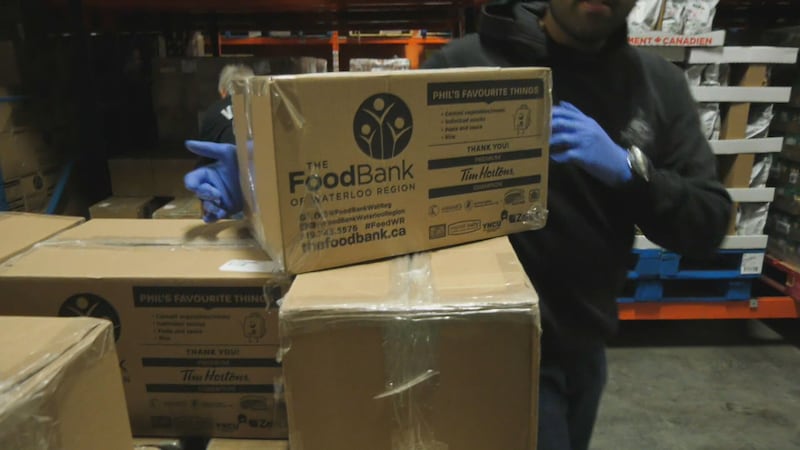
More Manitobans are visiting food banks than ever before, according to new data from Food Banks Canada, with more than a third of those visitors being children. In Canada, there have been 2.35 million monthly visits to food banks across the country in 2026—an almost nine per cent increase from last year and a 117 per cent spike since 2019. The data comes from Food Banks Canada’s 2026 HungerCount, which is a yearly study that looks at food banks across Canada. Looking at the breakdown for Manitoba, the data shows there are 71,127 monthly visits so far this year—a 9.5 per cent increase from 2025 and a 115.6 per cent jump since 2021. Of those 71,127 visits, 27,065 are children. “What’s really important to take from that is there’s a person behind the numbers,” said Meaghan Ervus, the vice president of advocacy and stakeholder relations for Harvest Manitoba. “You see a lot of statistics, but there’s a person behind that number. It could be somebody that looks like someone in our own families and I think that’s really important to recognize.” Ervus said what people should realize from this report is the demographic relying on food banks is changing. “We’ve seen more people that are working access our services. We’re seeing an uptick of seniors accessing our services and we’re also seeing more children access food banks as well.” The report found that nationally, 18 per cent of people going to food banks are employed compared to just over 12 per cent in 2019. As well, the lowest-income users are spending 60 per cent of their income on average on housing. “Since 2021, food prices have increased by approximately 30 per cent, housing costs by 28 per cent and transportation costs by nearly 24 per cent,” the report reads. In response to the latest data, Food Banks Canada is calling on all levels of government to make changes to help support “the long-term economic well-being of people in Canada, while simultaneously investing in a resilient food infrastructure.” “It’s really important to recognize that folks come access our services because they don’t have adequate income, and unfortunately, we as food banks can’t support them through that, and so we look to the federal government as HungerCount does, and the provincial government as Harvest Manitoba does to look at ways to better influence those changes through policy,” said Ervus. The entire report can be found online.