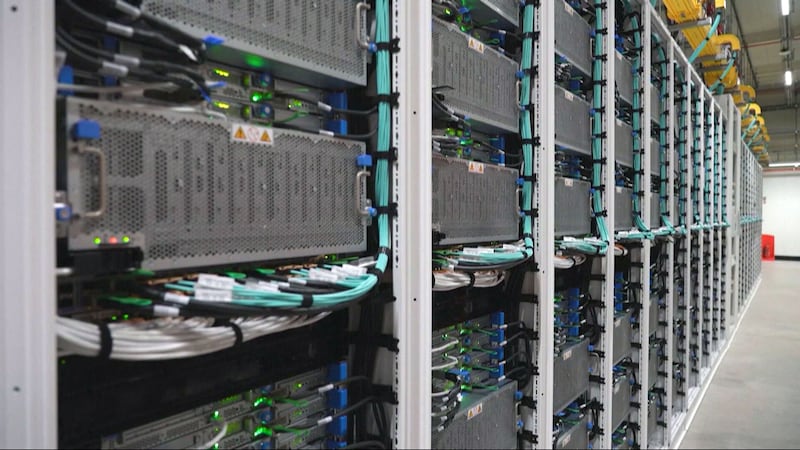
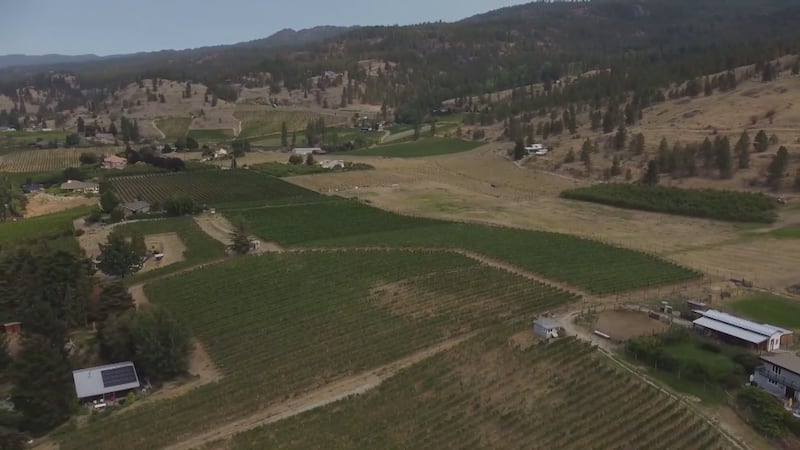
Nearly a century after fire rangers once watched for signs of wildfire from Mount Benson, an AI-powered camera is taking over the lookout. Two high-resolution cameras have been installed on the mountain as part of a pilot project by Mosaic Forest Management. Using artificial intelligence, the system can scan up to 50 kilometres for potential wildfire smoke and help pinpoint where a fire may be starting. For the B.C. Wildfire Service, the technology comes as wildfire seasons become longer and fires increasingly difficult to predict and contain. “Wildfires continue to be more challenging,” said Clint Parker, manager of the Coastal Fire Centre with the B.C. Wildfire Service. “The behaviour we’re experiencing becomes more and more catastrophic and intense every year.” Mosaic selected Mount Benson after assessing several potential sites and considering factors including existing power and communications infrastructure. The cameras are installed on towers at the site, about 1,040 metres above sea level. Mosaic director of forest protection Steve Mjaaland says the location also has a long history of wildfire detection. “It was a fire ranger station where someone would actually be up there in the season of fire season, and physically look with their eyes for fires,” he said. Nearly a century later, the view from Mount Benson is being monitored around the clock. “It’s just interesting now that in 2026, where we are with technology, you know, we’re back in almost the same location with 24-hour AI technology detecting wildfires,” Mjaaland said. The cameras use high-resolution imagery and more than 40 times optical zoom. Their artificial intelligence is trained to distinguish wildfire smoke from clouds, fog and dust. SenseNet chief operating officer Rahim Karmali says the company has spent years training its wildfire-detection algorithms to recognize those differences and reduce false alarms. The cameras are also designed to detect smoke in low-light conditions, allowing the system to operate at night. The Mount Benson installation is part of a broader approach to wildfire detection. SenseNet’s technology can also incorporate information from ground-based sensors and satellites, giving users multiple layers of information about potential fire starts. Mosaic is treating the Mount Benson installation as a pilot project while it evaluates the technology and considers whether to expand the system. The company manages about 1.5 million acres of forest, and Mjaaland says the Mount Benson cameras currently provide visibility over roughly 15 to 20 per cent of that land base. Their view also extends beyond Mosaic property, covering much of the Nanaimo area and reaching toward Ladysmith. The 50-kilometre range does not mean every part of the landscape is visible. Vancouver Island’s mountainous terrain creates blind spots, something Mosaic accounted for in a viewshed analysis before installing the cameras. Mjaaland says preliminary analysis suggests several additional strategically placed cameras could eventually provide much broader coverage of Mosaic’s land base and surrounding communities. Information from the cameras will also be shared with the B.C. Wildfire Service, extending the potential benefit beyond Mosaic’s own forests. “It’s a great collaborative asset,” Mjaaland said. “It also protects the safety of the communities and the neighbourhoods, our drinking watersheds and our working forest.” He says the biggest advantage is being able to act quickly once a fire is located. “You want to hit a fire fast. You want to hit it hard,” Mjaaland said. The Mount Benson pilot comes as the B.C. Wildfire Service explores the possibility of building a provincewide camera network. Parker said the service is working with UBC and UBC Okanagan on a multi-year research project examining how such a network could be designed and built. He says partnerships with forest companies, communities and local governments can help expand the use of technology. “We collaborate with Mosaic and the forest sector across the province on a multitude of things, from wildfire prevention, early detection, preparedness, response and even recovery,” Parker said. For now, the cameras are watching from a mountain that has been used for wildfire detection for generations. Only the eyes have changed, and they’re now powered by AI. With files from Brendan Strain