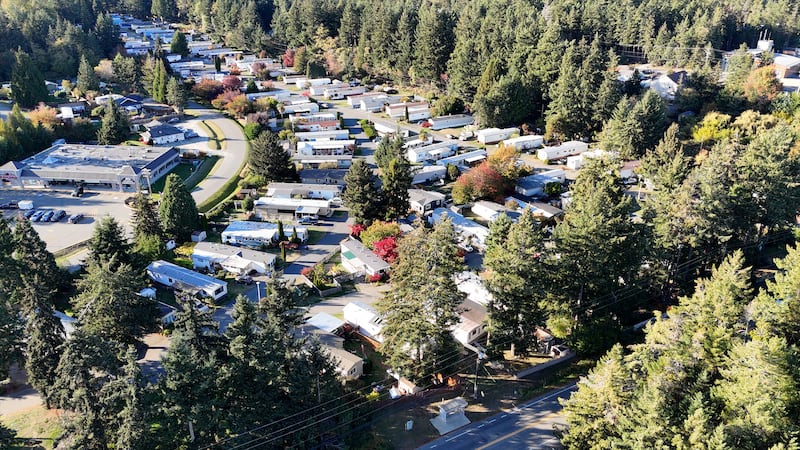
For Joe Martino, the sale of his Nanoose Bay manufactured home community raised a frightening question: What happens when you own your home but could lose the land beneath it? After 15 years in the community, the thought of being forced out and struggling to find another affordable place to live weighed heavily on him and his neighbours. Now, after more than two years advocating for change, Martino has helped secure a new Regional District of Nanaimo policy designed to give manufactured home park residents greater protection if redevelopment threatens their homes. “Many folks think it’s the last bastion of truly affordable housing,” Martino said. He and his wife moved to the 55 plus community after their two sons left home, downsizing from a larger house in Parksville. They found more than an affordable place to live. They found a neighbourhood where residents look out for one another. That sense of security was shaken when the property went up for sale about three years ago. The community had been family owned for decades, and Martino had assumed it would remain that way. With a new owner potentially free to pursue a different use for the land, he began investigating what protections residents would have if the park were redeveloped. “It was distressing to a lot of folks. You contemplate your future,” he said. What he found prompted him to take his concerns to the Regional District of Nanaimo (RDN) board. Manufactured home owners can own the structures they live in while renting the land beneath them, leaving them in a difficult position if an entire park is slated for redevelopment. “We own our homes but we pay rent to be in the park,” Martino told the board. “The regulations, the protections for people in our situation are pretty scant.” Under B.C.’s Manufactured Home Park Tenancy Act, the minimum compensation in the circumstances Martino described can be $20,000, with 12 months’ notice to vacate. Although additional compensation may be pursued through other legal avenues, those processes can be complicated and costly. Martino believed residents needed a clearer process and a fairer way to address the value of their homes, relocation costs and the challenges of finding somewhere else to live. He spent more than two years reviewing policies from other communities across B.C., bringing together provisions he believed could better protect homeowners while giving landowners and regulators a clear framework to follow. The RDN agreed to review its existing policy during broader work on its zoning bylaws. Public feedback also raised concerns about housing affordability and the potential displacement of manufactured home park residents. On Oct. 13, the RDN board unanimously approved its new Manufactured Home Park Tenant Assistance Policy. The policy is now in effect. Board chair Stuart McLean credited Martino, district staff and members of the public for helping bring the changes forward. “He was a tireless advocate for those manufactured home communities,” McLean said. The policy applies when an entire manufactured home park in the RDN’s electoral areas is proposed for redevelopment to another use. It does not apply within incorporated municipalities. One of the most significant changes is a two year notice period, giving residents more time to plan for a possible move. Developers must also hire a third party to assist with relocation efforts and explore alternatives with affected residents. While the policy cannot guarantee suitable replacement housing will be available, it establishes a process to help people navigate their options. The policy also sets out a more structured approach to compensation and home appraisals. If a homeowner disputes the initial appraisal, the policy allows for a second appraisal at a shared cost, with the average used to resolve differences. Martino says the policy also includes a right of first refusal provision and outlines compensation for eligible moving and setup costs when a home can legally be relocated. For residents who may have spent years building equity in their homes, those details matter. Moving a manufactured home is not always practical, and alternative sites may not be available or approved. McLean says the district has already heard from residents who welcome the changes. “Some of them saying they can sleep better at night now,” he said. “So it’s really nice when you get to do something that is net positive for the community.” The policy could affect up to 900 homes across 37 manufactured home communities in the RDN’s electoral areas, according to figures Martino said he had received. For him, the issue extends well beyond his own neighbourhood. As housing affordability remains a concern across Vancouver Island, he believes shielding existing affordable communities is just as important as creating new housing. “With the pressure for affordable housing, it’s important we protect these places,” he said. The new owners of the 99 home community where Martino lives have no current plans to redevelop the property. The policy would become relevant if a future owner proposed closing the park for redevelopment. But for Martino and his neighbours, the change means there is now a clearer process if that day comes. “It should make everybody sleep a little easier,” he said.