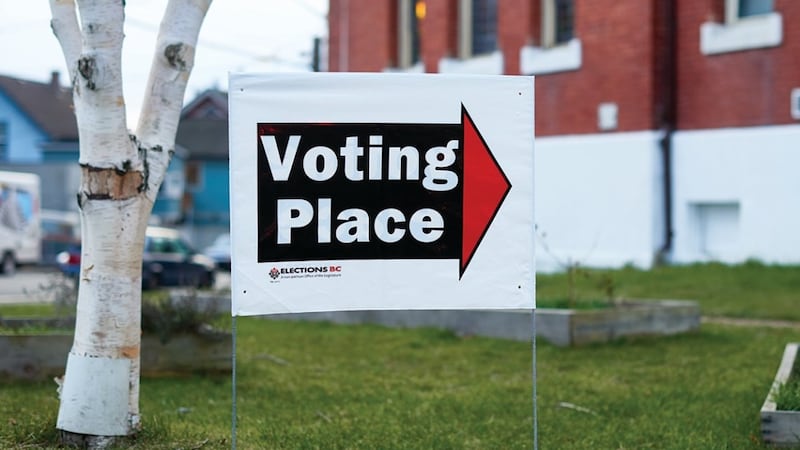
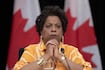
A proposal to provide just one assisted voting device for all of Vancouver during this year’s municipal election would amount to “voter suppression,” according to a local disability advocate. The device helps voters with disabilities cast a ballot with the same privacy awarded to most residents—allowing those with dexterity impairments to vote by blowing into a tube, for example. Vancouver has made two of the devices available during recent elections, but a report from the city’s chief election officer recommends reducing that number to one this year, available only at the election office at 305 West 8th Ave. City council is expected to vote on the proposal Tuesday. Gabrielle Peters, a disabled writer and policy analyst, called the notion of asking people with chronic disabilities to trek across the city to vote while the vast majority of Vancouverites can do so close to home “completely backwards.” “You should have the same right to be able to go to your local neighbourhoold polling station that your neighbour does,” Peters said. “It’s a clear-cut case of discrimination.” Incidentally, the election office is not currently accessible for those in wheelchairs—though the site is undergoing renovations, including the installation of a ramp and universal-access washroom, that officials expect to be completed this month. Election office defends proposal The city declined a request from CTV News to interview the chief election officer this week. In a statement, the election office said the use of the assisted voting devices in previous elections was “very low”—with 10 users in 2014, two in 2018 and zero in 2022. “The election office strongly rejects the accusation of voter suppression,” the statement added. “As a non-partisan body, the election office takes its responsibility to uphold the integrity of the democratic process very seriously. Staff have worked diligently to plan a fair, accessible, and secure election, and are committed to improving the voter experience for the 2026 Vancouver election.” The report’s recommendation would see the single assisted voting device made available from the first day of advance voting on Oct. 3 through to election day on Oct. 17—a total of 12 days—with trained staff available to provide support at all times throughout that period. The election office noted that would be the “longest the device has been offered in a Vancouver election,” up from just five days in 2022. Elections are paid for through a municipal reserve fund, and the decision to supply just one assisted voting device this year was not budget-driven, according to the statement. The devices are rented at a cost of $1,500 each, in an election with an estimated budget of $9.4 million—though the city said staff training is also required. More accessible devices in Toronto On the issue of turnout, Peters said the disabled people she has spoken with told her they were unaware such a device was available—and argued more voters would use one if it were easily accessible. “The duty of the elections office and the duty of the city is not to decide whether or not voting is popular,” she said. “Their decision-making is supposed to be based on making it readily available, and creating the conditions so people can vote without difficulty.” Peters stressed that her expectation isn’t that the city would scramble to make the devices available everywhere in time for October, but suggested they be provided at a couple polling stations per neighbourhood. Toronto offers similar accessible voting terminals at every advance polling station, and at two locations per ward on Election Day. Peters pointed out governments have spent years working to reverse declining turnout at Canadian elections, including in Vancouver, and asked how non-disabled voters would feel if officials decided to “throw in the towel” and make casting a ballot less convenient because they didn’t think enough people were exercising their right to do so. “We don’t say those things to other people,” Peters said. “So don’t say them to disabled people.” If the report is adopted at council this week, Peters suggested the failure to provide equal access to voting at neighbourhood polling stations could ultimately be a matter for the B.C. Human Rights Tribunal. “Who the hell is holding government accountable?” she said. “Because as a disabled poor person in Vancouver, British Columbia, there is not a single solitary organization, person or body that discriminates against me more than my municipal, provincial and federal government, period.”