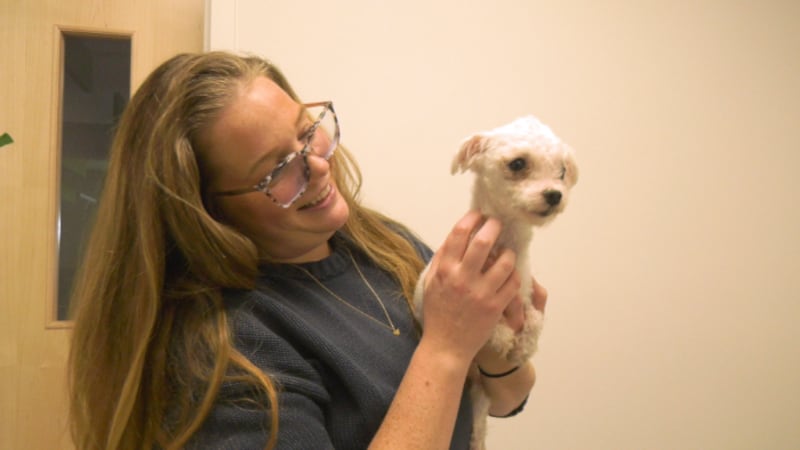
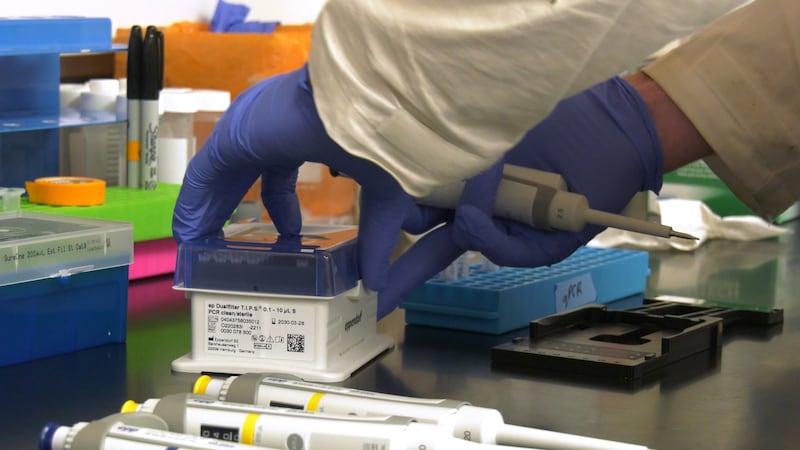
In the heart of Vancouver’s trendy Mount Pleasant neighbourhood, a local surgeon-researcher has assembled a team and equipment she believes will revolutionize medicine and give surgical patients new hope. Dr. Claudia Chavez-Munoz has recruited graduates from her alma mater, UBC, to work at the Conexeu lab in the new adMare BioInnovations complex off Main Street, where they are tweaking her absorbable 3D-printed implants. “People feel mutilated after mastectomy, after they’ve already gone through the roller coaster that is the cancer experience,” she said in a one-on-one interview with CTV News, explaining that everyone from burn victims to car crash survivors can benefit from the a-cellular material that acts as a bio-degradable collagen scaffolding for the patient’s own body to grow into after surgical implantation. “Whatever tissues we lose because of disease or because of trauma or because of whatever, we’re able to regenerate them – and regeneration means that it’s going to be exactly that, the same tissue that was before with the same functions,” Chavez-Munoz said. One of her researchers pulled a sample from a refrigeration unit kept at three degrees Celsius to display a prototype designed for mastectomy survivors. It’s the shape and semi-translucence a silicone breast implant, but puckered and tunneled with holes for fat and blood cells to permeate and grow onto. A booming industry Regenerative medicine is a growth industry, encompassing everything from stem cell technology to personalized gene editing with the power to halt or reverse debilitating illnesses. That all comes at a steep cost, and government grants don’t go far with so many promising but unproven technologies in development. It also requires years of study and testing, and some treatments work for some patients and not others. Nonetheless, patients facing life-altering diagnosis or debilitating pain are often willing to take a chance on something that can give them hope for a better quality of life. The body healing itself Labs across Canada are working on their own regenerative projects, from a lung-tissue printer in Montreal to regenerative dentistry in Manitoba. The notion of helping the body heal itself is attractive, particularly for breast cancer survivors. Currently, those who choose to have reconstructive surgery are closely monitored to see when the implant needs replacing, so a permanent fix of re-growing what was lost still sounds like science fiction. Chavez-Munoz is confident her technology could be in British Columbia operating rooms, including the ones she’s familiar with at her home hospital of VGH, within a decade, with the start of clinical trials anticipated soon. “There is no limit, not even the sky’s the limit,” she said. “For me, everything that I dream I try to make a reality.”