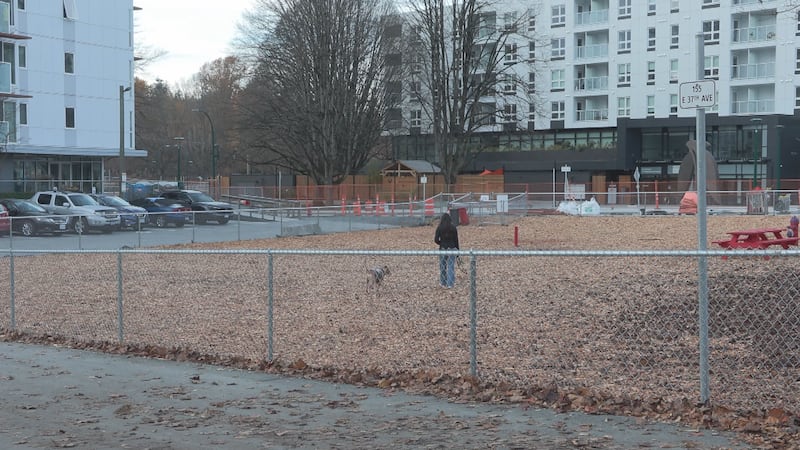
Vancouver’s new city council is aiming to clamp down on developers who are turning vacant lots into temporary community gardens and dog parks in exchange for a tax break. Under provincial regulations, developers can reclassify empty sites as recreational use rather than business, lowering the property tax for the vacant land. One such site where this occurred is at Little Mountain, where hundreds of social housing units were torn down after Holborn Group purchased the land in 2008. The redevelopment is set to have 282 non-market rental units and about 1,400 market homes, but progress has been slow. Non-market buildings have been built at Little Mountain, but there is land still waiting for construction. “The focus shouldn’t be on the dogs. No offense to any dog owner, but the greater need for housing is for humans,” said Ingrid Steenhuisen, one of the longest-standing Little Mountain residents, whose family moved there in the 1950s. She says after more than six decades of living at Little Mountain, she’s ready to see the last of the empty land filled with homes. In a statement, Holborn said rather than leave the land empty, it opened a temporary dog park and community garden and the amenities do not replace or delay housing. “When you’re doing something like this, where you essentially are creating minuscule little properties, and these are large compared to some, they’re really not benefiting anybody other than the developer who’s saving hundreds of thousands of dollars,” real estate planning consultant Michael Geller told CTV News. A City of Vancouver report found 10 properties reclassified from business to parks and gardens in 2026, creating a loss of about $900,000 in municipal taxes. Council is attempting to tackle the issue by passing a motion from OneCity Coun. Lucy Maloney on Wednesday. Her motion says that while tax incentives can help reduce risks associated with new construction, “some developers appear to be taking advantage of these measures to help them postpone building until more favourable market conditions arise.” The city cannot prevent developers from reclassifying land, but hopes to update its guidelines so that permits for community gardens and dog parks “do not inadvertently facilitate tax avoidance” on land destined for housing. “What we need to do is put in place measures to make sure that we reduce the incentive for these properties to be recategorized and therefore making them eligible for a big tax discount,” Maloney said. She said staff will look at introducing limits on how long these sites can remain community amenities.